Florida Land & Development
Florida's Buildable Land Is Running Out: What Real Estate Investors Need to Know in 2026
Published By Luminary Private Lending
- Author:
- Ivan Padilla
- Reviewed By:
- Kevin Mazzola
- Published:
- June 25, 2026
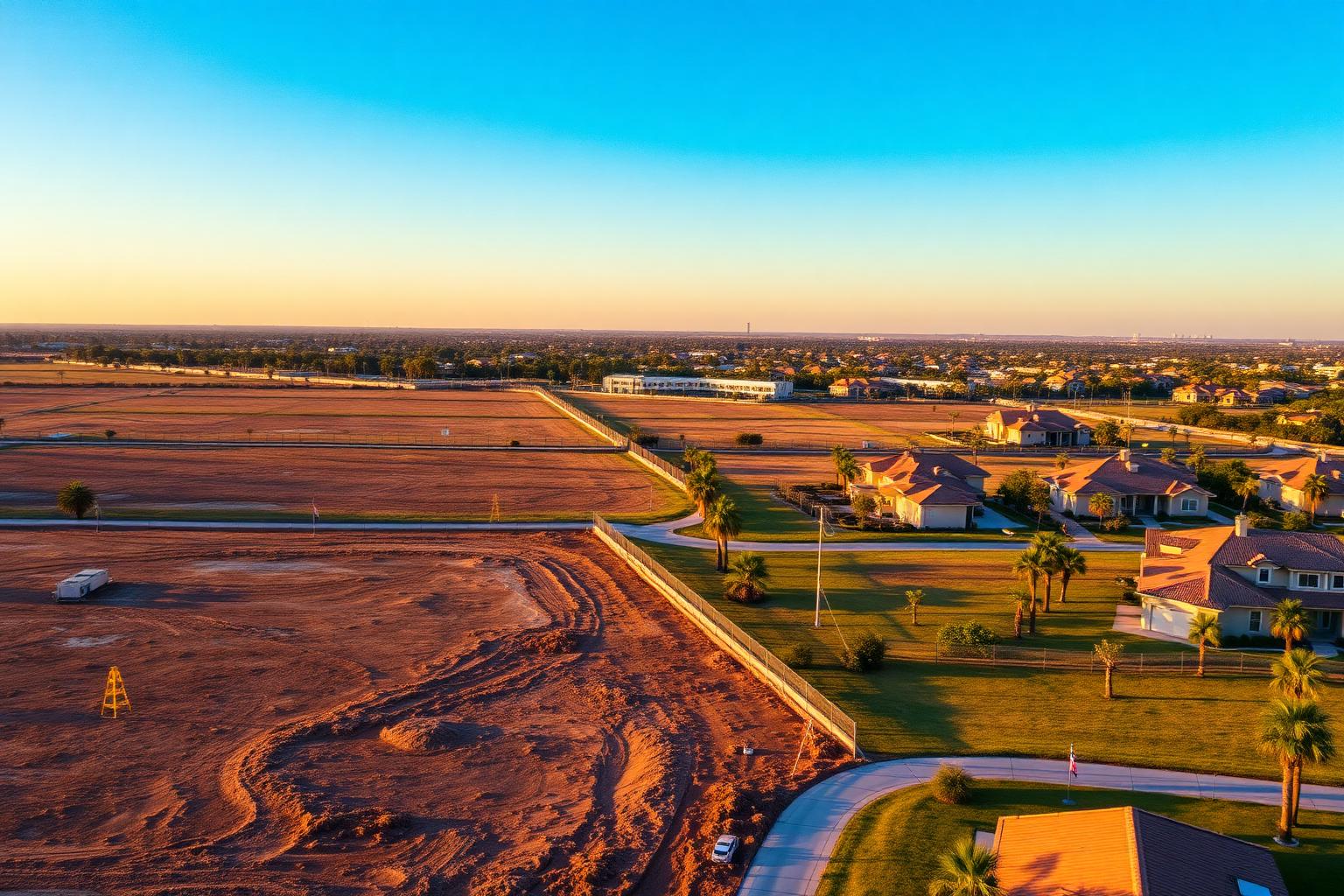
Florida's developable land is tightening across Orlando, Tampa, Jacksonville, Naples, and Palm Beach. See 2026 land data, investor scenarios, and the financing tools winning deals.
Florida's developable land supply is tightening, fast. From Jupiter to Orlando, Tampa to Naples, the last residential parcels in established communities are being claimed, and the next wave of investor returns will go to the buyers who can move first, finance fast, and see value where others see obstacles.
Table of Contents
- Florida's Land Supply Is Changing
- Florida Land Scarcity by the Numbers (2026)
- Why Buildable Land Matters for Investors
- Florida's Growth Engines
- City & Market Spotlight: Where Land Is Tightest
- Redevelopment: The New Land Strategy
- Real Investor Scenario: Orlando Infill Lot
- Why Speed Wins Florida Deals
- Financing Options for Land & Construction
- Loan Comparison Table
- Why Investors Work With Luminary
- Ready to Finance Your Next Florida Investment?
- Frequently Asked Questions
Florida's Land Supply Is Changing
Florida has been one of the fastest-growing states in the country for more than a decade, and demand is finally catching up to supply. Buildable residential parcels in established neighborhoods, the kind close to jobs, schools, and infrastructure, are disappearing. A recent example out of Jupiter, Florida, made the news when local officials confirmed that one of the last residential parcels available for development in the community had just been built on. It's one community's story, but it mirrors a much larger pattern playing out statewide.
"Buildable land isn't disappearing across Florida overnight, but in many established markets, it is becoming materially harder and more expensive to acquire."
When supply falls and demand rises, the investors who win are the ones with capital lined up before the listing hits.
Florida Land Scarcity by the Numbers (2026)
The story isn't just anecdotal. Public data from the U.S. Census Bureau, the Federal Reserve, Florida Realtors, and the Florida Department of Commerce all point the same direction:
| Metric | 2020 | 2026 (Est.) | Trend |
|---|---|---|---|
| Florida population | 21.5M | ~23.6M | +9.8% |
| Net new residents / day | ~900 | ~1,000+ | Sustained |
| Single-family permits (annual) | ~128K | ~150K+ | Up |
| Median residential lot price (statewide) | ~$70K | ~$135K+ | +90% |
| Months of land inventory in core metros | 9–12 | 3–5 | Tightening |
| Construction cost per SF (FL avg.) | ~$135 | ~$195 | +44% |
According to the U.S. Census Bureau, Florida continues to rank among the nation's fastest-growing states, adding thousands of new residents each month. That sustained demand is putting real pressure on the remaining inventory of buildable parcels, especially inside the I-4 corridor and South Florida's coastal counties.
Why Buildable Land Matters for Investors
Every new home, townhome, rental community, and retail center starts with one thing: land. As inventory shrinks, the rest of the market shifts with it.
- Higher land prices and faster bidding
- More competition from national builders and institutional buyers
- A rise in redevelopment and infill projects
- Faster sale decisions, sometimes within hours
- Greater reliance on flexible, fast-close financing
Investors purchasing raw land should understand how Vacant Land Loans can help finance eligible parcels before competitors lock them up.
Florida's Growth Engines
Florida's land squeeze is being driven by the same forces fueling the broader real estate market:
- No state income tax, attracts high-income earners and retirees
- Job growth in tech, healthcare, logistics, and finance
- Tourism & hospitality, Orlando, Miami, Tampa
- Technology corridors, Lake Nona, Miami, Tampa Bay
- Distribution & ports, Jacksonville, Polk County, Port Tampa Bay
- Retirement migration, Sarasota, Naples, The Villages
Every new resident creates demand for single-family homes, townhomes, condos, rentals, retail, and infrastructure, all of which require land.
City & Market Spotlight: Where Land Is Tightest
Orlando
Lake Nona, Horizon West, and Winter Garden continue to absorb thousands of new residents each year. Land prices in Orange County and Osceola County have outpaced statewide averages, and infill lots in established neighborhoods often sell within days. Construction loans are increasingly used to fund spec homes and build-to-rent communities along the SR-429 corridor.
Tampa
Tampa Bay's job growth and downtown revitalization have pushed demand into Hillsborough, Pasco, and Pinellas counties. Land suitable for townhomes and small subdivisions is increasingly scarce inside the city core, pushing investors toward redevelopment plays in older neighborhoods.
Jacksonville
Northeast Florida remains one of the most affordable major metros, but Duval, St. Johns, and Clay counties are seeing steady tightening as logistics, healthcare, and finance jobs expand. Vacant land near Nocatee, World Golf Village, and St. Johns Town Center is moving quickly.
Naples & Sarasota
The Gulf Coast's premium markets have minimal raw land left within established communities. Most new opportunities now involve teardowns, infill, or assemblage plays, exactly where private lending tends to outperform traditional banks.
Palm Beach
From Jupiter to Boca Raton, eastern Palm Beach County is functionally built out. Investors are turning to redevelopment and small lot acquisition, often financed with bridge loans to win competitive offers.
Ocala & Marion County
The World Equestrian Center has reshaped Ocala. Buildable acreage that traded for a fraction five years ago is now in high demand for residential, equestrian, and mixed-use development.
Redevelopment: The New Land Strategy
As raw lots become harder to find, savvy Florida investors are pivoting to redevelopment. The opportunity set includes:
- Older single-family homes on large lots
- Vacant or underperforming commercial buildings
- Underused shopping centers ripe for mixed-use conversion
- Small warehouses near urban cores
- Obsolete office buildings in growing submarkets
Developers building new homes often use Construction Loans to fund each phase of the project, while investors holding redevelopment sites frequently tap Second Mortgages to unlock equity for the next acquisition.
Real Investor Scenario: Orlando Infill Lot
The setup: An investor identifies a vacant lot in Orlando listed at $310,000. The parcel is zoned for residential construction, has utilities at the street, and sits in a corridor experiencing steady population growth. A competing developer is preparing an offer for the same property.
The advantage: Because the investor pre-qualified for a vacant land loan with a private lender, financing is already arranged. They submit an offer the same day with proof of funds and a 10-day inspection period, instead of waiting 30+ days for a traditional bank approval.
The outcome: The seller accepts the faster, cleaner offer even though it isn't the highest on price. The investor then refinances into a construction loan once permits are in hand. While every transaction is different, preparing financing ahead of time consistently improves an investor's odds of winning in fast-moving markets.
Why Speed Wins Florida Deals
In competitive markets, the best parcels rarely last more than a few days. Investors face pressure from cash buyers, national builders, and large investment firms, and waiting weeks for bank approval is often the difference between winning and losing the deal.
Pre-qualified financing improves negotiating leverage in three ways:
- You can submit an offer the day a property hits the market
- You can offer a faster close (often 7–14 days)
- You signal credibility to sellers who have been burned by financing fall-throughs
Financing Options for Land & Construction
Financing varies by project type, location, and borrower qualifications. The four most common programs Florida investors use today:
- Bridge Loans, short-term capital to acquire properties before resale or refinance
- Construction Loans, staged funding for ground-up builds and major rehabs
- Vacant Land Loans, financing for eligible buildable parcels
- Second Mortgages, equity-based capital to fund the next acquisition
Loan Comparison Table
| Loan Type | Best For | Typical Close | Term |
|---|---|---|---|
| Bridge Loan | Quick acquisitions, fix-and-flip | 7–14 days | 6–24 months |
| Construction Loan | New builds, spec homes, BTR | 14–30 days | 12–24 months |
| Vacant Land Loan | Buildable parcels & lots | 10–21 days | 12–36 months |
| Second Mortgage | Unlocking equity for next deal | 10–21 days | 12–36 months |
Why Investors Work With Luminary
- ✓ Florida focused, every loan, every market
- ✓ Fast decisions, most term sheets within 24–48 hours
- ✓ Direct communication with decision-makers
- ✓ Local market knowledge across all 67 counties
- ✓ Bridge, construction, vacant land, and second mortgage programs
- ✓ Asset-based underwriting that fits investor timelines
Ready to Finance Your Next Florida Investment?
Whether you're purchasing vacant land, planning a new construction project, or need short-term financing to secure an investment opportunity, Luminary Private Lending can help you explore financing solutions designed for Florida investors. Contact our team today to discuss your project and learn about available loan programs.
Frequently Asked Questions
Author & Review
Written by Ivan Padilla, Director of Growth and Real Estate Lending Specialist, Luminary Private Lending.
Reviewed by Kevin Mazzola, Founder, Luminary Private Lending.
Disclaimer: This article is for educational purposes only and is not legal, financial, tax, or investment advice. Loan approval depends on underwriting, property eligibility, borrower qualifications, and lending guidelines. Not all applications or properties qualify.
Related Florida Lending Resources
Keep Reading
Latest Insights
Keep exploring Florida private lending insights.
Florida Market
Miami-Dade Development Boom Creates New Opportunities for Florida Real Estate Investors in 2026
Miami-Dade's 2026 development boom is creating fresh opportunities for Florida Real Estate Investors. See how Florida Hard Money Lenders Residential financing, bridge, construction, land, and second mortgages, helps investors move first in Miami, Hialeah, Doral, Kendall, Coral Gables, and Homestead.
Investor Education
What Is a Balloon Payment? A Complete Guide for Real Estate Investors in Florida
A balloon payment is a large final payment due at the end of a short term loan. Here is how balloon loans work, which programs use them, real Florida examples, the risks, and how investors plan an exit strategy before borrowing.
Florida Bridge Loans
Bridge Loan vs. HELOC: Which Is Better for Florida Real Estate Investors? (2026)
Bridge loans fund in days and are underwritten on the asset and exit. HELOCs take weeks and require owner occupancy. Here is how Florida investors should choose, with a decision tree, cost breakdown, and 15 FAQs.
Florida Commercial Real Estate
Southwest Florida's Next Commercial Real Estate Boom? Why Institutional Investors Are Betting Big on the Gulf Coast
Institutional capital is quietly pouring into Southwest Florida's Gulf Coast, from Tampa to Naples. Here's why the I-75 corridor is Florida's next commercial real estate growth engine, and how investors can position for it.
Florida Real Estate Market
Southwest Florida Foreclosures Are Rising in 2026: What It Means for Florida Real Estate Investors
Cape Coral and Fort Myers are leading Florida in foreclosure filings. It's not another 2008, it's a market reset. Here's what Florida real estate investors need to know, and how to move fast.
Real Estate Investing
Florida Real Estate Wire Fraud: How Investors Can Protect Their Closing Funds
Florida real estate investors move millions through digital closings every year, making them a growing target for wire fraud. Here's how to spot the scams and protect your closing funds.
Florida Real Estate Market
Florida Housing Construction Trends 2026: What Fewer Building Permits Mean for Real Estate Investors
Florida building permits have slowed in 2026. Here's what fewer new construction starts mean for investors, plus the loan programs that help you move faster than traditional banks.
Florida Real Estate Market
Fastest-Growing Home Prices Around Orlando in 2026: What Florida Investors Need to Know
Where Orlando-area home prices are rising fastest in 2026, which suburbs to watch, and how bridge, construction, second-mortgage, and vacant-land financing help investors act.
Florida Housing Market
Florida Housing Market Update 2026: What Rising Northeast Florida Home Prices Mean for Real Estate Investors
Northeast Florida home prices climbed ~5.1% while inventory improved and homes sold faster. See what this means for investors using bridge loans, construction financing, and value-add strategies across Jacksonville, St. Augustine, and surrounding counties.
Commercial Real Estate
Florida Commercial Real Estate Market 2026: Why Investors Prefer Private Lending
Higher rates, tighter bank underwriting, and rising insurance costs are reshaping Florida's commercial real estate market in 2026. See the sectors, regions, and private lending strategies investors are using now.
Florida Housing Market
Florida Housing Market 2026: Is Now a Better Time for Real Estate Investors?
Florida's housing market is rebalancing in 2026, more inventory, longer days on market, and real negotiating room. See what it means for investors, builders, and the bridge and construction financing that wins deals.
Florida Property Tax
What Florida's Proposed Property Tax Changes Could Mean for Real Estate Investors in 2026
Florida voters decide a major homestead exemption expansion in November 2026. See how it could move home prices, county infrastructure, and investor strategy, plus the bridge, construction, and land financing that wins in shifting markets.