Florida Property Tax
What Florida's Proposed Property Tax Changes Could Mean for Real Estate Investors in 2026
Published By Luminary Private Lending
- Author:
- Ivan Padilla
- Reviewed By:
- Kevin Mazzola
- Published:
- June 30, 2026
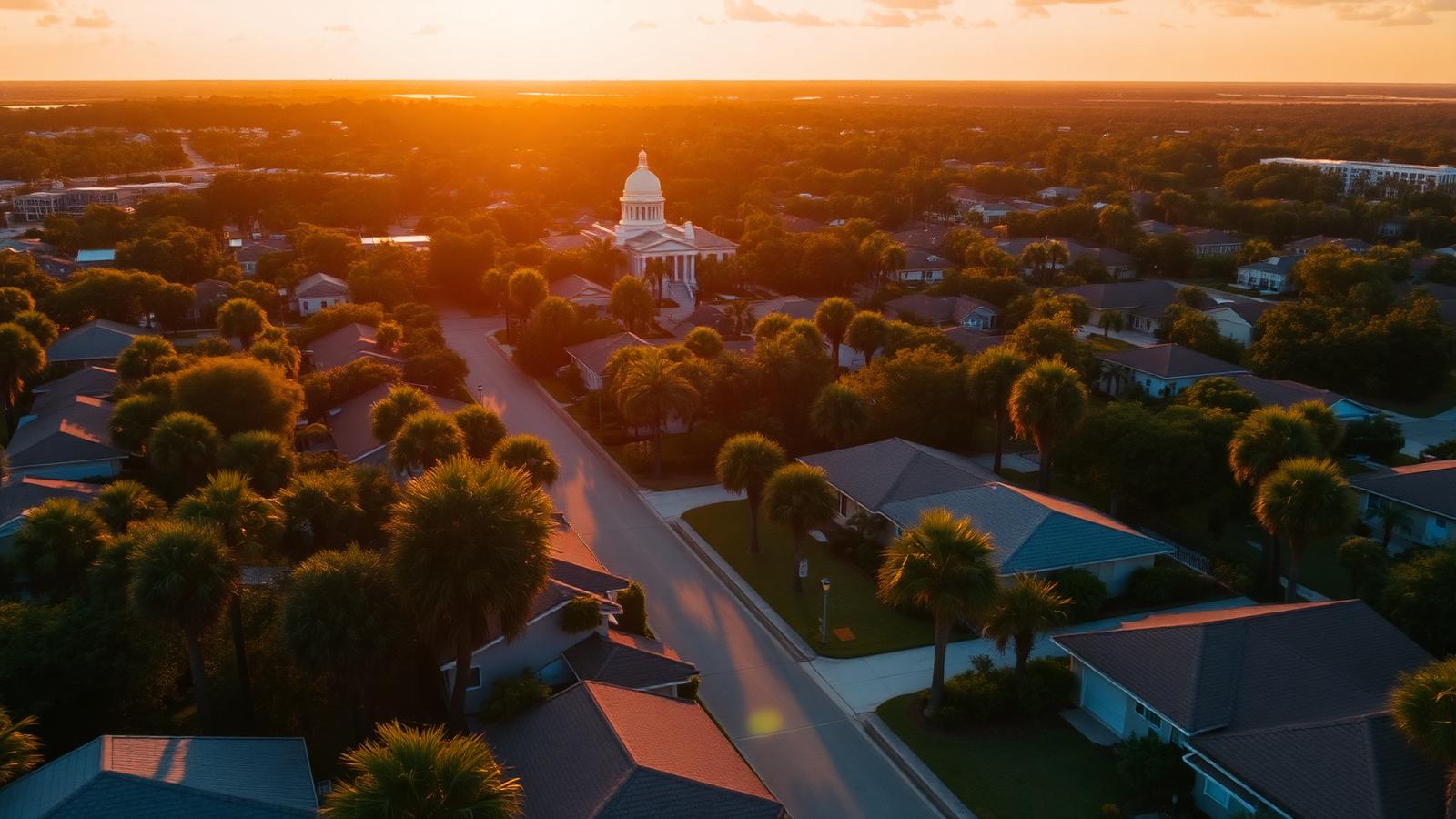
Florida voters decide a major homestead exemption expansion in November 2026. See how it could move home prices, county infrastructure, and investor strategy, plus the bridge, construction, and land financing that wins in shifting markets.
Florida lawmakers have approved a plan to expand the homestead property tax exemption. If voters approve it on the November 2026 ballot, many homeowners could pay lower property taxes, and the ripple effects will reach every Florida real estate investor, builder, and lender.
Key Takeaways
- Florida added more than 467,000 new residents between July 2023 and July 2024 (U.S. Census Bureau), keeping long-term housing demand intact regardless of how the amendment vote lands.
- The proposed expansion targets homestead (primary residence) properties, investment, rental, and commercial properties keep their existing assessment rules.
- County leaders warn of billions in lost revenue that could slow infrastructure in fast-growing counties such as Orange, Hillsborough, Lee, and Polk.
- For investors, the smart play is financing readiness, bridge, construction, vacant land, and second-mortgage capital queued before the November vote moves the market.
Published: June 30, 2026 • Last Updated: June 30, 2026 • Author: Ivan Padilla • Reviewed by: Kevin Mazzola • Reading time: 10 minutes
Table of Contents
- What Is Florida's Proposed Property Tax Amendment?
- Why Counties Are Concerned
- Could This Affect Florida Real Estate?
- Florida Still Faces a Housing Supply Challenge
- What This Means for Builders
- Opportunities for Real Estate Investors
- Should Investors Wait?
- Florida Counties to Watch
- If Taxes Decrease: Scenario Table
- Financing Workflow for Florida Investors
- Frequently Asked Questions
- Sources & Editorial Notes
What Is Florida's Proposed Property Tax Amendment?
The proposal would significantly raise Florida's homestead exemption for primary residences. If voters approve it in November 2026:
- The homestead exemption for non-school taxes would increase beginning in 2027.
- It would grow again in 2028.
- The amendment sets up a framework for additional, phased property tax relief.
The state-level policy is tracked through the Florida Senate and administered locally with guidance from the Florida Department of Revenue.
"Whenever tax policy changes, investors should avoid making decisions based only on headlines. Every property, timeline, and financing strategy is different." Ivan Padilla, Director of Growth and Real Estate Lending Specialist, Luminary Private Lending
Why Counties Are Concerned
Property taxes, ad valorem taxes calculated against the assessed value and millage rate, fund the services that keep growing Florida communities livable. These include:
- Road improvements and drainage
- Public safety, fire, and EMS
- Parks, libraries, and recreation
- Infrastructure and utility expansion
- Community redevelopment
County commissions and property appraiser offices, from Miami-Dade to Orange County, warn that reduced revenue could force delayed projects, higher fees, or new revenue sources to backfill municipal budgets.
Counties Most Exposed to Revenue Loss
Counties with a high share of homesteaded inventory. Orange, Hillsborough, Lee, Polk, Brevard, Pasco, would feel the largest dollar impact. Coastal counties already squeezed by insurance pressures may face the toughest budget tradeoffs.
Could This Affect Florida Real Estate?
Probably, but indirectly. Real estate markets respond to a stack of inputs: population growth, interest rates, employment, housing supply, consumer confidence, and local infrastructure. Property taxes are one piece of that puzzle.
Demand Side
Lower ownership costs for homestead buyers could pull demand forward, particularly in price-sensitive markets like Polk, Pasco, and Marion counties. According to Florida Realtors®, the state's population growth continues to drive long-term housing demand.
Supply Side
If counties trim infrastructure spending, some greenfield development could slow. Investors should track where roads, water, and sewer projects continue and where they pause, that map tells you where construction velocity stays high.
Florida Still Faces a Housing Supply Challenge
Even with potential tax changes, Florida still needs more housing. According to the U.S. Census Bureau Building Permits Survey and FRED data, many Florida metros continue to see:
- Population growth above the national average
- Limited inventory of homes under $400K
- Construction cost inflation
- High demand for new homes near job centers
That backdrop is why construction financing and bridge loans stay central to investor strategy.
What This Means for Builders
Builders should watch local government decisions carefully. Delayed infrastructure can affect construction timelines via:
- Road and intersection expansions
- Utility hook-ups and capacity upgrades
- Plat approvals and impact-fee schedules
- School concurrency
None of this guarantees a project halts. It does mean builders should plan ahead and work with financing partners who understand how Florida's permitting and infrastructure calendar shifts when budgets tighten.
Building in Florida?
Lock construction draws and entitlements before county budgets tighten.
"We tell builders to pre-stage construction draws and lock entitlements before the political calendar tightens. Capital readiness wins more deals than predicting policy." Kevin Mazzola, Luminary Private Lending
Opportunities for Real Estate Investors
Buying Before Competition Increases
If the amendment passes, lower homestead carrying costs may pull more buyers off the sidelines. Investors targeting bridge financing can move now and beat the November rush.
Development Opportunities
Florida continues to attract residents from across the country. Growing communities still need housing, commercial space, and mixed-use development, particularly in Orlando, Tampa, Jacksonville, and Fort Myers.
Bridge Loan Opportunities
Competitive markets reward speed. Bridge loans can help investors buy before selling another asset, close quickly, renovate, and then refinance into a permanent loan.
Vacant Land Investments
Vacant land financing remains one of Florida's most valuable long-term plays. Land bought today often outperforms when growth spreads into adjacent corridors over the next 5–10 years.
Holding or buying land?
Get pre-approved on Florida vacant land up to 24-month interest-only terms.
Should Investors Wait?
Whenever lawmakers propose major legislation, investors ask: do I sit out or move now?
Waiting can mean missing opportunities, paying higher prices later, and facing more competition once the vote settles. But buying without diligence creates unnecessary risk. The right call is to underwrite each property on its own, don't make portfolio decisions based on headlines.
Florida Counties to Watch (GEO Spotlight)
Where investor demand and policy exposure intersect across the state:
| Metro / County | Investor Angle | Tax-Change Sensitivity |
|---|---|---|
| Orlando / Orange | Build-to-rent, tourism corridor | High homestead share |
| Tampa / Hillsborough | Urban infill, BTR | High |
| Jacksonville / Duval | Affordable new construction | Medium |
| Miami / Miami-Dade | Luxury, condo redev | Lower (lots of non-homestead) |
| Fort Myers / Lee | Recovery + new build | High |
| Naples / Collier | Luxury, lot scarcity | Lower |
| Ocala / Marion | Affordable migration, equestrian | High |
| Lakeland / Polk | I-4 corridor logistics + housing | High |
| Pensacola / Escambia | Coastal redevelopment | Medium |
| Fort Lauderdale / Broward | Mixed-use, luxury rentals | Medium |
If Taxes Decrease: Scenario Table
| If Taxes Decrease | Potential Impact |
|---|---|
| Lower homeowner costs | Increased buyer demand |
| More affordability | Potential rise in competition |
| Reduced county revenue | Possible infrastructure delays |
| Growing demand | More opportunities for builders |
| Less pressure on household budgets | Rental demand may soften slightly in entry-level segments |
| Higher transaction velocity | Bridge-loan and fix-and-flip volume likely rises |
Financing Workflow for Florida Investors
How a typical Florida real estate investment is financed end-to-end:
Find Property
    ↓
Evaluate Equity & Exit
    ↓
Bridge Loan / Vacant Land Loan
    ↓
Purchase
    ↓
Build or Renovate (Construction Draws)
    ↓
Stabilize / Lease
    ↓
Refinance (DSCR, Conventional) or Sell
Whether you're purchasing vacant land, funding new construction, or tapping equity with a second mortgage, our team can help you evaluate financing designed for Florida investors. Apply today or contact Luminary Private Lending to discuss your project.
Who This Article Is For
This guide is written for the Florida real estate audience most exposed to a homestead-exemption shift:
- Florida real estate investors and fix-and-flip operators
- Builders and developers running ground-up projects
- Land buyers evaluating entitled and unentitled parcels
- Property owners weighing a refinance or second mortgage
- Real estate agents, brokers, and mortgage originators serving Florida investors
Luminary Lending Desk Data (Proprietary)
Drawn from internal application volume reviewed by our underwriting team over the trailing 12 months across Florida. Figures are directional and rounded; they reflect inquiry composition, not closed-loan averages.
| Metric | Luminary Observation (TTM) |
|---|---|
| Florida investment scenarios reviewed | 500+ across 30+ counties |
| Bridge-loan inquiries from Central Florida (Orange, Seminole, Osceola, Lake, Polk) | ~72% |
| Average requested LTV, bridge | 62–68% of as-is value |
| Average requested LTC, ground-up construction | 68–75% of total cost |
| Median bridge term requested | 12 months |
| Top exit strategy cited | Sale (51%), DSCR refinance (34%), construction takeout (15%) |
| Share of applicants closing in an LLC | ~88% |
| Counties with the largest YoY inquiry growth | Polk, Marion, Pasco, Lee |
Source: Luminary Private Lending internal underwriting data, trailing twelve months ending Q2 2026. Directional figures, not a guarantee of program terms.
Illustrative Case Studies
Composite scenarios drawn from real Luminary lending patterns. Names, addresses, and exact figures are anonymized; structures reflect deals our team reviews regularly.
Case Study 1. Orlando Fix-and-Flip (Bridge Loan)
- Market: Orange County, ZIP 32806
- Purchase Price: $420,000
- Renovation Budget: $95,000
- ARV: $640,000
- Financing: 12-month bridge loan at 65% of as-is, with rehab holdback
- Exit: Listed sale at month 8
- Result: Closed in 14 days; investor exited inside the bridge term and recycled equity into a second project in Seminole County.
Case Study 2. Polk County Ground-Up Construction
- Market: Polk County, I-4 corridor
- Lot Acquisition: $85,000 (paid in cash)
- Construction Budget: $310,000 (4-bed, 2,200 sqft)
- As-Completed Appraisal: $510,000
- Financing: Construction loan at 70% LTC with monthly draw schedule
- Timeline: 11 months from first draw to certificate of occupancy
- Exit: DSCR refinance to long-term rental
Case Study 3. Lee County Vacant Land Hold
- Market: Lee County, growth corridor near Babcock Ranch
- Parcel: 1.2 acres, residential entitlement pending
- Purchase Price: $135,000
- Financing: Vacant land loan at 55% LTV with 24-month interest-only term
- Plan: Hold through entitlement, then build-to-rent duplex
Composite illustrations. Actual terms depend on borrower experience, asset profile, market, and exit strategy.
Keep Reading
Latest Insights
Keep exploring Florida private lending insights.

Florida Market
Will Florida End Property Taxes? What Real Estate Investors Need to Know
Florida is debating major property tax changes. Here's a factual, investor-focused breakdown of how the system works today, what reform could mean for cash flow and values, and what to do right now.
Investor Education
What Is a Balloon Payment? A Complete Guide for Real Estate Investors in Florida
A balloon payment is a large final payment due at the end of a short term loan. Here is how balloon loans work, which programs use them, real Florida examples, the risks, and how investors plan an exit strategy before borrowing.
Florida Bridge Loans
Bridge Loan vs. HELOC: Which Is Better for Florida Real Estate Investors? (2026)
Bridge loans fund in days and are underwritten on the asset and exit. HELOCs take weeks and require owner occupancy. Here is how Florida investors should choose, with a decision tree, cost breakdown, and 15 FAQs.
Florida Commercial Real Estate
Southwest Florida's Next Commercial Real Estate Boom? Why Institutional Investors Are Betting Big on the Gulf Coast
Institutional capital is quietly pouring into Southwest Florida's Gulf Coast, from Tampa to Naples. Here's why the I-75 corridor is Florida's next commercial real estate growth engine, and how investors can position for it.
Florida Real Estate Market
Southwest Florida Foreclosures Are Rising in 2026: What It Means for Florida Real Estate Investors
Cape Coral and Fort Myers are leading Florida in foreclosure filings. It's not another 2008, it's a market reset. Here's what Florida real estate investors need to know, and how to move fast.

Real Estate Investing
Florida Real Estate Wire Fraud: How Investors Can Protect Their Closing Funds
Florida real estate investors move millions through digital closings every year, making them a growing target for wire fraud. Here's how to spot the scams and protect your closing funds.
Florida Real Estate Market
Florida Housing Construction Trends 2026: What Fewer Building Permits Mean for Real Estate Investors
Florida building permits have slowed in 2026. Here's what fewer new construction starts mean for investors, plus the loan programs that help you move faster than traditional banks.
Florida Real Estate Market
Fastest-Growing Home Prices Around Orlando in 2026: What Florida Investors Need to Know
Where Orlando-area home prices are rising fastest in 2026, which suburbs to watch, and how bridge, construction, second-mortgage, and vacant-land financing help investors act.
Florida Real Estate Market
Central Florida Real Estate Market 2026: Is Now the Right Time to Buy Investment Property?
Central Florida inventory is rising, negotiations are more balanced, and investors have new opportunities in 2026, here's what's changing and how to finance your next deal.
Florida Housing Market
Florida Housing Market Update 2026: What Rising Northeast Florida Home Prices Mean for Real Estate Investors
Northeast Florida home prices climbed ~5.1% while inventory improved and homes sold faster. See what this means for investors using bridge loans, construction financing, and value-add strategies across Jacksonville, St. Augustine, and surrounding counties.
Commercial Real Estate
Florida Commercial Real Estate Market 2026: Why Investors Prefer Private Lending
Higher rates, tighter bank underwriting, and rising insurance costs are reshaping Florida's commercial real estate market in 2026. See the sectors, regions, and private lending strategies investors are using now.
Florida Housing Market
Florida Housing Market 2026: Is Now a Better Time for Real Estate Investors?
Florida's housing market is rebalancing in 2026, more inventory, longer days on market, and real negotiating room. See what it means for investors, builders, and the bridge and construction financing that wins deals.