Florida New Construction
Why Florida's New Construction Market Offers Opportunities for Real Estate Investors in 2026
Published By Luminary Private Lending
- Author:
- Ivan Padilla
- Reviewed By:
- Kevin Mazzola
- Published:
- June 26, 2026
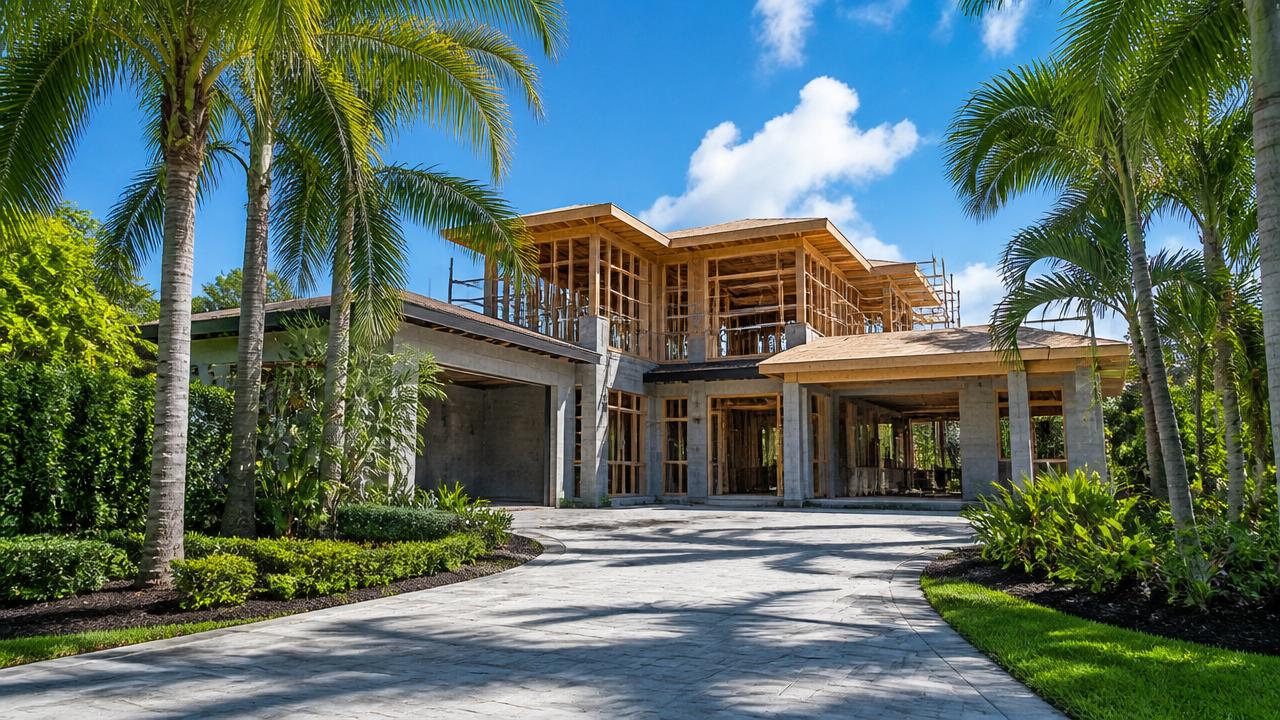
Population growth, job expansion, and tight inventory are fueling Florida's 2026 new construction boom. See market data, investor playbooks, and the private financing winning deals.
Florida's new construction market is one of the most active in the country heading into 2026. Population growth, job expansion, no state income tax, and chronic housing shortages are pushing builders, investors, and developers into new neighborhoods across Orlando, Tampa, Miami, Jacksonville, Naples, Sarasota, Fort Myers, Palm Beach, Lakeland, Ocala, and beyond.
Key Takeaways
- Florida gains nearly 1,000 new residents every day.
- New construction inventory remains tight across major metros.
- Construction and insurance costs continue to climb in 2026.
- Investors are expanding into secondary markets like Ocala, Lakeland, and Pensacola.
- Fast financing is the single biggest competitive advantage in this cycle.
- Private lending supports bridge, construction, land, and second-mortgage loans.
Table of Contents
- Why Florida's New Construction Market Is Booming
- Florida New Construction by the Numbers (2026)
- Luminary Insight: What We See on the Ground
- Why New Homes Cost More Than Existing Ones
- Opportunities for Real Estate Investors
- Florida Markets to Watch in 2026
- Common Mistakes Investors Make
- Why Financing Has Become the Deciding Factor
- Bank vs. Private Lending Comparison (Expanded)
- Market Forecast: What Could Happen Next?
- Quick Answers (Featured Snippets)
- How to Prepare Before Applying
- Sources
- Frequently Asked Questions
- About the Author
Why Florida's New Construction Market Is Booming
Florida continues to add roughly 900–1,000 net new residents every day, according to the U.S. Census Bureau. That sustained migration, paired with tourism, expanding tech corridors in Miami and Tampa Bay, growing healthcare and logistics employment, and a steady stream of retirees, keeps housing demand well ahead of supply in most major metros.
- Population growth, among the fastest in the U.S.
- Job expansion across tech, healthcare, logistics, and finance
- No state income tax attracting high earners and retirees
- Modern, energy-efficient new builds commanding premium pricing
- Hurricane-resilient construction driving rebuild and infill demand
- Build-to-rent communities meeting record rental demand
Florida New Construction Growth (2020–2026)
| Metric | 2020 | 2026 (Est.) | Trend |
|---|---|---|---|
| Florida population | 21.5M | ~23.6M | +9.8% |
| Single-family permits (annual) | ~128K | ~150K+ | Up |
| Median new home price (FL) | ~$330K | ~$455K | +38% |
| Median existing home price (FL) | ~$280K | ~$395K | +41% |
| Construction cost per SF (FL avg.) | ~$135 | ~$195 | +44% |
| Months of housing inventory | 4–6 | 2–4 | Tight |
| Build-to-rent starts (FL) | ~7K | ~22K+ | +200%+ |
| Average rental demand (renter HH growth) | Baseline | +18% | Up |
Data drawn from the U.S. Census Bureau New Residential Construction, Florida Realtors, the National Association of Realtors, the Federal Reserve, and Realtor.com Research.
Luminary Insight: What We See on the Ground
From our lending desk: Based on the investment scenarios our team reviews across Florida, the most common challenge investors face isn't finding opportunities, it's securing financing quickly enough to compete. Projects with a clear exit strategy, realistic budgets, and complete documentation tend to move through underwriting noticeably faster.
We've also seen growing interest in ground-up construction financing throughout Central Florida and the I-4 corridor as builders respond to continued housing demand, and a steady uptick in vacant land requests in Florida counties where entitled lots are getting harder to find.
Why New Homes Cost More Than Existing Ones
Across most Florida metros, newly built homes trade at a meaningful premium over comparable existing homes. Three structural forces explain the gap:
1. Limited buildable supply
Buildable lots in established neighborhoods are increasingly scarce. See our deeper analysis in Florida's Buildable Land Is Running Out. Constrained land supply lifts both lot prices and finished home prices.
2. Higher construction costs
Lumber, concrete, steel, roofing, hurricane-rated windows, insurance, labor, and permits have all risen sharply since 2020. The combined effect has pushed average Florida residential construction costs above $190/SF in many submarkets.
3. Modern features and resilience
New homes typically include open layouts, hurricane-resistant windows, energy-efficient HVAC, smart-home tech, builder warranties, and lower near-term maintenance, features today's buyers will pay extra for.
Opportunities for Real Estate Investors
For investors, builders, and developers, Florida's new construction cycle is creating multiple playbooks:
- Fix-and-flip: Acquire dated homes, modernize, and resell into strong buyer demand, often financed with bridge loans.
- Ground-up spec homes: Build single-family or small subdivisions financed via construction loans with staged draws.
- Build-to-rent (BTR): Develop single-family rental communities targeting long-term cash flow and appreciation through investment property loans.
- Vacant land acquisition: Lock down parcels with vacant land financing before competitors.
- Cash-out / second mortgages: Pull equity from existing properties using second mortgages to fund the next deal.
- Distressed / infill redevelopment: Teardowns, lot splits, and assemblage in built-out coastal markets.
Florida Markets to Watch in 2026
Orlando & Central Florida
Lake Nona, Horizon West, Winter Garden, and Kissimmee continue to lead Central Florida growth. Tech, healthcare, and tourism keep demand strong across Orange County and Osceola County. See our Orlando loans coverage for local programs.
Tampa Bay & St. Petersburg
Hillsborough, Pasco, and Pinellas counties are absorbing major job growth and downtown revitalization. Investors are targeting townhome infill and small-subdivision spec builds.
Jacksonville & Northeast Florida
Duval, St. Johns, and Clay counties offer some of the most affordable land in major Florida metros. Nocatee, World Golf Village, and the port economy are driving steady absorption.
Miami, Fort Lauderdale & Palm Beach
South Florida remains a global capital magnet. New luxury condos, townhomes, and infill single-family product continue to command premium pricing despite higher costs.
Naples, Fort Myers & Sarasota
Southwest Florida is in active rebuild and expansion mode. New construction is essential to replace aging inventory and meet ongoing migration demand.
Lakeland, Ocala, Pensacola & Boca Raton
Emerging and secondary markets like Lakeland, Ocala (anchored by the World Equestrian Center), Pensacola, and Boca Raton are seeing accelerating builder activity as buyers seek value outside the core metros. Explore our full Florida lending guide for county-by-county detail.
Common Mistakes Investors Make
- Underestimating construction costs. Hard costs in Florida have risen 30–45% since 2020, old per-SF assumptions can sink a pro forma.
- Ignoring carrying costs. Property taxes, insurance, debt service, and HOA dues during construction and lease-up are real money.
- Weak exit strategies. "Sell or refi" without a backup plan often becomes neither when rates or buyer demand shift.
- No contingency budget. 10–15% contingency on hard costs is a minimum, not a luxury.
- Delaying financing. Lining up a relationship with a bridge or construction lender before you have a deal is what wins competitive offers.
- Skipping due diligence. Title, survey, zoning, wetlands, flood zone, and impact fees can change a project's economics entirely.
Why Financing Has Become the Deciding Factor
Demand is strong, but the investors actually winning Florida deals in 2026 are the ones who can close fast. Traditional banks still require extensive documentation, multi-committee approval, and 30–60+ day timelines. In a market where great properties receive multiple offers within days, that's often too slow.
Private capital fills the gap. Private lenders focus primarily on the property's value, the project's business plan, and the borrower's experience, enabling faster decisions and flexible structures for qualified borrowers.
Bank vs. Private Lending Comparison (Expanded)
| Feature | Traditional Bank | Private Lending (Luminary) |
|---|---|---|
| Typical timeline | 30–60+ days | Often 7–14 days |
| Underwriting focus | W-2 income, DTI | Property + project + experience |
| Documentation load | Heavy | Streamlined |
| Typical loan purpose | Owner-occupied purchase / refi | Bridge, construction, land, value-add |
| Investment-property friendly | Limited | Designed for investors |
| LLC / entity borrowers | Often restricted | Commonly accepted |
| Closing costs | Standard bank fees + 3rd-party | Transparent; tailored to deal size |
| Extension options | Rare | Available, project-specific |
| Prepayment | Often penalized | Frequently flexible |
| Interest reserve | Uncommon | Often structured into the loan |
| Draw schedules | Rigid, slow inspections | Project-aligned, fast funding |
| Rehab funding | Limited | Built into bridge & construction loans |
| Vacant land financing | Rarely offered | Available for eligible parcels |
| Repeat borrower benefits | Minimal | Faster reapproval, relationship pricing |
| Appraisal requirements | Full URAR, longer turn | Asset-focused, faster turn |
| Structural flexibility | Low | Tailored to project |
Market Forecast: What Could Happen Next?
No market is guaranteed, but the structural drivers behind Florida's new construction cycle look durable. Continued population growth, sustained infrastructure investment, persistent housing undersupply, and a deep build-to-rent pipeline suggest the sector may remain active through 2027. Investors should still monitor interest rates, insurance pricing, property tax trends, and local inventory closely when evaluating opportunities, and stress-test their exit assumptions before committing capital.
Quick Answers (Featured Snippets)
What is a construction loan?
A construction loan is short-term financing used to build a new property. Funds are released in stages (draws) as construction milestones are completed and verified.
What is a bridge loan?
A bridge loan is short-term financing used to acquire or refinance a property quickly while a longer-term plan, like a sale, refinance, or renovation, is put in place.
What is after-repair value (ARV)?
ARV is the projected value of a property after planned renovations are completed, commonly used to size fix-and-flip and rehab loans.
Can LLCs get private loans in Florida?
Yes. Most private lenders, including Luminary, regularly close investment-property loans to LLCs and other entities, subject to underwriting.
How long do bridge loans last?
Most Florida bridge loans run 6–24 months, with terms tailored to the project's exit strategy.
How to Prepare Before Applying
Investors can dramatically speed up approvals by organizing key information up front:
- Purchase contract (or land contract)
- Property address and parcel ID
- Renovation or construction budget (with contingency)
- Project timeline and exit strategy
- Contractor information (for construction projects)
- Recent investor experience / track record
- Entity documents if borrowing through an LLC
- Financial documentation requested by the lender
Ready to Finance Your Next Florida Investment?
Luminary Private Lending provides fast, flexible private capital for Florida real estate investors, builders, and developers, including bridge loans, construction loans, vacant land financing, and second mortgages. Explore our full Florida private lending coverage or apply now to discuss your project with our team.
Sources
- U.S. Census Bureau. Florida Population Estimates (2025)
- U.S. Census Bureau. New Residential Construction (2025–2026)
- Florida Realtors. Housing Market Reports (2026)
- National Association of Realtors. Existing Home Sales (2025–2026)
- Federal Reserve. Interest Rate Data (2026)
- Realtor.com Research. New Construction Trends (2026)
Frequently Asked Questions
About the Author
Written by Ivan Padilla, Director of Growth and Real Estate Lending Specialist, Luminary Private Lending.
Reviewed by Kevin Mazzola, Founder, Luminary Private Lending.
Last updated: June 26, 2026.
Disclaimer: This article is for educational purposes only and does not constitute legal, financial, tax, or investment advice. Loan approval is subject to underwriting, property eligibility, and borrower qualification.
Related Florida Lending Resources
Keep Reading
Latest Insights
Keep exploring Florida private lending insights.
Florida Real Estate Market
Florida Housing Construction Trends 2026: What Fewer Building Permits Mean for Real Estate Investors
Florida building permits have slowed in 2026. Here's what fewer new construction starts mean for investors, plus the loan programs that help you move faster than traditional banks.
Florida Market
Construction Loan Florida: Miami's New Construction Market Offers Builders Opportunities in 2026
Miami's new construction market continues to expand in 2026, with new-build premiums above 300%. See how a Construction Loan Florida program helps builders win land, fund draws, and finish projects faster across Miami-Dade and the rest of South Florida.
Florida Market
Miami-Dade Development Boom Creates New Opportunities for Florida Real Estate Investors in 2026
Miami-Dade's 2026 development boom is creating fresh opportunities for Florida Real Estate Investors. See how Florida Hard Money Lenders Residential financing, bridge, construction, land, and second mortgages, helps investors move first in Miami, Hialeah, Doral, Kendall, Coral Gables, and Homestead.
Florida Real Estate Market
Southwest Florida Foreclosures Are Rising in 2026: What It Means for Florida Real Estate Investors
Cape Coral and Fort Myers are leading Florida in foreclosure filings. It's not another 2008, it's a market reset. Here's what Florida real estate investors need to know, and how to move fast.
Florida Real Estate Market
Fastest-Growing Home Prices Around Orlando in 2026: What Florida Investors Need to Know
Where Orlando-area home prices are rising fastest in 2026, which suburbs to watch, and how bridge, construction, second-mortgage, and vacant-land financing help investors act.
Florida Housing Market
Florida Housing Market Update 2026: What Rising Northeast Florida Home Prices Mean for Real Estate Investors
Northeast Florida home prices climbed ~5.1% while inventory improved and homes sold faster. See what this means for investors using bridge loans, construction financing, and value-add strategies across Jacksonville, St. Augustine, and surrounding counties.
Commercial Real Estate
Florida Commercial Real Estate Market 2026: Why Investors Prefer Private Lending
Higher rates, tighter bank underwriting, and rising insurance costs are reshaping Florida's commercial real estate market in 2026. See the sectors, regions, and private lending strategies investors are using now.
Florida Housing Market
Florida Housing Market 2026: Is Now a Better Time for Real Estate Investors?
Florida's housing market is rebalancing in 2026, more inventory, longer days on market, and real negotiating room. See what it means for investors, builders, and the bridge and construction financing that wins deals.
Florida Market
Florida Private Lending: Why Orlando's Tech Growth Is Creating Real Estate Investment Opportunities in 2026
Orlando's tech boom, Gen Z migration, and Central Florida growth corridors are creating real opportunities for investors. See how Florida private lending, bridge, construction, land, and second-mortgage programs, helps close deals faster in 2026.
Florida Market
How Florida's 2024 Hurricanes Are Creating New Real Estate Investment Opportunities Across Tampa Bay
Hurricanes Helene and Milton reshaped Tampa Bay real estate. Here is how investors, builders, and owners are using bridge loans, construction financing, vacant land financing, and second mortgages to act on the rebuild.
Florida Market
Osceola County Growth Update: Impact of 1,000 New Homes on Florida Real Estate Investors
Osceola County is set to add approximately 1,000 new homes, here's what the expansion could mean for Florida investors, builders, landowners, and developers watching Central Florida.
Florida Market
Will Florida End Property Taxes? What Real Estate Investors Need to Know
Florida is debating major property tax changes. Here's a factual, investor-focused breakdown of how the system works today, what reform could mean for cash flow and values, and what to do right now.