Florida Housing Market
Is Florida Building Enough Homes? What Every Investor Needs to Know in 2026
Published By Luminary Private Lending
- Author:
- Ivan Padilla
- Reviewed By:
- Kevin Mazzola
- Published:
- June 29, 2026
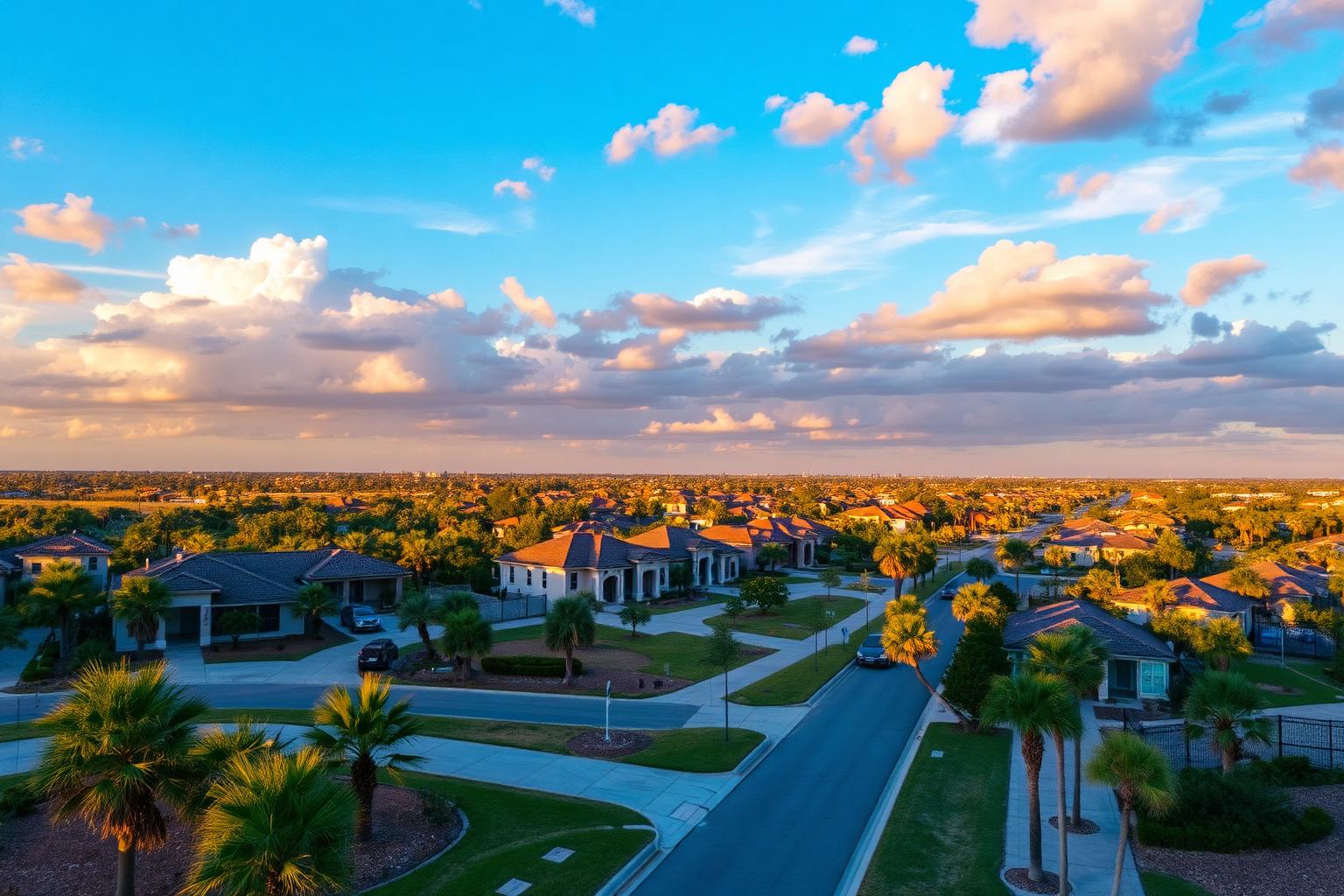
Florida's home construction has slowed in Orlando and other markets while demand keeps climbing. See the latest data, investor playbooks, and the bridge and construction financing winning deals in 2026.
Florida continues to attract new residents, businesses, and real estate investors every year. Strong job growth, warm weather, and no state income tax keep this state at the top of relocation rankings. But as more people move in, a hard question is showing up in builder boardrooms and investor models: is Florida actually building enough homes to keep up?
Recent reports show new home construction slowing across parts of Central Florida, with fewer building permits issued than in prior years. According to the U.S. Census Bureau's Building Permits Survey, residential permit activity in several Florida metros has cooled from the highs of 2022–2023, even as the state's population continues to expand.
The short answer: housing demand is strong, supply is tightening, and prepared investors have real opportunities.
Key Takeaways
- Florida remains one of the fastest-growing states in the U.S. by net migration.
- Single-family permit activity has cooled across Orlando, Tampa, Jacksonville, and parts of South Florida.
- Limited supply plus steady demand is creating a multi-year window for builders and value-add investors.
- Private lending. bridge, construction, vacant land, and second mortgages, helps qualified investors compete on speed.
Table of Contents
- Florida Housing Snapshot (2026)
- Why Florida Construction Has Slowed
- Population & Migration Trends
- Housing Inventory & Supply
- Statewide Market Coverage
- Why This Matters for Investors
- Construction Loans
- Bridge Loans
- Vacant Land Opportunities
- Loan Type Comparisons
- Investor Case Study
- Topic Cluster & Related Reading
- Long-Term Outlook
- FAQs
- Sources & Editorial
Florida Housing Snapshot (2026)
2026 At-a-Glance
- Population: Florida continues to add hundreds of thousands of net new residents per year.
- Single-family permits: Down meaningfully across most major metros vs. the 2022 peak.
- Insurance premiums: Among the highest in the U.S., reshaping investor pro formas.
- Bridge loan demand: Elevated as investors seek speed over rate.
| Indicator | 2026 Direction | What It Means for Investors |
|---|---|---|
| Population growth | Continued net in-migration | Sustained housing demand |
| Single-family permits (Central FL) | Down vs. 2022–2023 peaks | Future supply tightening |
| Existing-home inventory | Below long-term average in many counties | Pricing power for sellers |
| Mortgage rates | Elevated vs. pre-2022 | Higher carrying costs, slower turnover |
| Construction costs | Still high; partial stabilization | Underwriting must stress-test budgets |
| Insurance premiums | Elevated statewide | Impacts cash-flow and exit pricing |
| Bridge loan demand | Rising | Speed is the new competitive edge |
Sources: U.S. Census Bureau, Florida Realtors, Redfin Data Center, FHFA House Price Index, FRED (St. Louis Fed), NAHB, CoreLogic.
Why Florida Construction Has Slowed
Builders are still launching new communities, but several headwinds are making it harder to break ground. Each driver below is worth its own underwriting overlay.
Higher Interest Rates
Construction lines reprice as the Federal Reserve holds rates elevated. Carry costs on land and vertical construction have risen sharply since 2021, compressing margins on lower-velocity product.
Insurance Costs
Wind, flood, and builder's risk premiums in Florida are among the highest in the country. Higher insurance reserves push pro forma exits up and squeeze investor IRR, especially on coastal product.
Material & Labor Prices
Per the National Association of Home Builders, construction materials remain well above pre-2020 levels even after recent stabilization. Trade labor remains tight statewide.
Permit & Approval Delays
Permitting timelines in some Central and South Florida jurisdictions have lengthened, pushing draw schedules and stretching interest reserves. Sophisticated builders now bake 30–90 day permitting buffers into every model.
"In our pipeline this year, the projects that close fastest aren't the cheapest deals, they're the ones with a clean title, a realistic budget, and a credible exit. Speed almost always beats rate."
Ivan Padilla, Luminary Private Lending
Florida's Population & Migration Trends
Even with slower construction, Florida keeps gaining residents. U.S. Census Bureau estimates have consistently ranked Florida among the fastest-growing states by net migration. People keep arriving for:
- Employment opportunities and corporate relocations
- Retirement communities and 55+ developments
- Lifestyle, beaches, and warm climate
- Expanding local economies, especially across Central Florida
- No state income tax and a business-friendly regulatory environment per the Florida Department of Commerce
Orlando, Tampa, Jacksonville, and the Southwest Florida corridor remain among the most active in the state for new jobs, schools, and infrastructure. As long as inbound migration continues, housing demand stays elevated.
Housing Inventory & Supply
Limited inventory is one of the defining features of today's Florida market. When builders deliver fewer homes and demand stays high, the result is predictable:
- More competition among buyers
- Higher home values in desirable submarkets
- Faster sales velocity for well-priced product
- Continued demand for new construction and infill
Months of supply data from Florida Realtors and FRED continues to run below long-term norms across most major Florida MSAs. For investors, this is where opportunities surface, buying, renovating, or developing properties before additional supply hits the market.
Statewide Market Coverage
The slowdown isn't uniform. Each Florida metro is moving at its own speed, and capital strategy should follow.
- Orlando & Central FL, Permit pullback, but population and theme-park-adjacent jobs still expanding. See our Orange County lending page.
- Tampa Bay, Inventory rebuilding faster than peers; bridge demand strong for value-add multifamily.
- Miami & Miami-Dade, Land scarcity drives infill economics; insurance is the swing variable.
- Jacksonville, Most affordable major metro; strong build-to-rent thesis.
- Fort Myers & Naples, Post-hurricane rebuild plus retirement migration; vacant land repriced.
- Sarasota, Lakeland, Ocala, Secondary metros benefiting from spillover demand from Tampa and Orlando.
- West Palm Beach, Fort Lauderdale, Wealth migration continues; luxury and small-balance commercial active.
- Gainesville, Stable university-anchored rental demand.
For metro-specific underwriting notes, see our Florida private lending hub.
Why This Matters for Real Estate Investors
Experienced investors watch housing supply closely because it shapes future values. When supply stays tight, opportunities tend to cluster in:
- Vacant land purchases in growth corridors
- Residential development and infill projects
- Ground-up new construction
- Investment properties for rent or resale
- Fix-and-flip and value-add plays
- Build-to-rent portfolios
Every investment has risk. But understanding market trends, and being pre-positioned with financing, lets investors act when the right deal appears.
"The investors winning right now treat financing the same way they treat property selection: it gets diligence, structure, and a relationship, not just a rate quote."
Kevin Mazzola, Luminary Private Lending
Builders Need More Than Construction Experience
Today's builders are juggling material pricing, labor scheduling, permit timelines, cash flow, interest costs, project management, and unexpected delays. Reliable financing at every phase keeps projects on schedule and protects margins.
Construction Loans
A construction loan is short-term financing for new building projects. Depending on the deal, funds can be used for land acquisition, site preparation, construction costs, materials, labor, and project completion. Most loans are structured as draw schedules, capital is released as milestones are verified, which protects both borrower and lender.
Many builders prefer construction financing to preserve cash reserves and keep working capital available while the project is underway.
Bridge Loans
Not every investment follows a clean timeline. Bridge loans provide short-term capital for situations like:
- Purchasing investment properties before a sale closes
- Acquiring development land quickly
- Refinancing existing investment properties
- Preventing delays during acquisitions
- Closing on time-sensitive opportunities
Vacant Land Opportunities
As Florida grows, buildable land is getting harder to find in many markets. New subdivisions, retail, and industrial parks have absorbed land that sat untouched a decade ago. That's why more investors are turning to vacant land financing to position for future development, small residential communities, custom homes, investment properties, and long-horizon resale plays.
Loan Type Comparisons
Bridge vs. Construction
| Feature | Bridge Loan | Construction Loan |
|---|---|---|
| Purpose | Short-term acquisition or refinance | New construction or major rehab |
| Typical Term | 6–24 months | Project duration (12–24 months) |
| Funding | Lump sum at close | Draw schedule by milestone |
| Best For | Investors needing speed | Builders and developers |
| Exit Strategy | Sale or permanent refi | Refinance or sale after completion |
Construction vs. Bank vs. Hard Money vs. Private Lending
| Feature | Bank Construction | Hard Money | Private Lending (Luminary) |
|---|---|---|---|
| Approval speed | 30–60+ days | Days | Days to ~2 weeks |
| Credit focus | Heavy | Asset-only | Asset & exit-focused |
| Draws | Strict, slower | Often lump-sum | Structured, responsive |
| Flexibility on scope changes | Low | Variable | High |
| Best for | Owner-occupants, large balance sheet | Quick one-off flips | Repeat Florida investors |
Bridge vs. HELOC vs. Second Mortgage
| Feature | Bridge | HELOC | Second Mortgage |
|---|---|---|---|
| Lien position | 1st (typical) | 2nd | 2nd |
| Speed | Fast | Moderate | Fast |
| Use case | Acquire / reposition | Revolving access | Lump-sum equity tap |
| Typical borrower | Investor | Homeowner | Investor pulling equity |
Buying Existing vs. Building New
| Factor | Buy Existing | Build New |
|---|---|---|
| Time to cash flow | Days–weeks | 12–24+ months |
| Margin potential | Lower, faster | Higher, slower |
| Execution risk | Lower | Higher |
| Financing fit | Bridge / DSCR | Construction / land + construction |
Investor Case Study (Illustrative)
Scenario: A repeat borrower identified an infill lot in an Orlando-area growth corridor and needed to close before a competing offer.
- Asset: Vacant residential parcel, entitled.
- Loan type: Vacant land bridge, with a path to construction financing at permit.
- Targeted LTV: Conservative, sized to a credible appraisal and sale-comps band.
- Timeline: Term sheet inside 48 hours; funding within ~2 weeks of clean title.
- Exit: Refinance into a construction loan once permits cleared; build-and-sell plan.
Illustrative composite based on common Luminary scenarios; not a specific client transaction.
Topic Cluster & Related Reading
This article is part of a broader topic cluster on Florida housing supply and investor financing:
- Florida Housing Market Growth in 2026
- Florida's Buildable Land Is Becoming More Limited
- Florida's New Construction Market Continues to Grow
- How Much Income Do You Need to Buy a Home in Florida?
- Bridge Loans · Construction Loans · Vacant Land · Second Mortgages
- About Luminary · Contact · Apply
Florida's Long-Term Outlook Remains Positive
New construction may be slower today, but the structural drivers of Florida real estate remain in place: continued population growth, expanding infrastructure, strong job creation, growing business activity, and high housing demand. Market conditions will fluctuate, but the underlying demand for housing supports long-term investment opportunities.
How Luminary Private Lending Can Help
Every project has unique financing needs. Talk to our team about:
- Apply now
- Free lending consultation
- Speak with a lending specialist about your scenario
- Estimate your bridge loan LTV
- Walk through a construction budget
Final Thoughts
So, is Florida building enough homes? Recent data suggests the pace of new construction has slowed in parts of the state, while Florida continues to welcome new residents, businesses, and investment opportunities. That combination of steady demand and slower supply can create opportunities for builders, developers, and investors prepared to act. Contact Luminary Private Lending or start your application today.
Sources & Editorial
- U.S. Census Bureau. Building Permits Survey
- Federal Reserve. Monetary Policy
- FRED (St. Louis Fed) Economic Data
- FHFA House Price Index
- Florida Realtors. Research & Statistics
- NAHB. Housing Economics
- CoreLogic Intelligence
- Freddie Mac Research
- Florida Department of Commerce
- HUD. Community Planning Data
About the Author: Ivan Padilla works directly with Florida real estate investors and builders on bridge, construction, vacant land, and second mortgage financing.
Reviewed by: Kevin Mazzola, Luminary Private Lending.
Editorial policy: Articles are written by Luminary's lending team, reviewed by a second team member, and refreshed when material market or policy data changes.
Fact-checking: Data points are sourced to the agencies and publications cited above. Illustrative scenarios are composites and not specific client transactions.
Last reviewed: June 29, 2026.
Related Florida Lending Resources
Keep Reading
Latest Insights
Keep exploring Florida private lending insights.
Florida Housing Market
Florida Housing Market Update 2026: What Rising Northeast Florida Home Prices Mean for Real Estate Investors
Northeast Florida home prices climbed ~5.1% while inventory improved and homes sold faster. See what this means for investors using bridge loans, construction financing, and value-add strategies across Jacksonville, St. Augustine, and surrounding counties.
Florida Housing Market
Florida Housing Market 2026: Is Now a Better Time for Real Estate Investors?
Florida's housing market is rebalancing in 2026, more inventory, longer days on market, and real negotiating room. See what it means for investors, builders, and the bridge and construction financing that wins deals.
Florida Real Estate Market
Florida Housing Construction Trends 2026: What Fewer Building Permits Mean for Real Estate Investors
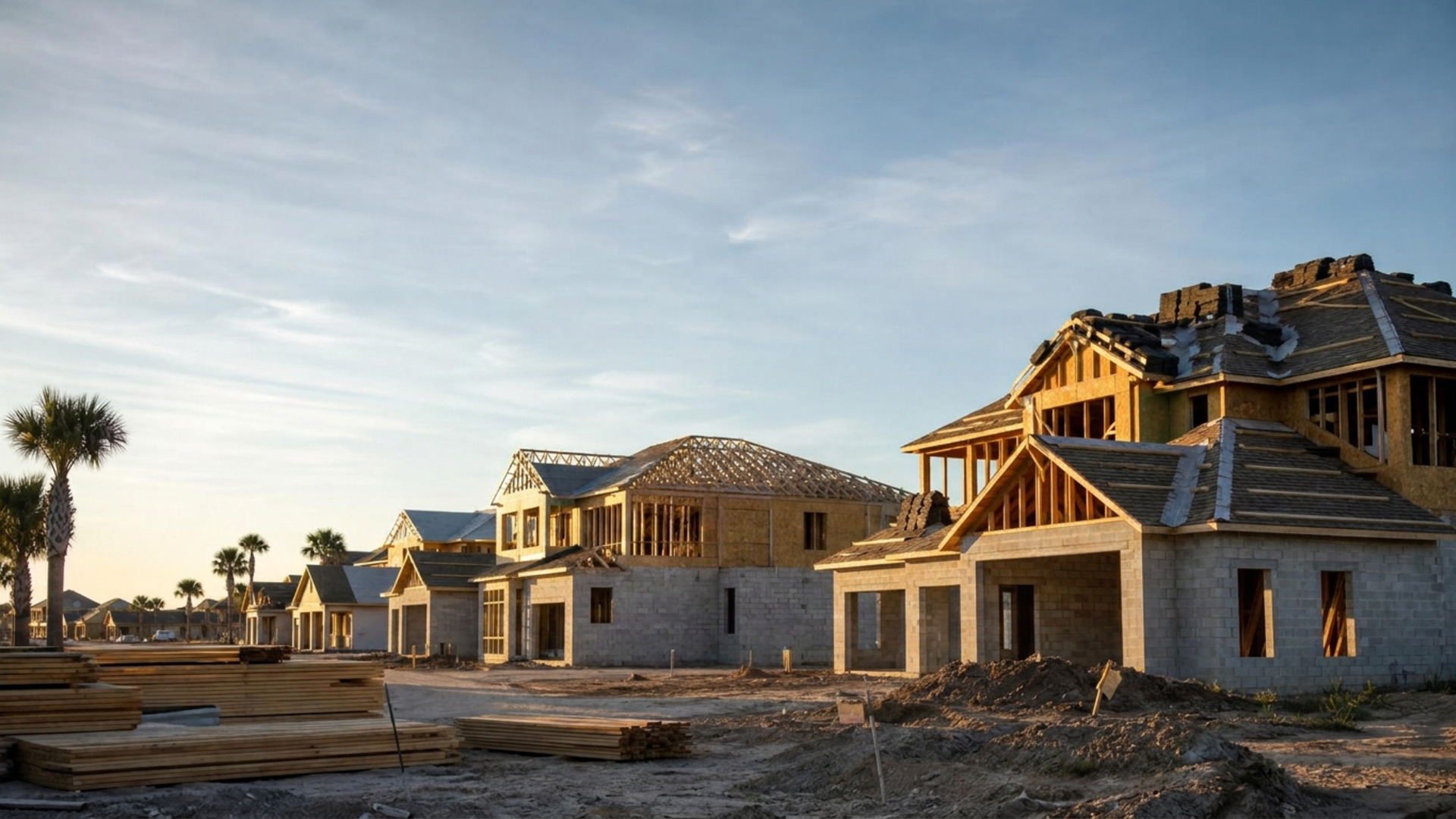
Florida building permits have slowed in 2026. Here's what fewer new construction starts mean for investors, plus the loan programs that help you move faster than traditional banks.
Florida Market
Florida Housing Market Growth in 2026: Key Insights for Investors
Florida's 2026 housing market is opening one of the best buying windows in years. See investor stats, city outlooks, county growth, and how private lending closes deals fast.
Florida Market
Osceola County Growth Update: Impact of 1,000 New Homes on Florida Real Estate Investors
Osceola County is set to add approximately 1,000 new homes, here's what the expansion could mean for Florida investors, builders, landowners, and developers watching Central Florida.
Florida Real Estate Market
Southwest Florida Foreclosures Are Rising in 2026: What It Means for Florida Real Estate Investors
Cape Coral and Fort Myers are leading Florida in foreclosure filings. It's not another 2008, it's a market reset. Here's what Florida real estate investors need to know, and how to move fast.
Florida Real Estate Market
Fastest-Growing Home Prices Around Orlando in 2026: What Florida Investors Need to Know
Where Orlando-area home prices are rising fastest in 2026, which suburbs to watch, and how bridge, construction, second-mortgage, and vacant-land financing help investors act.
Commercial Real Estate
Florida Commercial Real Estate Market 2026: Why Investors Prefer Private Lending
Higher rates, tighter bank underwriting, and rising insurance costs are reshaping Florida's commercial real estate market in 2026. See the sectors, regions, and private lending strategies investors are using now.
Florida New Construction
Why Florida's New Construction Market Offers Opportunities for Real Estate Investors in 2026
Population growth, job expansion, and tight inventory are fueling Florida's 2026 new construction boom. See market data, investor playbooks, and the private financing winning deals.
Florida Market
Florida Bridge Loans: How Investors Are Winning More Deals With Private Capital in 2026
Florida bridge loans are helping investors, builders, and developers close faster in Orlando, Tampa, Miami, Jacksonville, and Fort Lauderdale. Charts, comparisons, and a real bridge-loan case study for 2026.
Florida Market
Miami-Dade Development Boom Creates New Opportunities for Florida Real Estate Investors in 2026
Miami-Dade's 2026 development boom is creating fresh opportunities for Florida Real Estate Investors. See how Florida Hard Money Lenders Residential financing, bridge, construction, land, and second mortgages, helps investors move first in Miami, Hialeah, Doral, Kendall, Coral Gables, and Homestead.
Florida Market
Tampa Homes Under $400,000 in 2026: Where Buyers Are Still Finding Value in Tampa Bay
Tampa remains one of Florida's hottest real estate markets. See where buyers, investors, and property owners are still finding homes under $400,000 across Tampa Bay in 2026, plus the financing options that can help you move on them.