Florida Market
Florida Private Lending: Why Orlando's Tech Growth Is Creating Real Estate Investment Opportunities in 2026
Published By Luminary Private Lending
- Author:
- Ivan Padilla
- Reviewed By:
- Kevin Mazzola
- Published:
- June 18, 2026
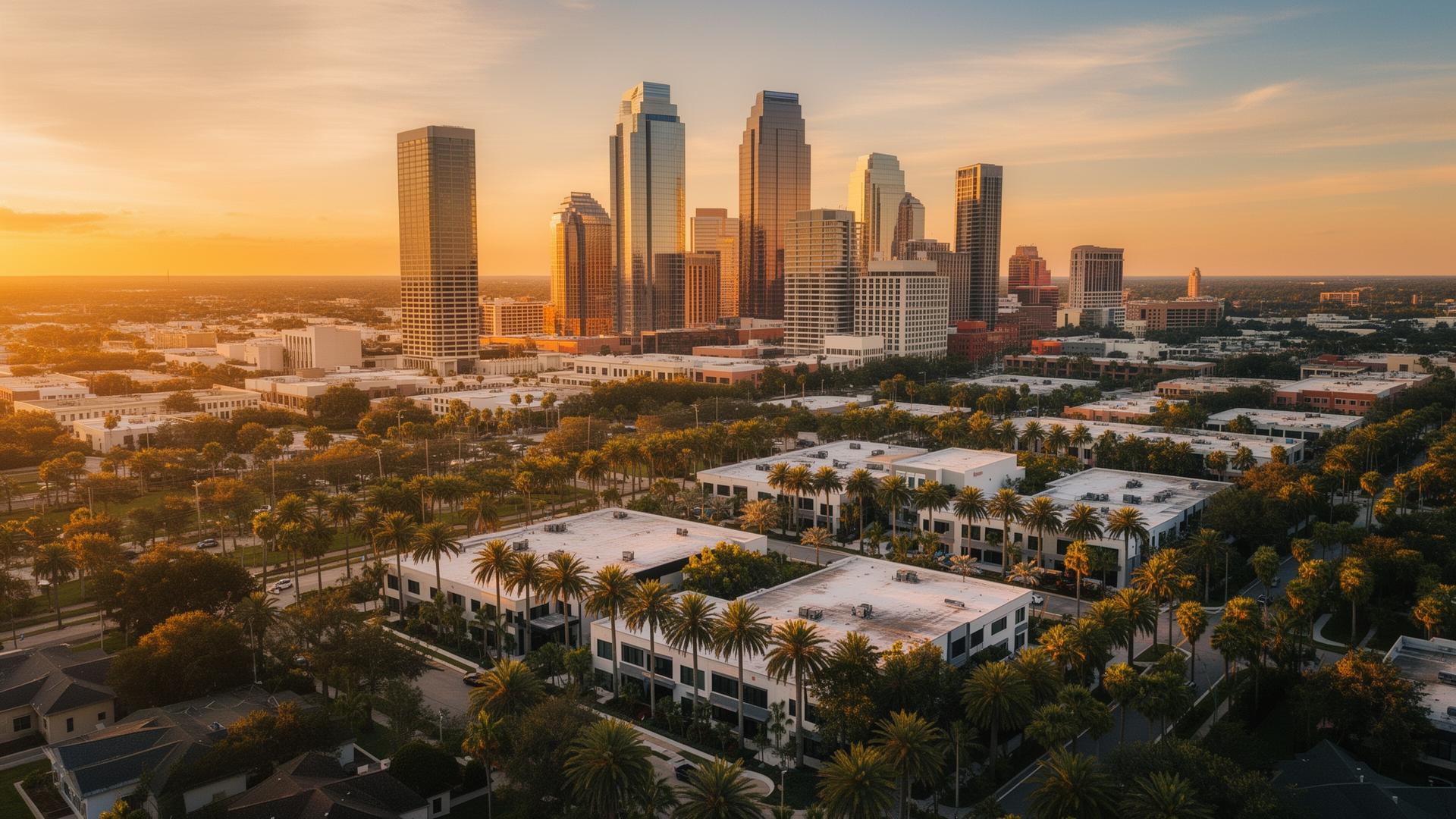
Orlando's tech boom, Gen Z migration, and Central Florida growth corridors are creating real opportunities for investors. See how Florida private lending, bridge, construction, land, and second-mortgage programs, helps close deals faster in 2026.
Florida private lending is becoming the financing tool of choice for investors, builders, and developers chasing Orlando's 2026 growth story. Tourism may still define the city in the popular imagination, but a fast-expanding technology, healthcare, aerospace, and fintech base, paired with one of the largest Gen Z migration waves in the country, is rewriting the real estate playbook across Central Florida.
This guide breaks down why Orlando is becoming a business relocation hub, where the highest-conviction growth corridors sit, how interest rates and risk fit into the picture, and how a well-structured Florida private lending program helps investors close on deals that bank financing typically can't reach in time.
Updated June 18, 2026 · Written by Luminary Private Lending
Table of Contents
- Why Gen Z is Choosing Orlando
- Orlando's Growing Technology Sector
- Why Orlando Is Becoming a Business Relocation Hub
- Top Orlando Growth Corridors Investors Should Watch
- Orlando Growth by the Numbers
- Why Are Investors Looking at Orlando in 2026?
- Why Population Growth Matters for Real Estate Investors
- The Best Opportunities for Florida Investors
- Why Builders Are Increasing New Construction Activity
- Why Florida Private Lending Is Becoming More Important
- How Interest Rates Affect Investment Opportunities
- Risks Investors Should Consider
- Financing Opportunities for Orlando Investors
- How Luminary Private Lending Helps Investors Move Faster
- About Luminary Private Lending
- Frequently Asked Questions
Why Gen Z Is Choosing Orlando
Younger professionals are rethinking where to live and work. Cities like San Francisco, Seattle, and New York still have strong job markets, but affordability and quality of life are pushing a steady stream of Gen Z and millennial workers toward Florida, and Orlando in particular.
The pull factors are well documented:
- No state income tax
- Growing job opportunities across multiple industries
- Warm weather year-round
- Lower cost of living than most coastal tech hubs
- Strong, liquid real estate market
- Expanding business ecosystem from startups to Fortune 500 regional HQs
Fortune has flagged Orlando as one of the top destinations for younger workers who want career growth without the coastal price tag, see Fortune coverage on Gen Z migration trends. The downstream effect is a deeper, more durable housing demand base across the Central Florida housing market.
Orlando's Growing Technology Sector
Orlando is no longer just a tourism town. Central Florida has built one of the most diversified regional economies in the Southeast, with serious investment flowing into:
- Technology and software development
- Aerospace and defense contracting
- Healthcare and biotech
- Financial technology
- Artificial intelligence and modeling/simulation
- Advanced manufacturing
The Orlando Economic Partnership has tracked sustained employer expansion across Orange, Osceola, Seminole, and Lake counties. As companies hire, housing demand follows, opening doors for residential and commercial investors who can move quickly with Florida private lending capital behind them.
Why Orlando Is Becoming a Business Relocation Hub
Three forces are turning Orlando into a true business relocation hub in 2026:
Operating Cost Advantages
Office rents, wages, and energy costs in Orlando are meaningfully lower than in coastal tech metros. Combined with no state income tax, the after-tax math on relocating an office, or a workforce, is hard to ignore.
Talent Pipeline
The University of Central Florida is one of the largest universities in the country and feeds a steady stream of engineers, designers, healthcare professionals, and finance graduates into the local market. That talent pipeline is one of the most underrated parts of the Orlando story.
Logistics and Infrastructure
Orlando International Airport ranks among the busiest in the U.S., and Brightline's high-speed rail connection to South Florida has tightened the Orlando–Miami corridor into a single, walkable-by-train economic zone. That logistics backbone makes Orlando a credible HQ option for companies that previously defaulted to Atlanta, Dallas, or Charlotte.
Each of these forces creates secondary demand for housing, retail, industrial, and small office, the bread-and-butter assets that Florida private lending programs are designed to fund.
Top Orlando Growth Corridors Investors Should Watch
Orlando's growth is not evenly distributed. Investors targeting Lake Nona, Winter Garden, Horizon West, Clermont, Kissimmee, and Sanford are seeing the most active residential and commercial expansion. Below is a quick read on the corridors with the most institutional and private capital flowing through them in 2026.
| Corridor | County | Why Investors Care |
|---|---|---|
| Lake Nona | Orange | Medical City, sports performance campuses, and high-end residential expansion |
| Horizon West | Orange | One of the largest master-planned communities in the U.S.; strong rental demand |
| Winter Garden | Orange | Walkable downtown, school quality, and steady appreciation |
| Clermont | Lake | Affordable land, commuter access, and new build-to-rent activity |
| Kissimmee | Osceola | Short-term rental demand from theme-park visitors plus long-term workforce housing |
| Sanford | Seminole | SunRail access, historic district revitalization, and infill opportunity |
Lake County and Polk County are also worth watching as developable land in Orange and Seminole tightens further.
Orlando Growth by the Numbers
The macro data lines up with what we see on the desk. Here is a directional snapshot drawn from public sources including the U.S. Census Bureau, the U.S. Bureau of Labor Statistics, and the Florida Department of Economic Opportunity.
| Metric | Recent Reading |
|---|---|
| Orlando MSA population growth (annual) | ~1.8% |
| Florida statewide population growth (annual) | ~1.5% |
| New residential permits, Orlando MSA | 30,000+ annually |
| Median home price, Orlando MSA | ~$390,000 |
| Orlando MSA non-farm job growth (annual) | ~2.4% |
| Tech sector job growth, Central Florida | Above national average |
Figures are directional and rounded for readability. Always verify against current local property and economic reports before underwriting a deal.
A simple way to visualize the trend is a year-over-year bar chart of Orlando MSA permits and population growth running consistently above the Florida statewide line for the last five years, a pattern that supports both rental absorption and new-construction velocity.
Why Are Investors Looking at Orlando in 2026?
Investors are focusing on Orlando because of sustained population growth, accelerating technology and healthcare job expansion, strong housing demand, and ongoing infrastructure investment. These factors are creating durable opportunities across rental properties, new construction projects, land development, and investment property acquisitions throughout Central Florida, and Florida private lending is how most of those deals are getting funded.
Why Population Growth Matters for Real Estate Investors
Population growth is the single most important macro variable in residential real estate. When more people move in, demand rises across single-family homes, rental properties, commercial space, and new construction. Central Florida growth is concentrated across Orange County, Osceola County, Seminole County, Lake County, and Polk County, exactly the counties where Luminary deploys Florida private lending capital.
Investors who follow population data tend to outperform investors who chase headlines, because rising demand lifts occupancy rates, supports rent growth, and underwrites property values for the long run.
The Best Opportunities for Florida Investors
Fix-and-Flip Projects
Investors buy properties needing repairs and resell them. Speed of capital is critical, desirable assets attract multiple offers. Investors seeking short-term capital often use our Bridge Loans Florida program to lock in deals before a bank could clear underwriting.
New Construction Projects
Population growth drives housing demand. Builders are actively pursuing single-family homes, townhome communities, and build-to-rent projects across Horizon West, Winter Garden, and Clermont. Builders frequently utilize Construction Financing Florida solutions to fund land, vertical construction, and lease-up.
Vacant Land Opportunities
As entitled land in Orange and Seminole tightens, developers are moving into Osceola and Lake counties for residential, commercial, and mixed-use plays. Developers pursuing land opportunities may benefit from Vacant Land Financing Florida structured to support hold-and-entitle strategies.
Rental Property Investments
Younger professionals typically rent before buying. That creates real opportunity in single-family rentals and small multifamily, particularly along SunRail corridors and near major employers like Lake Nona Medical City.
Why Builders Are Increasing New Construction Activity
Builders are increasing activity in Central Florida for three reasons. First, demand absorption keeps pace with supply, new inventory in Horizon West and Lake Nona is leasing or selling quickly. Second, build-to-rent has matured into a real institutional asset class, and Florida is one of the most active states in the country for that strategy. Third, private capital, through Florida private lending programs, has filled the gap left by banks that pulled back on construction commitments after the 2024–2025 rate cycle.
For experienced builders, the result is a market with real demand and accessible capital, a combination that is harder to find than it looks in most of the U.S. right now.
Why Florida Private Lending Is Becoming More Important
Traditional financing often involves long underwriting timelines, extensive documentation, and multiple approval steps. In a market moving as fast as Orlando, that creates real deal risk.
Florida private lending, including hard money loans Florida, private money lending Florida, and Florida bridge financing, offers a different path. It is asset-based, faster, and structured around the project's exit rather than only the borrower's W-2.
| Benefit | Investor Advantage |
|---|---|
| Faster Funding | Secures deals with speed, often 7–14 days |
| Flexible Underwriting | Asset and exit-focused review |
| Bridge Financing | Capital for short-term opportunities |
| Construction Funding | Supports ground-up development projects |
| Land Financing | Aids in land acquisitions and entitlement holds |
| Second Mortgages | Unlocks equity from existing investment property financing |
How Interest Rates Affect Investment Opportunities
Rates matter, but they matter differently in private credit than in conventional mortgages. A Florida private lending facility is typically short-duration, 12 to 24 months, and priced on the asset, not on a 30-year amortization. That means the cost of capital is a line item in the deal pro forma, not a long-term commitment.
In practice, investors evaluate three things together: the cost of the loan, the speed at which it closes, and the strength of the exit (sale, refinance, or rental). When a deal is right, paying a few hundred basis points more for speed is often the difference between owning a profitable Orlando asset and missing the trade.
Where rates do matter is on the take-out side. As long-term rates ease, refinances of bridge and construction loans into permanent debt get easier and cheaper, which improves outcomes for investors using Florida private lending today as a stepping stone.
Risks Investors Should Consider
No real estate market is risk-free, including Orlando. Investors should size positions and underwrite with these risks in mind:
- Insurance costs. Florida insurance premiums remain elevated; always model worst-case scenarios for premium increases.
- Storm exposure. Wind, flood, and surge risk varies sharply by county and elevation, confirm flood zones and policy availability.
- Construction costs. Labor and materials can move; build cost contingency into every Construction Financing Florida draw schedule.
- Permit timelines. Orange, Osceola, and Lake counties each have their own pacing, model a realistic permit horizon.
- Exit risk. Always plan multiple exits (sale, refinance, rental) so a single market shift doesn't trap capital.
These risks are manageable when the financing structure is right. Florida private lending programs are designed to fund the deal and protect the exit at the same time.
Financing Opportunities for Orlando Investors
Orlando's growth has created demand for a full stack of financing solutions, and most active investors use more than one over the course of a project. Here is how the products in a Florida private lending toolkit typically fit together for a Central Florida deal.
Bridge Loans
Bridge financing is ideal for fix-and-flip, acquisition, and time-sensitive deals. Investors typically use a Florida bridge loan to close in 7–14 days, complete a value-add, and then refinance or sell. Up to 65% loan-to-value, fast closings, and no income verification keep the process fast and predictable.
Construction Financing
Ground-up construction in Horizon West, Winter Garden, or Lake Nona benefits from a purpose-built Construction Financing Florida facility. Up to 70% of after-construction value, structured draws, and ground-up funding give builders the cash-flow discipline they need to stay on schedule.
Vacant Land Financing
As entitled land tightens, more investors are using Vacant Land Financing Florida programs to hold parcels through entitlement or pull cash out of land they already own, a strategy traditional banks rarely support at the same speed.
Second Mortgages
Owners with equity in existing investment property can use a second mortgage to fund the next acquisition, cover construction soft costs, or bridge between projects without disturbing a low-rate first mortgage.
Commercial Real Estate Financing
Small commercial deals, flex industrial, mixed-use, and infill retail, increasingly run through Florida private lending channels rather than community banks. Speed and creative structure are the usual reasons investors choose private capital for commercial real estate financing in Central Florida.
How Luminary Private Lending Helps Investors Move Faster
Luminary Private Lending focuses on Florida private lending solutions for investors, builders, and developers across Orange, Osceola, Seminole, Lake, and Polk counties. We underwrite the asset, the exit, and the sponsor, and we close in days, not weeks.
"Orlando's growth isn't a story anymore, it's a balance sheet. The investors winning here have capital ready before the listing hits."
Ivan Padilla, Director of Growth and Real Estate Lending Specialist, Luminary Private Lending
About Luminary Private Lending
Luminary Private Lending provides Florida-focused financing solutions for investors, builders, and developers. Our team specializes in bridge loans, construction financing, land loans, and second mortgage programs designed for Florida investment opportunities, with a deep focus on the Orlando MSA and the broader Central Florida growth corridor.
Frequently Asked Questions
For full answers, see the FAQ section below, covering migration drivers, growth corridors, private lending speed, and product fit across the Orlando MSA.
Final Thoughts
The biggest opportunity in Orlando is not the technology growth itself, it's the demand that growth creates. More professionals are moving to Central Florida, lifting demand for housing, rentals, and new construction. Investors who see the trend early and pair it with a reliable Florida private lending partner are positioned to tap into one of the country's fastest-growing markets.
Ready to discuss your next Florida investment opportunity? Call Luminary Private Lending at (321) 621-1280 or explore our bridge, construction, vacant land, and second mortgage programs.
Disclaimer: This article is for informational purposes only. It is not financial, legal, investment, or tax advice. Loan programs, underwriting guidelines, and property eligibility differ by lender. All loans are subject to underwriting, appraisal, and property review.
Related Florida Lending Resources
Keep Reading
Latest Insights
Keep exploring Florida private lending insights.
Florida Market
Why Orlando's Growth Is Creating New Opportunities for Private Lending in Central Florida
Orlando is attracting more high-net-worth buyers, investors, and developers than ever. Here's why private lending has become the go-to financing tool across Central Florida in 2026.

Florida Market
How Florida's 2024 Hurricanes Are Creating New Real Estate Investment Opportunities Across Tampa Bay
Hurricanes Helene and Milton reshaped Tampa Bay real estate. Here is how investors, builders, and owners are using bridge loans, construction financing, vacant land financing, and second mortgages to act on the rebuild.
Florida Market
Miami-Dade Development Boom Creates New Opportunities for Florida Real Estate Investors in 2026
Miami-Dade's 2026 development boom is creating fresh opportunities for Florida Real Estate Investors. See how Florida Hard Money Lenders Residential financing, bridge, construction, land, and second mortgages, helps investors move first in Miami, Hialeah, Doral, Kendall, Coral Gables, and Homestead.
Florida Market
Osceola County Growth Update: Impact of 1,000 New Homes on Florida Real Estate Investors
Osceola County is set to add approximately 1,000 new homes, here's what the expansion could mean for Florida investors, builders, landowners, and developers watching Central Florida.
Florida Market
Florida Housing Market Growth in 2026: Key Insights for Investors
Florida's 2026 housing market is opening one of the best buying windows in years. See investor stats, city outlooks, county growth, and how private lending closes deals fast.
Florida Market
Florida Bridge Loans: How Investors Are Winning More Deals With Private Capital in 2026
Florida bridge loans are helping investors, builders, and developers close faster in Orlando, Tampa, Miami, Jacksonville, and Fort Lauderdale. Charts, comparisons, and a real bridge-loan case study for 2026.

Florida Market
Construction Loan Florida: Miami's New Construction Market Offers Builders Opportunities in 2026
Miami's new construction market continues to expand in 2026, with new-build premiums above 300%. See how a Construction Loan Florida program helps builders win land, fund draws, and finish projects faster across Miami-Dade and the rest of South Florida.
Florida Market
Fort Lauderdale Luxury Real Estate: Why Wealthy Buyers Are Leaving Miami in 2026
Fort Lauderdale luxury real estate is having a defining moment. High-net-worth buyers, family offices, and investors are leaving Miami for deep-water dockage, new luxury developments, and stronger relative value north of the county line.

Florida Market
Will Florida End Property Taxes? What Real Estate Investors Need to Know
Florida is debating major property tax changes. Here's a factual, investor-focused breakdown of how the system works today, what reform could mean for cash flow and values, and what to do right now.
Florida Market
Florida Hard Money Lenders Residential: Why Buyers Love Florida's Best Spots in 2026
Florida's top cities are pulling in buyers and investors in 2026. See where opportunity is strongest. Orlando, Tampa, Jacksonville, Sarasota, Naples, and how Florida hard money lenders residential financing helps you move first.
Florida Market
Tampa Homes Under $400,000 in 2026: Where Buyers Are Still Finding Value in Tampa Bay
Tampa remains one of Florida's hottest real estate markets. See where buyers, investors, and property owners are still finding homes under $400,000 across Tampa Bay in 2026, plus the financing options that can help you move on them.
Commercial Real Estate
Florida Commercial Real Estate Market 2026: Why Investors Prefer Private Lending
Higher rates, tighter bank underwriting, and rising insurance costs are reshaping Florida's commercial real estate market in 2026. See the sectors, regions, and private lending strategies investors are using now.