Investor Education
What Is a Balloon Payment? A Complete Guide for Real Estate Investors in Florida
Published By Luminary Private Lending
- Author:
- Ivan Padilla
- Reviewed By:
- Kevin Mazzola
- Published:
- August 6, 2026
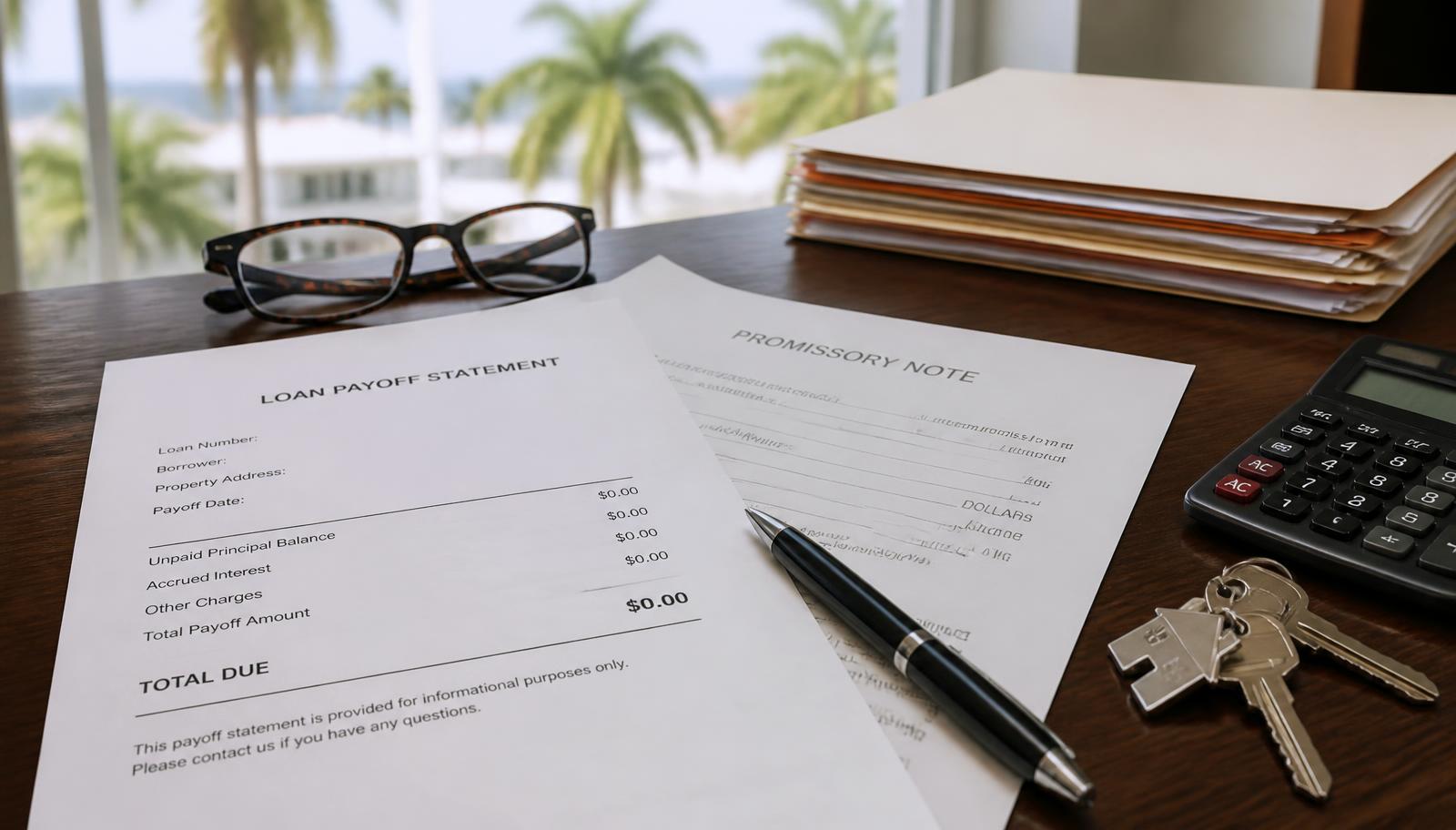
A balloon payment is a large final payment due at the end of a short term loan. Here is how balloon loans work, which programs use them, real Florida examples, the risks, and how investors plan an exit strategy before borrowing.
A balloon payment is a large final payment due at the end of a short term loan after a period of smaller monthly payments. Balloon payments are common in bridge loans, commercial real estate financing, construction loans, and investment property loans, where the borrower plans to sell or refinance before maturity.
Table of Contents
- What Is a Balloon Payment?
- How Does a Balloon Payment Work?
- At a Glance: Which Loans Carry a Balloon?
- Balloon Payment Example: A Florida Investment Property
- Real Investor Scenario: An Orlando Duplex
- Why Do Balloon Payments Exist?
- Common Loans That May Include Balloon Payments
- Who Uses Balloon Loans?
- Why Real Estate Investors Choose Balloon Loans
- Potential Risks of Balloon Payments
- When a Balloon Loan May Not Be Appropriate
- What Is an Exit Strategy?
- Balloon Loan Timeline
- Balloon Payment vs. Traditional Mortgage
- Pros and Cons
- Common Misconceptions
- Definitions Investors Should Know
- Frequently Asked Questions
- People Also Ask
- Balloon Payment Summary
What Is a Balloon Payment?
A balloon payment is a large sum due at the end of a loan. The borrower makes monthly payments during the term, then pays a big chunk of the principal at maturity. A balloon loan works differently from a traditional mortgage. In a traditional mortgage you pay off both principal and interest over 15 or 30 years, so the balance reaches zero on the final scheduled payment. With a balloon loan, most of the principal remains unpaid until the end of the term.
For Florida investors this structure is everywhere. It shows up when someone buys a rental in Tampa and plans to stabilize it, when a builder funds a spec home in Jacksonville, when an owner takes bridge financing on a Miami property before selling another, and when a small commercial borrower buys a retail building in Sarasota with a five year note on a longer amortization schedule. In each case the loan is a tool for a defined window of time, not a thirty year commitment.
Balloon payments are common in bridge loans, commercial real estate financing, construction loans, and other short term loans. They attract real estate investors who intend to refinance, sell a property, or complete a project before the loan term ends. Understanding how the payment works, and how you plan to satisfy it, is essential before you sign anything. Whether you are buying an investment property, funding renovations, or refinancing an existing note, knowing what comes due at maturity is what lets you build a realistic exit strategy instead of a hopeful one.
How Does a Balloon Payment Work?
In a balloon loan you make regular monthly payments over a short period, often 12 to 36 months. At the end of the term one final payment covers the remaining principal balance.
Your monthly payments might be:
- Interest only payments
- Payments that are partially amortized
- Payments amortized over a longer schedule while the note matures sooner
The key point is that the loan matures before the balance is fully repaid, which is what creates the balloon payment.
This structure provides flexibility. Monthly payments can be lower than they would be on a fully amortizing loan. In exchange, the borrower needs a clear plan for the remaining balance when the term ends.
At a Glance: Which Loans Carry a Balloon?
| Loan Type | Balloon Payment? | Typical Term |
|---|---|---|
| Bridge loan | Often | 12 to 24 months |
| Construction loan | Often | 12 to 24 months |
| Vacant land loan | Often | 12 to 36 months |
| Second mortgage on investment property | Sometimes | 12 to 60 months |
| Commercial real estate loan | Frequently | 3 to 10 years |
| Conventional residential mortgage | No | 15 to 30 years |
Balloon Payment Example: A Florida Investment Property
Imagine an investor buys a rental property with the following terms:
- Loan amount: $500,000
- Interest rate: 10%
- Loan term: 12 months
- Payment structure: interest only
Throughout the year the borrower makes monthly interest payments. At the end of the term the $500,000 principal balance remains unpaid.
The investor has several options:
- Sell the property and use the proceeds to pay off the loan
- Refinance into another loan if conditions allow
- Repay the remaining balance with available funds
That final payment is the balloon payment.
Real Investor Scenario: An Orlando Duplex
A Florida investor purchases a duplex near Orlando for $410,000. One unit is vacant and the kitchens in both units are dated, so a bank will not underwrite the property on current income. The investor closes with a 12 month bridge loan of $300,000 structured with interest only payments and a balloon at maturity.
Over the next seven months the investor completes roughly $55,000 in renovations, leases both units at market rent, and builds a clean payment history on the note. With both units occupied and documented income in place, the property now appraises at $505,000 and supports long term financing.
In month ten the investor closes a thirty year loan and uses the proceeds to satisfy the balloon payment on the bridge loan. The balloon was never a problem, because the exit was defined before the first loan ever closed. That sequence, buy, improve, stabilize, refinance, is the reason balloon structures exist.
Why Do Balloon Payments Exist?
Balloon payments work well for borrowers who do not intend to keep a loan for long. Many investment strategies involve buying, improving, refinancing, or selling property inside a short window, and a thirty year mortgage does not match that plan.
Balloon loans provide:
- Higher monthly cash flow
- Short term financing flexibility
- Funding that matches an investment timeline
- Capital for transitional real estate projects
Borrowers can concentrate on renovations or on raising property value rather than paying down principal that they plan to retire in a year anyway.
Common Loans That May Include Balloon Payments
Lenders structure loans differently, but balloon payments are frequently attached to the following programs.
Bridge Loans
Bridge loans help borrowers move between financing events. An owner may buy a new property before selling an existing one, or refinance after improving value. Learn more about bridge financing.
Construction Loans
These loans typically use short terms while a project is completed. After construction the borrower often refinances into permanent financing. See how construction financing works and how a draw schedule releases funds.
Commercial Real Estate Loans
Many commercial programs carry terms far shorter than the amortization schedule, which produces a balloon at the note maturity date.
Investment Property Financing
Experienced investors often choose lower monthly payments to preserve capital while an exit strategy plays out. Related options include vacant land financing and second mortgages.
Who Uses Balloon Loans?
- Residential investors buying rentals that need work before they qualify for conventional financing.
- Builders and developers funding spec homes, infill projects, and small subdivisions in markets such as Tampa, Fort Lauderdale, and Naples.
- LLCs and business entities holding property for investment, where financing is underwritten on the asset and the plan rather than on personal wage income.
- Landlords repositioning a portfolio, pulling equity, or consolidating debt while a longer term takeout is arranged.
- Commercial owners acquiring retail, office, industrial, or mixed use buildings in West Palm Beach and similar markets where lease up drives value.
- Owners facing a timing problem, such as a purchase that must close before another property sells.
Why Real Estate Investors Choose Balloon Loans
Investors often select balloon payment structures because they line up with short term goals.
Lower Monthly Payments
Interest only payments usually create a smaller monthly obligation than a fully amortizing payment on the same balance.
Improved Cash Flow
Lower payments free up capital for renovations, maintenance, carrying costs, and future acquisitions.
Short Term Financing
Investors buying and renovating property generally intend to sell or refinance well before the maturity date arrives.
Financing Flexibility
Asset based lenders can underwrite property value, equity, and the investment plan rather than relying only on traditional income documentation.
Potential Risks of Balloon Payments
Balloon loans can be useful, and borrowers still need to understand what can go wrong.
Refinancing Is Not Guaranteed
Many investors plan to refinance before maturity. Future approval depends on market conditions, property value, and the financial profile of the borrower at that time.
Market Conditions Can Change
Real estate values rise and fall. An unexpected shift can affect refinance options or sale proceeds.
Interest Rates May Vary
If you need to refinance, rates may be higher or lower than they were when the original loan closed.
Exit Strategy Matters
Every borrower should be able to explain, in plain terms, how the remaining balance gets repaid before taking a balloon loan.
When a Balloon Loan May Not Be Appropriate
A balloon structure is a poor fit in several situations:
- The property is a long term hold with no planned sale or refinance.
- The repayment plan depends on a single outcome with no backup, such as one buyer or one appraisal number.
- The borrower needs absolute payment certainty over many years, which a fully amortizing fixed rate loan provides.
- The project timeline is longer than the loan term with no realistic path to an extension.
- Cash reserves are thin enough that a delay of two or three months would create a default risk.
In those cases a fully amortizing loan may simply be the better tool. Good financing matches the plan; it does not fight it.
What Is an Exit Strategy?
An exit strategy is the planned method for repaying the loan at maturity. Common strategies include the following.
Selling the Property
Many investors renovate and then sell at a higher value, using sale proceeds to retire the note.
Refinancing
Borrowers refinance once occupancy, income, and documentation support long term financing.
Property Stabilization
Commercial properties that raise occupancy and net income often qualify for new financing once stabilized.
Cash Repayment
Some borrowers plan to satisfy the balance with business income, a maturing investment, or other liquid funds.
Balloon Loan Timeline
Loan closes
    v
Monthly payments (often interest only)
    v
Property improvement or lease up
    v
Sale or refinance
    v
Balloon payment satisfied at maturity
Balloon Payment vs. Traditional Mortgage
| Feature | Balloon Loan | Traditional Mortgage |
|---|---|---|
| Typical term | 12 to 36 months | 15 to 30 years |
| Monthly payments | Often lower | Fully amortized |
| Large final payment | Yes | No |
| Common uses | Investment property, bridge financing, construction, commercial real estate | Primary residences and long term ownership |
| Exit strategy needed | Yes | Typically less critical |
The right structure depends on the goals of the borrower, the property type, and the financial picture behind the deal.
Pros and Cons
| Pros | Cons |
|---|---|
| Lower monthly payments | Large payment due at maturity |
| Better cash flow during the project | Refinance approval is not guaranteed |
| Flexible, speed friendly financing | Market and rate uncertainty |
| Terms that match a short investment window | Requires disciplined planning and reserves |
Common Misconceptions
Myth: balloon loans are always risky.
Reality: risk depends on planning. A balloon loan with a funded reserve, a completed renovation, and a lender lined up for the takeout is a controlled situation. A balloon loan with no plan is not.
Myth: a balloon payment means a penalty.
Reality: the balloon is simply the unpaid principal balance. Any penalty would be a separate prepayment term in the note.
Myth: only commercial borrowers see balloon payments.
Reality: residential investment loans, construction loans, and land loans commonly include them.
Myth: you cannot pay a balloon loan off early.
Reality: many allow early payoff. Read the note, because prepayment terms vary by lender.
Where to Verify Loan Terms Independently
Borrowers can research loan structures and lender obligations through neutral public sources, including the Consumer Financial Protection Bureau, the Federal Reserve, and the Florida Office of Financial Regulation. Reviewing an independent source alongside your loan documents is a good habit before any closing.
Definitions Investors Should Know
- Loan maturity
- The date a loan becomes due in full.
- Principal balance
- The amount of borrowed money still owed, excluding interest.
- Amortization
- The schedule by which principal and interest are repaid over time.
- Interest only loan
- A loan where scheduled payments cover interest and do not reduce principal.
- Payoff amount
- The total required to satisfy the loan on a given date, including interest and fees.
- Underwriting
- The lender review of the property, the borrower, and the plan.
- Collateral
- The property securing the loan.
- Equity
- Property value minus the debt secured against it.
- Loan to value, or LTV
- The loan amount expressed as a percentage of property value.
- Refinance
- Replacing existing debt with a new loan, often to retire a balloon payment.
Is a Balloon Payment Right for You?
A balloon payment has advantages and trade offs, and it works best inside a planned investment strategy. Short term structures often fit well when you are buying rental property, repositioning an asset, or funding construction.
Before accepting a balloon loan, work through these questions:
- What is my plan to repay the balance at maturity?
- How long do I expect to own the property?
- Will renovations realistically increase value, and by how much?
- Is refinancing a credible option based on projected income and value?
- Have I accounted for market changes, insurance costs, and timeline slippage?
Answering these early reduces surprises and improves long term financial planning.
People Also Ask
Why would someone choose a balloon mortgage? To keep monthly payments low during a short holding period while a sale or refinance is completed.
Is a balloon payment good? It can be, when the term matches a defined exit. It is a poor fit for a long term hold with no repayment plan.
What is the difference between a balloon payment and a payoff? The balloon is the remaining principal due at maturity. A payoff amount is the full figure required to close out the loan on a specific date, including interest and any fees.
Can balloon payments be avoided? Yes, by choosing a fully amortizing loan, or by refinancing or selling before the maturity date.
Understanding Balloon Payments Before You Borrow
Balloon payments are common in short term real estate financing and they offer real flexibility for investors with specific goals. Instead of retiring the full principal through scheduled payments, the borrower makes regular payments and satisfies the remaining balance at the end of the term.
Understanding balloon payments before signing any loan agreement helps investors evaluate financing options, compare loan structures, and prepare for repayment with greater confidence.
Balloon Payment Summary
- Balloon payments leave a remaining principal balance due at maturity.
- They are common in bridge loans, construction loans, and commercial real estate financing.
- Investors usually repay by refinancing, selling the property, or using available funds.
- Most balloon loans mature in 12 to 36 months.
- Planning an exit strategy before borrowing is the most important part of using a balloon loan successfully.
Related Articles
- Bridge Loan vs. HELOC for Florida Investors
- Construction Loan Draw Schedule Explained
- What Is a Bridge Loan in Florida?
- Why Private Lenders Decline Loan Applications
- Florida Private Lending by County
Author and Reviewer
Author. Ivan Padilla, Director of Growth and Real Estate Lending Specialist, Luminary Private Lending. Ivan works daily with Florida investors and builders on bridge, construction, second mortgage, and vacant land financing.
Reviewed by. Kevin Mazzola, Founder of Luminary Private Lending. Kevin has structured asset based financing for investors and entities throughout Florida.
Published: August 6, 2026. Last updated: August 6, 2026. Last reviewed: August 6, 2026. Editorial and credit review by Luminary Private Lending. This article is educational and is not a loan commitment or an offer of credit.
Related Florida Lending Resources
Keep Reading
Latest Insights
Keep exploring Florida private lending insights.

Investor Education
What Is Cross Collateralization in Private Lending? A Complete Guide for Real Estate Investors
Cross collateralization lets investors combine equity from several properties to secure one loan. Here is how the collateral package works, who it fits, the risks, lender requirements, and a Florida example that closed in ten days.

Investor Education
Can an LLC Get a Real Estate Loan Without Personal Credit? A Florida Private Lending Guide
An LLC real estate loan without personal credit as the deciding factor is possible with asset-based private lenders. This Florida guide covers what lenders review instead, LTV math with worked scenarios, new-LLC and free-and-clear situations, the difference between a credit pull and a personal guarantee, and a borrower document checklist.

Investor Education
Can You Get a Private Real Estate Loan Without Tax Returns in Florida?
Tax returns do not always reflect an investor's real financial strength. This Florida guide explains how asset-based private lenders evaluate property value, equity, loan-to-value, liquidity, use of funds and exit strategy instead of conventional income documentation.

Investor Education
Can a Newly Formed LLC Qualify for a Private Real Estate Loan in Florida?
A newly formed LLC may still qualify for private real estate financing in Florida. This guide explains what asset-based lenders review instead of operating history: property value, equity, liens, liquidity, the principals, documentation and the exit strategy.

Investor Education
Title Issues & Code Violations: Can They Get a Private Real Estate Loan Denied in Florida?
Strong equity and a supportive appraisal do not guarantee a closing. This Florida guide explains how title defects, recorded liens, municipal code liens, open permits and unpermitted work affect private lending, which issues are usually curable, what documentation to send up front, and why lien position matters as much as value.

Investor Education
What Is an Interest Reserve in a Construction Loan? A Complete Guide for Builders and Contractors
An interest reserve covers construction loan interest from loan proceeds while the property produces no income. Here is how lenders size it, how it interacts with the draw schedule, and what happens when a build runs long.

Investor Education
First-Lien vs. Second-Lien Loans: What Real Estate Investors Need to Know
A first lien holds the senior claim against a property while a second lien sits behind it. Here is how lien priority works, how LTV and CLTV differ, why equity drives second position financing, and how Florida records and ranks liens.

Investor Education
How Unclear Payoff Statements and Property Liens Can Delay a Private Real Estate Loan Closing
An unclear payoff or an unresolved lien can stall a Florida private loan even when the property has equity. This guide explains payoff statements, lien types, combined loan to value on second mortgages, paying liens at closing and how to prevent delays.
Investor Education
Can You Borrow Against a Free-and-Clear Property in Florida?
A 2026 guide to unlocking equity in Florida real estate you own free and clear: first lien position, LTV sizing tables, worked residential, commercial, multifamily, and land examples, plus a private loan vs. cash-out refinance vs. HELOC comparison.

Investor Education
LTV vs. LTC vs. ARV: What's the Difference in Real Estate Lending?
LTV measures the loan against property value, LTC measures it against total project cost, and ARV estimates value once the work is done. Here is how Florida private lenders use all three, with one deal calculated three ways.

Investor Education
Purchase Price Higher Than the Listing? Here’s What Could Really Be Going On
A higher contract price can be legitimate, but a material unexplained difference deserves independent verification. This guide explains how lenders can reconcile the listing, contract, appraisal, title and closing figures.

Investor Education
What Happens If a Property Appraises Lower Than Expected?
A low appraisal changes the numbers, not always the deal. How a lower-than-expected value affects LTV, loan proceeds, the appraisal gap, construction and refinance requests, and what Florida investors can do next.