Construction Financing
Construction Loan Draw Schedule Explained: How Private Lenders Release Funds
Published By Luminary Private Lending
- Author:
- Ivan Padilla
- Reviewed By:
- Kevin Mazzola
- Published:
- August 5, 2026
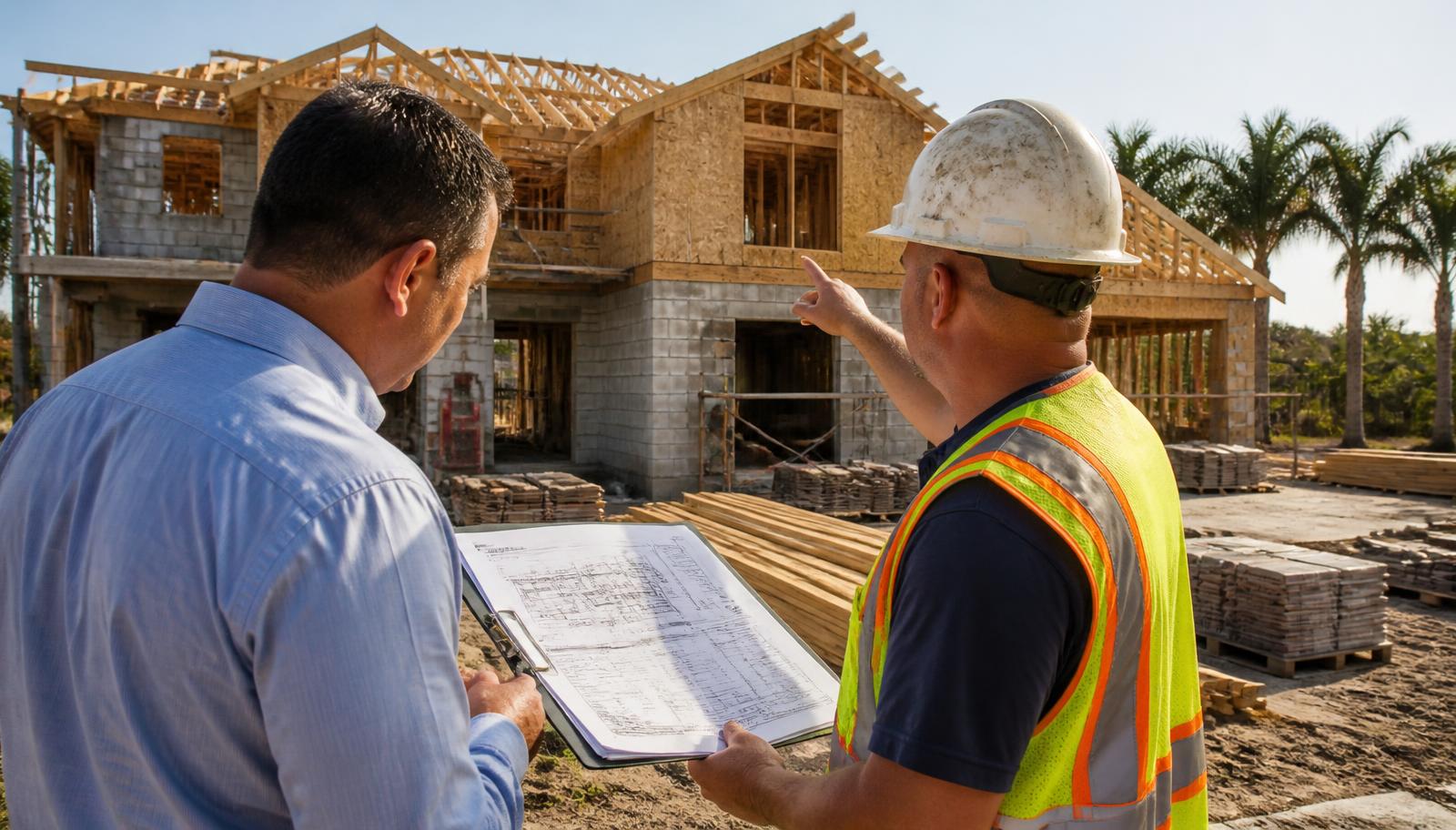
Construction loans do not fund in one lump sum. Funds release in stages tied to completed milestones. Here is the typical draw schedule, the documentation each request needs, how inspections and interest work, and why draws get delayed.
Building a property is one of the most rewarding investments in real estate, and one of the most demanding to finance. Unlike a traditional mortgage that funds in a single wire at closing, a construction loan releases money in stages as work is completed. That staged release is called a construction loan draw schedule, and every investor, builder, and property owner should understand it before breaking ground.
What Is a Construction Loan Draw Schedule?
A construction loan draw schedule is the agreed plan that governs when a lender releases funds over the life of a building project. Rather than receiving the full loan amount at closing, the borrower receives money in a series of installments called draws, each tied to a specific construction milestone.
Each draw provides the capital needed to fund the next phase of work so the general contractor can order materials, pay subcontractors, and keep the schedule moving. The structure serves two purposes at once: it confirms funds are being spent on the project, and it gives the lender a defined checkpoint to verify progress before advancing more capital.
Key Takeaway: The draw schedule is a funding calendar tied to physical progress, not to dates on a calendar.
Why Private Lenders Use Draw Schedules
Construction carries more uncertainty than acquiring a completed property. Material pricing, labor availability, building permit timing, and inspection queues all influence the timeline. A structured draw schedule protects everyone involved.
For Borrowers
- Capital arrives when it is actually needed
- Interest is generally not accruing on funds that have not been disbursed
- The budget becomes a working financial plan rather than a guess
- Contractor payments follow verified progress
For Contractors
- A predictable payment rhythm tied to completed work
- Better cash flow management across trades
- Easier scheduling of labor and material deliveries
- Fewer payment disputes because milestones are documented
For Private Lenders
- Confirmation that construction is tracking to the approved budget
- Controlled lending risk across the build period
- Assurance that proceeds are used for the intended scope
- Protection of the collateral value securing the loan
Typical Construction Loan Draw Schedule
Every project is unique, but many private construction loans follow a milestone-based structure similar to the one below. Most projects include five to seven draw requests, although larger commercial developments may require additional disbursements depending on complexity and the number of trades involved.
| Draw | Construction Phase | Typical Work Completed |
|---|---|---|
| Draw 1 | Site work | Clearing, grading, site prep, and foundation |
| Draw 2 | Structure | Framing and structural work |
| Draw 3 | Dry-in | Roofing, windows, doors, and exterior shell |
| Draw 4 | MEP rough-in | Plumbing, electrical, and HVAC installation |
| Draw 5 | Interior | Drywall, flooring, cabinetry, and finishes |
| Final Draw | Completion | Final inspection, punch list, certificate of occupancy |
The number of draws varies by lender and project. A small single-family build may use four. A multi-building commercial project may use ten or more with line-item budget tracking at each stage.
Visual Timeline: Loan Closing to Project Completion
Loan Closing
      ↓
Permits Issued
      ↓
Site Prep & Grading
      ↓
Foundation Draw
      ↓
Framing Draw
      ↓
Roof & Exterior Draw
      ↓
MEP Rough-In Draw
      ↓
Interior Finish Draw
      ↓
Final Inspection
      ↓
Final Draw Released
      ↓
Certificate of Occupancy
      ↓
Project Completion / Exit
How the Construction Draw Process Works
Knowing the mechanics of a draw removes most of the anxiety from construction financing.
Step 1: Construction Begins
Once the loan closes and the building permit is in hand, the contractor mobilizes and work starts per the approved plans and budget.
Step 2: Borrower Submits a Draw Request
After a milestone is complete, the borrower submits a draw request documenting the finished work. A typical package includes:
- Contractor invoices and a signed draw request form
- An updated budget showing amounts spent and remaining
- A written progress report
- Dated photographs of the completed work
- Lien waivers from the general contractor and subcontractors
- Approved change orders, if any
- Supporting permits or inspection sign-offs
Step 3: Lender Review
The lender verifies the request against the approved budget and scope. Review commonly includes:
- Reviewing submitted documentation for completeness
- Comparing costs to the original line-item budget
- Confirming the milestone was actually reached
- Ordering a third-party inspection or progress report if required
The depth of review varies by lender, project size, loan structure, and how far along construction is.
Step 4: Funds Are Released
Once the draw is approved, the lender disburses funds, typically by wire or check, and the borrower pays contractors and orders materials for the next phase. The cycle repeats until the final draw closes out the project.
Do All Draws Require an Inspection?
Not always. Inspection requirements generally depend on:
- Project size and total loan amount
- The construction stage being funded
- Lender guidelines and loan documents
- The overall risk profile of the transaction
- Whether prior draws raised any discrepancies
Some lenders inspect at every draw. Others inspect only at major milestones such as foundation, dry-in, and completion. Either way, the inspection confirms the work billed was actually performed, which protects the borrower as much as the lender.
How Long Does It Take to Receive a Draw?
Funding time depends far more on documentation quality than on loan size. The main variables are:
- Completeness and accuracy of the draw request
- Inspection scheduling and inspector availability
- Contractor documentation and lien waiver turnaround
- Budget verification and change order approval
- Internal lender review timelines
Borrowers who submit complete packages and communicate proactively almost always fund faster. Planning each draw request before cash runs low is the simplest way to avoid a gap in the schedule.
Do You Pay Interest on the Entire Loan?
This is one of the most common questions we hear at closing. It depends on the loan structure. Many private construction loans charge interest only on funds actually disbursed rather than on the full approved amount, which is one reason staged funding is favorable for borrowers. Other structures use an interest reserve funded at closing to cover carry during construction. Confirm exactly how interest is calculated, and whether a reserve applies, before you sign loan documents.
7 Common Construction Loan Draw Mistakes
- Waiting too long to request a draw. Momentum dies when payroll and material orders stall.
- Poor contractor communication. If the builder does not know what the lender requires, packages arrive incomplete.
- Missing invoices or unsigned forms. The most common cause of a delayed disbursement.
- Budget overruns without a change order. Unapproved cost increases stop a draw cold.
- Permit and inspection delays. A failed county inspection halts the next milestone.
- No contingency reserve. Any surprise becomes a funding emergency.
- Choosing an inexperienced builder. Draw administration is a skill, not a formality.
Why Construction Draws Get Delayed
Incomplete Documentation
Missing invoices, unsigned lien waivers, or an outdated budget will pause review until the file is complete.
Construction Behind Schedule
If the billed milestone has not been reached, additional funds are typically withheld until verified progress catches up.
Budget Changes
Unexpected cost increases or scope changes usually require a written change order and lender approval before further disbursement.
Permit Issues
An expired permit or a failed inspection can stall both construction and the next draw.
Contractor Communication Gaps
Most delays we see are avoidable. They come from information that never made it from the jobsite to the lender.
Construction Loan Draw Schedules in Florida: What Is Different
Florida construction financing carries specific local realities that affect draw timing, and experienced borrowers plan for them:
- County building departments set the pace. Permitting and inspection queues in Miami-Dade, Broward, Orange, Hillsborough, Lee, and Osceola counties move at different speeds. Draw timing follows the local inspector, not the loan.
- Coastal and high-velocity hurricane zone requirements. Projects in Miami-Dade and Broward face the High-Velocity Hurricane Zone provisions of the Florida Building Code, which add engineering review and product approval steps before framing and dry-in draws.
- Wind mitigation and impact-rated openings. Window, door, and roof-attachment inspections often gate the dry-in draw, so material lead times matter.
- Hurricane season delays. June through November can bring weather stoppages, material shortages, and inspector backlogs. Build a schedule buffer into the draw plan.
- Flood zone and elevation certificates. Coastal and inland flood zone parcels may require elevation documentation before the foundation draw is released.
- Impact fees and utility connections. Fast-growing Central Florida counties often require impact fee payment and utility sign-offs that affect the final draw and certificate of occupancy.
A lender who funds Florida construction daily anticipates these steps. A national lender unfamiliar with local building departments frequently does not.
Private Lender vs. Traditional Bank Construction Draws
| Factor | Private Lender | Traditional Bank |
|---|---|---|
| Funding speed | Faster closings and draw turnaround | Slower committee-driven approvals |
| Underwriting focus | Asset and project focused | Credit and income focused |
| Flexibility | Customized draw structures | Standardized schedules |
| Documentation | Streamlined, project-driven | Extensive borrower financials |
| Project types | Ground-up, land development, heavy renovation | Narrower eligibility |
| Draw administration | Direct contact with the decision maker | Third-party servicing desk |
Draw Request Checklist
Before requesting your next construction draw, confirm you have:
- ✔ Contractor invoices for the completed milestone
- ✔ Dated progress photographs of the work
- ✔ Inspection scheduled or completed, if required
- ✔ Updated line-item budget with remaining balances
- ✔ Signed lien waivers from the general contractor and subs
- ✔ Any change orders submitted and approved in writing
- ✔ Current permits and passed county inspections on file
- ✔ Signed draw request form and correct wire instructions
What a Draw Request Package Looks Like
A clean submission is short and self-explanatory. Most complete packages contain:
- Draw request form. Draw number, date, amount requested, and the budget lines being funded.
- Line-item budget. Original budget, amounts previously funded, this request, and remaining balance per line.
- Invoices. Contractor and material invoices matching the budget lines requested.
- Photos. Six to twelve dated images covering the completed milestone.
- Lien waivers. Conditional or unconditional waivers for prior payments, per loan documents.
- Change orders. Any scope or cost change with written approval.
- Inspection report. Third-party or county inspection documentation where applicable.
Sample Project Walkthrough
Consider a hypothetical $600,000 ground-up single-family build in Central Florida with a construction budget funded across five draws plus a final release. The illustration below is for education only and is not a quote or a commitment to lend.
| Draw | Milestone Verified | Illustrative Release | Typical Documentation |
|---|---|---|---|
| 1 | Site prep and foundation poured | 15% of budget | Invoices, photos, foundation inspection |
| 2 | Framing complete | 20% of budget | Invoices, photos, framing inspection |
| 3 | Roof, windows, exterior dry-in | 20% of budget | Invoices, photos, product approvals |
| 4 | Plumbing, electrical, HVAC rough-in | 20% of budget | Invoices, photos, trade inspections |
| 5 | Drywall, flooring, cabinetry, finishes | 20% of budget | Invoices, photos, updated budget |
| Final | Punch list and certificate of occupancy | 5% retainage release | Final inspection, CO, final lien waivers |
Notice that the final draw releases retainage only after the certificate of occupancy. That is standard, and it is why a contingency reserve matters at the end of a project rather than the beginning.
Tips for Keeping Your Construction Project on Schedule
Work With Experienced Contractors
Builders who have run draw-funded projects understand milestone documentation, permit sequencing, and inspector expectations.
Keep Accurate Records
Maintain organized digital copies of invoices, receipts, contracts, permits, change orders, and inspection reports from day one.
Communicate Early
Tell your lender about a delay or cost increase as soon as you know. Early notice is almost always solvable. Late notice is what stops funding.
Build a Contingency Budget
Unexpected costs are normal in construction. A reserve keeps crews working while a change order is processed.
Plan Ahead for Draw Requests
Prepare the next draw package while the current milestone is being finished, not after the account runs dry.
Market Context and Statistics
- Total U.S. construction spending has run above a $2 trillion annualized rate in recent years, according to U.S. Census Bureau Construction Spending data, which makes disciplined cash flow management essential on every project.
- Florida consistently ranks among the top states for new residential building permits issued, per U.S. Census Bureau Building Permits Survey data, keeping trade and inspector capacity tight in high-growth counties.
- The National Association of Home Builders reports that construction cost represents the largest share of a new single-family home's sale price, which is why draw discipline directly affects project margin.
Figures move over time. Always verify current data with the primary sources listed below before making an investment decision.
Construction Financing Glossary
- Draw. A scheduled disbursement of loan proceeds tied to completed construction work.
- Draw request. The documented submission asking the lender to release the next installment.
- Retainage. A percentage of funds held back until final completion and sign-off.
- Disbursement. The actual transfer of approved funds to the borrower or contractor.
- Loan-to-value (LTV). Loan amount divided by property value, expressed as a percentage.
- Loan-to-cost (LTC). Loan amount divided by total project cost including land and construction.
- After-repair value (ARV). The projected value of the property once the project is complete.
- Inspection. Verification, by a county official or third party, that billed work was performed.
- Contingency. Reserve funds set aside for unforeseen costs.
- Soft costs. Non-construction costs such as permits, design, engineering, and legal fees.
- Hard costs. Physical construction costs including labor and materials.
- Interest reserve. Loan funds allocated at closing to cover interest during construction.
- Change order. A written modification to the approved scope, budget, or schedule.
- Certificate of occupancy. The municipal approval confirming the building is legally habitable.
- Lien waiver. A signed release confirming a contractor has been paid for work performed.
People Also Ask
- How long does a construction draw take?
- Can you pay contractors yourself on a construction loan?
- Who controls draw releases?
- Do lenders inspect every draw?
- Can a construction draw be denied?
- What is retainage on a construction loan?
- Do you pay interest on undrawn construction funds?
Final Thoughts
A construction loan draw schedule is the operating system of construction financing. Because funds are released in stages rather than all at once, borrowers, contractors, and lenders stay aligned on progress, budget, and risk throughout the build.
Understand how draws work, prepare documentation in advance, and keep communication open with your lender. Those three habits eliminate most delays. Whether you are building a custom home, developing an investment property, or managing a commercial project, knowing what to expect from the draw process lets you plan instead of react.
Sources & References
- U.S. Census Bureau, Construction Spending
- U.S. Census Bureau, Building Permits Survey
- National Association of Home Builders (NAHB)
- Consumer Financial Protection Bureau (CFPB)
- U.S. Department of Housing and Urban Development (HUD)
- Fannie Mae Research and Insights
- Freddie Mac Research
- Florida Building Commission
Related Reading
- Construction Financing
- Bridge Loans
- Vacant Land Financing
- Second Mortgages
- What Is a Construction Loan in Florida?
- Florida Housing Construction Trends
- Florida Private Lending by County
Author and Reviewer
Author. Ivan Padilla, Director of Growth and Real Estate Lending Specialist, Luminary Private Lending. Ivan works daily with Florida real estate investors and builders on construction, bridge, second mortgage, and vacant land financing.
Reviewed by. Kevin Mazzola, Founder of Luminary Private Lending. Kevin has structured asset-based financing for investors and entities throughout Florida.
Published: August 5, 2026. Last updated: August 5, 2026. Last reviewed: August 5, 2026. Editorial and credit review by Luminary Private Lending. This article is educational and does not constitute a loan commitment or an offer of credit.
Related Florida Lending Resources
Keep Reading
Latest Insights
Keep exploring Florida private lending insights.
Construction Financing
What Happens When a Construction Loan Expires Before the Project Is Finished? | Florida Guide
An unfinished construction project does not automatically extend a maturing loan. This Florida guide explains extensions, modifications, refinancing, unused draws, updated appraisals, cost overruns and the documents lenders may review.
Construction Financing
You Split One Property Into Two Lots, but the Lender's Lien Is Still on Both. What Happens to Your Construction Loan?
A lot split does not automatically split an existing lien. This Florida guide explains partial lien releases, why an updated appraisal cannot remove a recorded lien, who approves a release, how construction lenders evaluate lien position, and the documents to have ready before applying.

Construction Financing
Dutch vs. Non-Dutch Interest on Construction Loans: What Borrowers Need to Know
Dutch interest is calculated on the full construction loan commitment. Non-Dutch interest is calculated on funds actually advanced. Worked $2 million examples, a full 12-month draw table, a Naples scenario and an interactive calculator show why a 12% loan can cost less than a 10% loan.
Construction Financing
Land Acquisition + Construction Financing in Florida: Can Both Be Included in One Loan?
A Florida developer's guide to combining land acquisition and construction financing in one loan: how acquisition advances and construction draws work, LTC vs. LTV, land equity as contribution, what costs are and are not funded, and what lenders need to approve the request.
Construction Financing
Ground-Up Construction vs. Heavy Rehab Financing in Florida
Ground-up construction financing builds a new property from vacant land or after demolition. Heavy rehab financing funds major renovation of an existing structure. Here is how Florida private lenders underwrite each, with worked LTC and ARV examples.

Investor Education
What Do Private Lenders Look for in an Appraisal?
A private lender reads an appraisal for value, comparable sales, condition, marketability, zoning, and projected value at completion. Here are the 12 things Florida borrowers should know, with worked LTV, CLTV, and LTC examples.
Private Lending Guidelines
10 Reasons Private Lenders Decline Loan Applications (And How to Avoid Them)
Insufficient equity, an ineligible property type, missing documents, or a weak exit strategy will sink a private loan request faster than a credit score will. Here are the 10 most common reasons applications get declined, and how to fix each one.

Broker Resources
Florida Private Lending Partner for Real Estate Brokers
A practical guide for brokers bringing Florida real estate opportunities to Luminary, including eligible deal types, the submission checklist, review process, common delays and transaction specific limitations.

Investor Education
How Unclear Payoff Statements and Property Liens Can Delay a Private Real Estate Loan Closing
An unclear payoff or an unresolved lien can stall a Florida private loan even when the property has equity. This guide explains payoff statements, lien types, combined loan to value on second mortgages, paying liens at closing and how to prevent delays.
Investor Education
Can You Get a Private Real Estate Loan Without Tax Returns in Florida?
Tax returns do not always reflect an investor's real financial strength. This Florida guide explains how asset-based private lenders evaluate property value, equity, loan-to-value, liquidity, use of funds and exit strategy instead of conventional income documentation.

Investor Education
Can a Newly Formed LLC Qualify for a Private Real Estate Loan in Florida?
A newly formed LLC may still qualify for private real estate financing in Florida. This guide explains what asset-based lenders review instead of operating history: property value, equity, liens, liquidity, the principals, documentation and the exit strategy.

Investor Education
Title Issues & Code Violations: Can They Get a Private Real Estate Loan Denied in Florida?
Strong equity and a supportive appraisal do not guarantee a closing. This Florida guide explains how title defects, recorded liens, municipal code liens, open permits and unpermitted work affect private lending, which issues are usually curable, what documentation to send up front, and why lien position matters as much as value.