Investor Education
What Is an Interest Reserve in a Construction Loan? A Complete Guide for Builders and Contractors
Published By Luminary Private Lending
- Author:
- Ivan Padilla
- Reviewed By:
- Kevin Mazzola
- Published:
- August 11, 2026
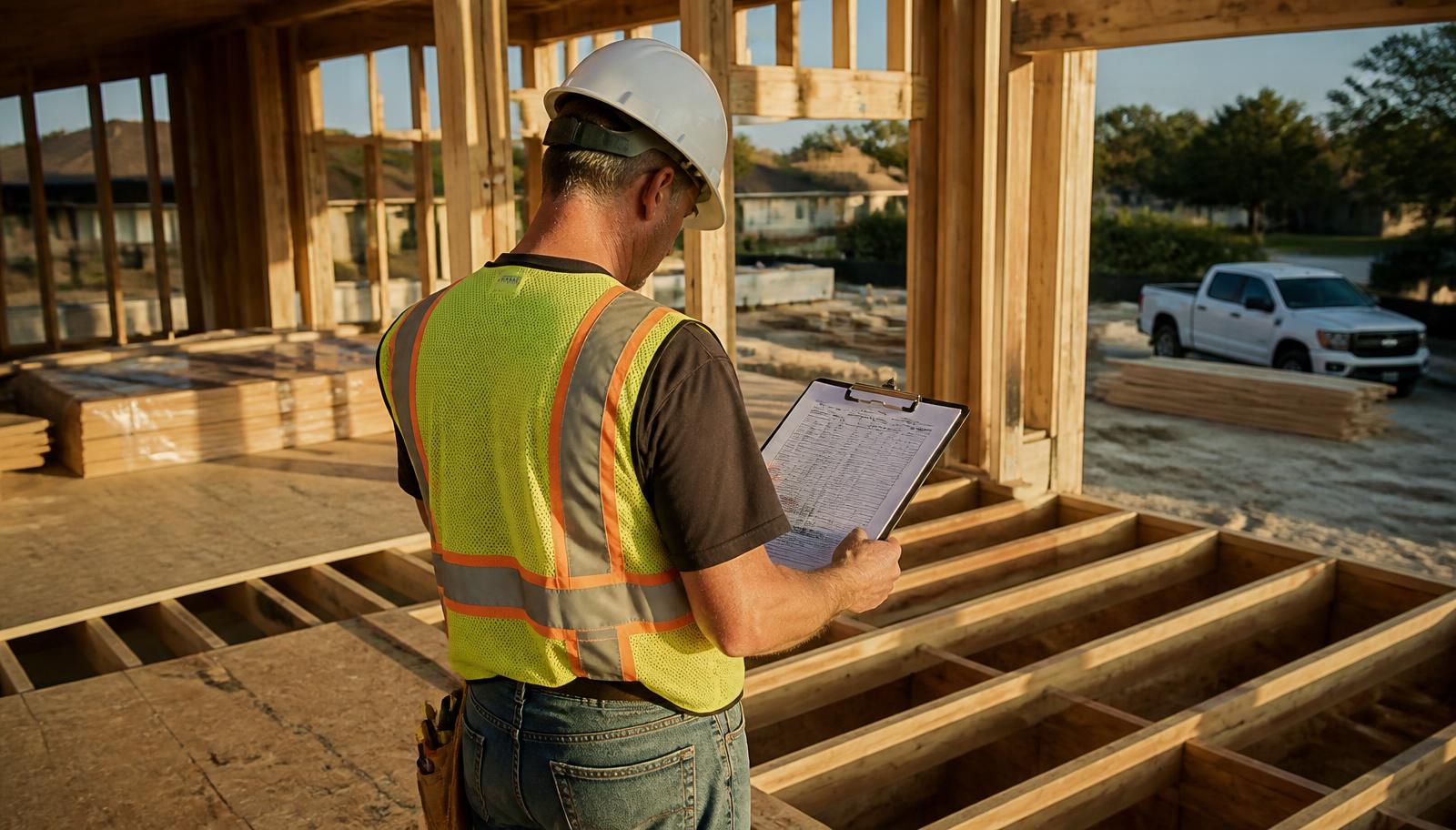
An interest reserve covers construction loan interest from loan proceeds while the property produces no income. Here is how lenders size it, how it interacts with the draw schedule, and what happens when a build runs long.
An interest reserve is money set aside inside a construction loan to cover the interest payments while the project is being built. Instead of the builder writing a check every month out of working capital, the lender holds a portion of the loan proceeds and applies them to interest as the balance draws up.
Table of Contents
- What Is an Interest Reserve?
- Why Construction Loans Use an Interest Reserve
- How an Interest Reserve Works Step by Step
- How Lenders Size an Interest Reserve
- Worked Example on a $600,000 Build
- How the Reserve Interacts With the Draw Schedule
- Does an Interest Reserve Cost More?
- How the Reserve Affects Loan to Cost
- What Happens If the Reserve Runs Out?
- Delays, Weather, and Florida Realities
- What Happens to Unused Reserve Funds?
- Common Mistakes Builders Make
- Interest Reserve vs. Paying Interest Monthly
- How This Plays Out Across Florida
- Questions to Ask Your Lender
- Frequently Asked Questions
What Is an Interest Reserve?
An interest reserve is a line item inside a construction loan budget that is reserved to pay the interest that accrues on the loan during the construction period. It sits alongside the other budget lines such as site work, foundation, framing, mechanical systems, finishes, and contingency.
The mechanics are simple. Each month, interest accrues on the amount that has actually been advanced. Rather than billing the borrower for that interest, the lender draws the payment from the reserve and records it against the loan. The borrower still owes the money, because the reserve is loan proceeds, but the payment does not come out of operating cash during the build.
Why Construction Loans Use an Interest Reserve
A finished rental pays its own debt service. A half framed house does not. During construction there is no tenant, no rent roll, and no closing proceeds, yet interest still accrues on every dollar advanced. The interest reserve is the industry's answer to that gap.
| Situation | Source of Debt Service |
|---|---|
| Stabilized rental property | Rental income |
| Property held for resale, completed | Sale proceeds at closing |
| Property under construction | Interest reserve or borrower cash |
For a builder running two or three projects at once, the reserve is also a liquidity tool. Cash that would have gone to monthly interest stays available for materials, labor, and the unexpected change order that always shows up.
How an Interest Reserve Works Step by Step
- The lender and borrower agree on a construction budget and a draw schedule.
- The lender projects the outstanding balance month by month based on that schedule.
- The lender calculates projected interest across the loan term and budgets that amount as the reserve.
- The reserve is included in the total loan amount and held by the lender, not disbursed to the borrower.
- Each month, accrued interest is paid from the reserve and the loan balance increases accordingly.
- At payoff, any unused reserve is generally not owed, because it was never advanced.
How Lenders Size an Interest Reserve
Three inputs drive the number: the projected average outstanding balance, the interest rate, and the number of months the loan is expected to be outstanding.
Interest Reserve ≈ Average Outstanding Balance × Annual Rate ÷ 12 × Months
Because the balance starts small and grows with each draw, the average outstanding balance on a typical build lands well below the full loan amount. Many lenders model it somewhere in the range of half to two thirds of the total commitment, then add a cushion for a timeline that slips.
Worked Example on a $600,000 Build
| Item | Amount |
|---|---|
| Total construction budget | $600,000 |
| Projected average outstanding balance | $330,000 |
| Assumed annual rate for illustration | 11% |
| Projected construction period | 10 months |
| Estimated interest reserve | about $30,250 |
The math: $330,000 × 11% equals $36,300 per year, or $3,025 per month, across 10 months. Rates, terms, and reserve sizing vary by lender, property, borrower, and transaction. This example is illustrative only.
Notice what the reserve does to the budget. If the loan commitment is $600,000 including the reserve, only about $569,750 is available for actual construction. Builders who forget this discover the shortfall in the middle of the drywall stage.
How the Reserve Interacts With the Draw Schedule
The reserve and the draw schedule are two halves of the same machine. Interest is charged on advanced funds, so a project that draws slowly burns less reserve, and a project that front loads draws burns more. This is one more reason to understand your construction loan draw schedule before closing rather than after the first inspection.
A practical habit: request draws when the work is genuinely complete and inspection ready. Drawing early to park cash in the operating account starts the interest clock on money that is not working yet.
Does an Interest Reserve Cost More?
The reserve itself is not a fee. It is loan proceeds allocated to a specific purpose. The nuance is that reserved dollars are still borrowed dollars, so once they are applied to interest they carry interest of their own for the remainder of the term.
| Question | Answer |
|---|---|
| Is the reserve an added fee? | No, it is a budgeted use of loan proceeds |
| Does it increase the loan amount? | Typically yes |
| Do I owe unused reserve? | Generally no, unadvanced funds are not owed |
| Does it reduce funds for construction? | Yes, if the total commitment is fixed |
How the Reserve Affects Loan to Cost
Lenders underwrite construction deals on loan to cost and on projected value at completion. An interest reserve is part of the total loan, so it consumes room under those limits. A builder targeting the maximum leverage on a project will feel the reserve directly, because every dollar of reserve is a dollar that cannot go into cabinets or impact fees.
That trade is usually worth making. Running out of cash mid project is a far more expensive problem than borrowing a little more to keep the interest current.
What Happens If the Reserve Runs Out?
Reserves are sized against a projected timeline. When a build runs long, the reserve empties and interest becomes the borrower's monthly obligation in cash. Options at that point generally include:
- Paying interest monthly out of pocket for the remainder of the term.
- Requesting an extension or a modification, subject to lender approval and any applicable fees.
- Reallocating remaining budget or contingency, if the lender permits it.
- Bringing additional equity or a capital partner into the project.
- Accelerating completion so the exit, whether sale or refinance, arrives sooner.
None of these are emergencies if you see them coming a month or two out. All of them are stressful if you discover the shortfall the week a payment is due.
Delays, Weather, and Florida Realities
Florida builds carry timeline risks that a spreadsheet in January does not always capture. Summer storm season stalls exterior work. Permit and inspection queues in fast growing counties such as Osceola, Polk, and Lee stretch during peak cycles. Truss and mechanical lead times move with demand. Each week of delay is another week of accrued interest against a reserve that was sized for a shorter build.
The practical response is not pessimism, it is padding. Build the reserve around a realistic schedule with a buffer, not around the best case timeline in the proposal.
What Happens to Unused Reserve Funds?
Reserve dollars that are never applied to interest are generally never advanced, so they are typically not part of the payoff. A project that finishes ahead of schedule simply uses less of the reserve. Some lenders will consider reallocating a portion of an unused reserve to construction line items, and that decision depends on the loan documents and the lender's approval.
Common Mistakes Builders Make
- Treating the reserve as free money instead of borrowed money.
- Sizing the reserve on the optimistic timeline rather than the realistic one.
- Forgetting that the reserve reduces the funds available for hard costs.
- Front loading draws and accelerating interest on idle cash.
- Ignoring the reserve balance until it is nearly gone.
- Assuming an extension will automatically include additional reserve.
Interest Reserve vs. Paying Interest Monthly
| Feature | Interest Reserve | Monthly Cash Payments |
|---|---|---|
| Source of payment | Loan proceeds | Borrower cash |
| Effect on monthly cash flow | Preserves cash | Consumes cash |
| Effect on loan amount | Increases it | No increase |
| Effect on funds for construction | Reduces them if commitment is fixed | No reduction |
| Best fit | Builders running multiple projects | Borrowers with strong idle liquidity |
How This Plays Out Across Florida
On an infill build in Orange County, a ten month reserve is often plenty. On a coastal project in Lee County during storm season, the same ten months can feel tight. On a raw parcel where vacant land financing came first and site work is heavier than expected, the reserve needs to account for a longer runway before vertical construction even starts. Investors pairing a build with a near term sale sometimes plan a bridge loan as the exit, and the reserve should carry the project comfortably to that point.
Whatever the county, the underwriting question is the same: does the reserve survive the schedule you can actually deliver?
Questions to Ask Your Lender
- How was my interest reserve calculated, and on what assumed timeline?
- Is the reserve included in my total loan amount and my loan to cost?
- How will I see the remaining reserve balance during the build?
- What happens if the reserve is exhausted before completion?
- Can unused reserve be reallocated to construction costs?
- Does an extension include additional reserve, and at what cost?
- How do early or accelerated draws change my reserve burn?
If you are still comparing structures, start with the fundamentals in construction financing and confirm how the reserve is handled before you sign a term sheet.
Frequently Asked Questions
The questions below cover what builders and contractors most often ask about interest reserves. Terms vary by lender and by transaction, so confirm specifics with your own loan documents.
Author and Reviewer
Author. Ivan Padilla, Director of Growth and Real Estate Lending Specialist, Luminary Private Lending. Ivan works daily with Florida investors and builders on bridge, construction, second mortgage, and vacant land financing.
Reviewed by. Kevin Mazzola, Founder of Luminary Private Lending. Kevin has structured asset based financing for investors and entities throughout Florida.
Published: August 11, 2026. Last updated: August 2026. Last reviewed: August 11, 2026. This article is educational and informational and is not financial, legal, tax, or investment advice. Availability, terms, rates, fees, reserve sizing, and loan to cost limits vary by property, borrower, lender, and transaction.
Related Florida Lending Resources
Keep Reading
Latest Insights
Keep exploring Florida private lending insights.
Investor Education
What Is Cross Collateralization in Private Lending? A Complete Guide for Real Estate Investors
Cross collateralization lets investors combine equity from several properties to secure one loan. Here is how the collateral package works, who it fits, the risks, lender requirements, and a Florida example that closed in ten days.
Investor Education
What Is a Balloon Payment? A Complete Guide for Real Estate Investors in Florida
A balloon payment is a large final payment due at the end of a short term loan. Here is how balloon loans work, which programs use them, real Florida examples, the risks, and how investors plan an exit strategy before borrowing.

Investor Education
What Does 125% Lender’s Title Insurance Mean? Florida Private Lending Guide
A 125% lender’s title insurance requirement means the policy amount equals 125% of the loan principal. It does not mean the borrower receives 25% more money or pays a 25% fee. On a $1,950,000 loan, 125% coverage equals $2,437,500; actual protection depends on the policy terms.

Investor Education
Can an LLC Get a Real Estate Loan Without Personal Credit? A Florida Private Lending Guide
An LLC real estate loan without personal credit as the deciding factor is possible with asset-based private lenders. This Florida guide covers what lenders review instead, LTV math with worked scenarios, new-LLC and free-and-clear situations, the difference between a credit pull and a personal guarantee, and a borrower document checklist.
Investor Education
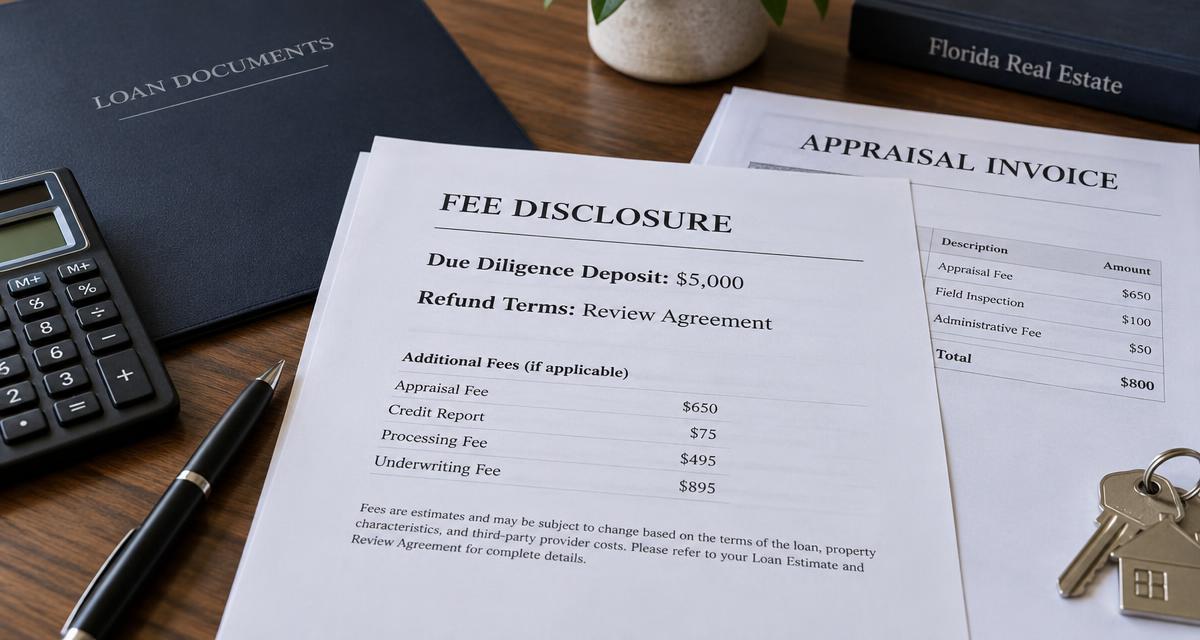
Upfront Due Diligence Deposits: How Florida Borrowers Can Avoid Costly Financing Mistakes
Know who receives your money, what work it covers and what happens if financing fails. A practical Florida guide to upfront deposits, written fee terms and independent verification.
Investor Education
Purchase Price Higher Than the Listing? Here’s What Could Really Be Going On
A higher contract price can be legitimate, but a material unexplained difference deserves independent verification. This guide explains how lenders can reconcile the listing, contract, appraisal, title and closing figures.

Investor Education
How Unclear Payoff Statements and Property Liens Can Delay a Private Real Estate Loan Closing
An unclear payoff or an unresolved lien can stall a Florida private loan even when the property has equity. This guide explains payoff statements, lien types, combined loan to value on second mortgages, paying liens at closing and how to prevent delays.

Investor Education
Can You Get a Private Real Estate Loan Without Tax Returns in Florida?
Tax returns do not always reflect an investor's real financial strength. This Florida guide explains how asset-based private lenders evaluate property value, equity, loan-to-value, liquidity, use of funds and exit strategy instead of conventional income documentation.

Investor Education
Can a Newly Formed LLC Qualify for a Private Real Estate Loan in Florida?
A newly formed LLC may still qualify for private real estate financing in Florida. This guide explains what asset-based lenders review instead of operating history: property value, equity, liens, liquidity, the principals, documentation and the exit strategy.

Investor Education
Title Issues & Code Violations: Can They Get a Private Real Estate Loan Denied in Florida?
Strong equity and a supportive appraisal do not guarantee a closing. This Florida guide explains how title defects, recorded liens, municipal code liens, open permits and unpermitted work affect private lending, which issues are usually curable, what documentation to send up front, and why lien position matters as much as value.

Investor Education
What Happens If a Property Appraises Lower Than Expected?
A low appraisal changes the numbers, not always the deal. How a lower-than-expected value affects LTV, loan proceeds, the appraisal gap, construction and refinance requests, and what Florida investors can do next.
Investor Education
Can You Borrow Against a Free-and-Clear Property in Florida?
A 2026 guide to unlocking equity in Florida real estate you own free and clear: first lien position, LTV sizing tables, worked residential, commercial, multifamily, and land examples, plus a private loan vs. cash-out refinance vs. HELOC comparison.