Investor Education
Can You Borrow Against a Free-and-Clear Property in Florida?
Published By Luminary Private Lending
- Author:
- Ivan Padilla
- Reviewed By:
- Kevin Mazzola
- Published:
- September 1, 2026
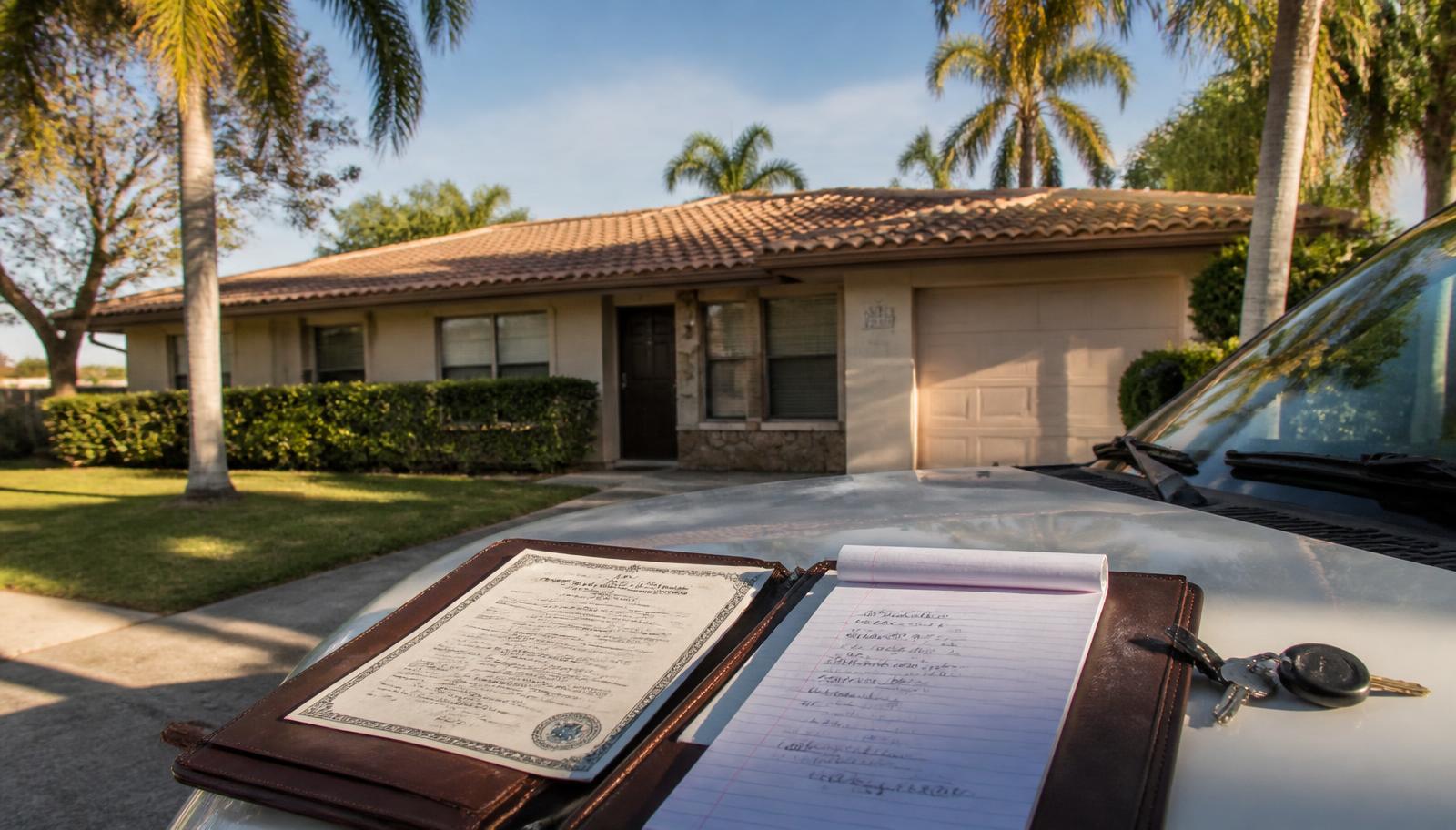
A 2026 guide to unlocking equity in Florida real estate you own free and clear: first lien position, LTV sizing tables, worked residential, commercial, multifamily, and land examples, plus a private loan vs. cash-out refinance vs. HELOC comparison.
If you own real estate in Florida with no mortgage, you may be sitting on a significant source of capital. A property that is free and clear has no existing mortgage or other financing secured against it, which means qualified owners can borrow against the equity instead of selling the asset.
Quick Answer: Can You Borrow Against a Paid-Off Property in Florida?
Yes. Florida real estate owned free and clear can potentially secure a new business-purpose private loan. Because there is no existing mortgage, the new lender can usually record a first-position lien. Loan size generally depends on the property's appraised value, the lender's maximum loan-to-value, property type, title, loan purpose, and exit strategy.
Key Takeaways
- Equity is usable. A free-and-clear property can potentially be pledged as collateral for financing rather than sold.
- First position. With no existing mortgage, the new loan can typically be recorded in first lien position, which is the strongest collateral posture for a lender.
- LTV drives sizing. The loan amount is the appraised value multiplied by the lender's maximum acceptable loan-to-value ratio.
- Appraisal, title, and exit matter. Equity alone does not approve a loan. Valuation, clear title, and a realistic repayment plan all carry weight.
- Business purpose only. These are investment and business-purpose loans on Florida property, not consumer mortgages.
How Much Can You Borrow Against a Paid-Off Property?
Most owners ask this second, right after asking whether it is possible at all. The short version: multiply the qualifying value by the lender's maximum loan-to-value.
A property valued at $1,000,000 with no mortgage, at 65% loan-to-value, produces:
$1,000,000 × 65% = $650,000
That is a sizing exercise, not an approval. Property type, appraisal, marketability, loan purpose, title, exit strategy, and lender guidelines all shape the final number and terms.
Sample Loan Sizing by Value and Leverage
| Property value (no mortgage) | 40% LTV | 50% LTV | 60% LTV | 65% LTV |
|---|---|---|---|---|
| $500,000 | $200,000 | $250,000 | $300,000 | $325,000 |
| $1,000,000 | $400,000 | $500,000 | $600,000 | $650,000 |
| $2,000,000 | $800,000 | $1,000,000 | $1,200,000 | $1,300,000 |
| $5,000,000 | $2,000,000 | $2,500,000 | $3,000,000 | $3,250,000 |
Illustrative only. Maximum leverage varies by property type, market, condition, and transaction.
What This Guide Covers
- What free and clear actually means
- How borrowing against a paid-off property works
- Why first lien position matters
- Why owners borrow instead of selling
- What determines how much a private lender will lend
- The role of the appraisal
- Worked examples, including land and commercial
- Private loan vs. cash-out refinance vs. HELOC
- Who this may and may not be for
- Risks to weigh before pledging the property
- Documents to have ready
- Frequently asked questions
What Does "Free and Clear" Mean in Real Estate?
A property is free and clear when the owner has no mortgage debt tied to it. That happens when the owner bought with cash, paid off the original mortgage, inherited the property without debt, held it long enough to complete repayment, or acquired land without financing.
Owning free and clear does not guarantee clean title. Judgments, code liens, unpaid taxes, open permits, and other claims can still exist. A lender and title company will review title before closing, and Florida owners can verify recorded documents through their county Clerk of Court and confirm assessment details with the county property appraiser.
How Do You Borrow Against a Paid-Off Property?
Instead of selling, the owner pledges the property as collateral for a new loan. The process generally runs like this:
- The borrower provides property details and the requested loan amount.
- The lender performs an initial review of collateral and purpose.
- Value is evaluated, usually through an appraisal.
- Title and supporting documentation are reviewed.
- The lender determines the maximum acceptable loan-to-value.
- Final terms and closing requirements are set.
- On closing, proceeds are released according to the transaction structure.
The borrower keeps ownership, now with debt secured against the property.
Why First Lien Position Matters
Because nothing else is recorded against the property, a new lender can typically take first lien position. First position means that lender is paid first from a sale or foreclosure proceeds, ahead of any later lien. That priority is why paid-off collateral often supports better leverage and cleaner structure than a second mortgage behind an existing bank loan. If you want the mechanics, our guide to first lien vs. second lien position walks through payoff order, and cross-collateralization covers what happens when more than one property secures a single loan.
Why Would Someone Borrow Against a Property They Already Own?
Real estate builds wealth, but that wealth is illiquid until the property is sold or financed. Common business and investment purposes include:
- Buying another investment property. An owner finds a deal that needs a fast close and raises capital against an owned asset instead of selling it.
- Funding a construction project. Available equity becomes part of a broader construction financing strategy.
- Renovating an investment property. Capital for repairs or upgrades that lift value or income.
- Business capital. Using investment or commercial real estate for a legitimate business purpose.
- Restructuring higher-cost business debt, subject to lender requirements.
- Time-sensitive opportunities. The constraint is rarely net worth. It is liquid cash today, which is where bridge financing often fits.
Florida Collateral Comes in Many Forms
Florida's property mix is unusually broad, and so is the collateral we see. Investment homes in Orlando and Jacksonville, small multifamily in Tampa and St. Petersburg, warehouses and light industrial along the I-4 corridor, retail and mixed-use in Miami and Fort Lauderdale, seasonal rentals in Naples and Sarasota, and raw or entitled land across Central Florida can all be candidates. Marketability differs sharply between those categories even when appraised values match.
Larger commercial requests, generally $5 million and up, are underwritten as commercial bridge loans, and our Florida guide walks through leverage, appraisal, documentation, and exit requirements at that size.
What Determines How Much a Private Lender Will Lend?
1. Property Value
The collateral's value anchors an asset-based transaction, and an appraisal helps establish current market value.
2. Property Type
Single-family rentals, multifamily, commercial buildings, warehouses, mixed-use, vacant land, development land, and specialized properties each carry different guidelines because liquidity and marketability differ.
3. Loan-to-Value Ratio
The more equity remaining above the loan, the larger the lender's cushion.
4. Loan Purpose
Private real estate loans are structured for business or investment purposes, and the lender will want to understand exactly how proceeds are used.
5. Exit Strategy
Short-term loans need a realistic repayment path: selling the property, refinancing into longer-term debt, selling another asset, completing and selling a development, or stabilizing and refinancing. Many of these loans carry a balloon payment at maturity, so the exit matters as much as the equity.
6. Title
A search can surface liens or claims the owner did not know about, and those generally must be resolved before closing.
7. Condition and Marketability
Condition, location, zoning, comparable sales, occupancy, and demand all shape the lender's view of the collateral.
Do You Need an Appraisal to Borrow Against a Paid-Off Property?
Valuation is usually central. Suppose an owner believes a property is worth $1,500,000 and underwriting receives an appraisal at $1,200,000. At 50% leverage:
- Owner's estimate: $1,500,000 → $750,000
- Appraised value: $1,200,000 → $600,000
That is a $150,000 difference in potential loan sizing from the valuation alone. Our guide to how private lenders evaluate real estate appraisals explains what underwriters actually read in the report.
Worked Examples
Residential Investment Property: $1.2M Value, $500K Request
A Florida investor owns a rental property outright, valued at $1,200,000, and needs $500,000 for a new development opportunity.
$500,000 ÷ $1,200,000 = 41.7% LTV. Roughly 58% of value remains above the loan. Underwriting still reviews appraisal, title, property, borrower, use of proceeds, and exit, but the collateral position is strong.
Commercial Property: $8M Value, $3M Request
A business owner holds a paid-off Miami-Dade industrial building appraised at $8,000,000 and requests $3,000,000 to acquire an adjacent parcel.
$3,000,000 ÷ $8,000,000 = 37.5% LTV. On commercial collateral, underwriting typically also reviews leases, rent roll, operating statements, expenses, and occupancy alongside the appraisal.
Income-Producing Multifamily: $1.5M Value, $600K Request
An owner holds a free-and-clear eight-unit building in Tampa appraised at $1,500,000 that generates $132,000 in annual gross rent at 95% occupancy, and requests $600,000.
$600,000 ÷ $1,500,000 = 40% LTV. The lender weighs both the collateral cushion and property performance. How much weight each carries varies by lender and program.
Vacant Land: $500K Value, $175K Request
An owner holds a paid-off, entitled half-acre parcel in Osceola County appraised at $500,000 and requests $175,000.
$175,000 ÷ $500,000 = 35% LTV. Land generally supports lower leverage than improved property with the same appraised value, because marketability and holding costs look different. Our vacant land financing guide and the land loan program page cover zoning, access, utilities, and entitlement considerations.
Private Loan vs. Cash-Out Refinance vs. HELOC
| Private business-purpose loan | Bank cash-out refinance | HELOC | |
|---|---|---|---|
| Primary underwriting focus | Collateral, equity, exit | Income, credit, property | Income, credit, primary residence equity |
| Typical timeline | Days to a few weeks | Weeks to months | Weeks |
| Typical term | Short-term, often with a balloon | Long-term amortizing | Revolving line |
| Investment and commercial property | Commonly used | Sometimes, with tighter guidelines | Usually limited or unavailable |
| Income documentation | Varies, often lighter | Extensive | Extensive |
| Best fit | Speed, unusual property, business purpose | Lowest long-term cost when you qualify | Flexible smaller draws |
See our comparison of a bridge loan vs. a HELOC for Florida investors for a deeper look at that tradeoff.
Who This Loan May Be For
- Real estate investors holding paid-off rentals
- Builders and developers needing project capital
- Landlords with equity in stabilized property
- Business owners with investment or commercial real estate
- Commercial property owners and landowners
- Owners of entities such as an LLC that hold Florida real estate
Who This May Not Be For
- Owners who qualify comfortably for conventional financing and do not need speed. A bank will usually cost less over a long hold.
- Owners without a clear repayment or refinance path. Short-term debt against a paid-off asset introduces real foreclosure risk.
- Owners who intend to sell soon anyway, where selling may be simpler than borrowing and paying closing costs twice.
- Consumer or personal-use borrowing against a primary residence, which is outside business-purpose lending.
- Borrowers whose numbers only work if everything goes right.
Do Private Lenders Check Credit?
Asset-based lending centers on collateral, equity, appraisal, structure, and exit rather than on debt-to-income ratio, W-2 income, and personal tax returns. That does not mean no requirements. Requirements vary by lender and transaction, so ask directly rather than assuming. Our article on why private lenders decline applications covers the common friction points.
What Are the Risks of Borrowing Against a Paid-Off Property?
Pledging the property changes your position. Before the loan: $1,000,000 property, $0 mortgage. After a hypothetical $500,000 loan: $1,000,000 property, $500,000 debt, roughly $500,000 gross remaining equity, plus a repayment obligation.
Other considerations include interest expense, origination fees, closing and title costs, appraisal cost, short terms, balloon maturities, refinance risk, and market value changes. If a borrower defaults and cannot cure, the collateral is at risk. That is why the exit strategy should be settled before closing, not after.
What Documents Should You Have Ready?
- Property address and ownership information
- Requested loan amount and intended use of proceeds
- Existing lien or payoff information, if any
- Current appraisal, if available, and property photos
- Insurance information
- Entity documents for an LLC or corporation
- Rent roll and leases for income-producing property
- Construction budget or plans when applicable
- Proposed exit strategy
Not every transaction requires every item. The property and structure determine what is necessary.
In Short
A free-and-clear property is real estate with no existing mortgage. Florida investors and business owners may be able to use qualifying paid-off real estate as collateral for a business-purpose private loan, usually in first lien position. Loan size generally depends on property value, loan-to-value, property type, title, loan purpose, and exit strategy.
The Bottom Line
Owning Florida real estate free and clear can be a powerful position. You may hold hundreds of thousands, or millions, in equity while holding far less cash. Five questions decide whether borrowing makes sense: What is the property worth? How much do you need? What will the money do? How much leverage does that create? How will the loan be repaid?
Have a Free-and-Clear Property in Florida?
Luminary Private Lending reviews the property and the request together. To start an initial review, send:
- Property address
- Estimated value
- Requested loan amount
- How you plan to use the funds
Get started or contact our team.
Author and Reviewer
Author. Ivan Padilla, Director of Growth and Real Estate Lending Specialist, Luminary Private Lending. Ivan works daily with Florida investors, builders, and business owners on bridge, construction, second mortgage, and vacant land financing. Meet the team.
Reviewed by. Kevin Mazzola, Founder, Luminary Private Lending.
Published: September 1, 2026. Last updated: September 2026. Last reviewed: September 1, 2026. Florida properties only. Business-purpose financing only. Educational content, not a loan commitment. All loans are subject to underwriting, appraisal, title review, eligibility, and final approval. Terms, leverage, rates, fees, and closing timelines vary by transaction.
Related Florida Lending Resources
Keep Reading
Latest Insights
Keep exploring Florida private lending insights.
Investor Education
Upfront Due Diligence Deposits: How Florida Borrowers Can Avoid Costly Financing Mistakes
Know who receives your money, what work it covers and what happens if financing fails. A practical Florida guide to upfront deposits, written fee terms and independent verification.

Investor Education
How Unclear Payoff Statements and Property Liens Can Delay a Private Real Estate Loan Closing
An unclear payoff or an unresolved lien can stall a Florida private loan even when the property has equity. This guide explains payoff statements, lien types, combined loan to value on second mortgages, paying liens at closing and how to prevent delays.

Investor Education
What Does 125% Lender’s Title Insurance Mean? Florida Private Lending Guide
A 125% lender’s title insurance requirement means the policy amount equals 125% of the loan principal. It does not mean the borrower receives 25% more money or pays a 25% fee. On a $1,950,000 loan, 125% coverage equals $2,437,500; actual protection depends on the policy terms.
Investor Education
Can You Get a Private Real Estate Loan Without Tax Returns in Florida?
Tax returns do not always reflect an investor's real financial strength. This Florida guide explains how asset-based private lenders evaluate property value, equity, loan-to-value, liquidity, use of funds and exit strategy instead of conventional income documentation.

Investor Education
Can a Newly Formed LLC Qualify for a Private Real Estate Loan in Florida?
A newly formed LLC may still qualify for private real estate financing in Florida. This guide explains what asset-based lenders review instead of operating history: property value, equity, liens, liquidity, the principals, documentation and the exit strategy.

Investor Education
Title Issues & Code Violations: Can They Get a Private Real Estate Loan Denied in Florida?
Strong equity and a supportive appraisal do not guarantee a closing. This Florida guide explains how title defects, recorded liens, municipal code liens, open permits and unpermitted work affect private lending, which issues are usually curable, what documentation to send up front, and why lien position matters as much as value.

Investor Education
Can an LLC Get a Real Estate Loan Without Personal Credit? A Florida Private Lending Guide
An LLC real estate loan without personal credit as the deciding factor is possible with asset-based private lenders. This Florida guide covers what lenders review instead, LTV math with worked scenarios, new-LLC and free-and-clear situations, the difference between a credit pull and a personal guarantee, and a borrower document checklist.

Investor Education
What Happens If a Property Appraises Lower Than Expected?
A low appraisal changes the numbers, not always the deal. How a lower-than-expected value affects LTV, loan proceeds, the appraisal gap, construction and refinance requests, and what Florida investors can do next.
Investor Education
What Is a Balloon Payment? A Complete Guide for Real Estate Investors in Florida
A balloon payment is a large final payment due at the end of a short term loan. Here is how balloon loans work, which programs use them, real Florida examples, the risks, and how investors plan an exit strategy before borrowing.
Investor Education
Purchase Price Higher Than the Listing? Here’s What Could Really Be Going On
A higher contract price can be legitimate, but a material unexplained difference deserves independent verification. This guide explains how lenders can reconcile the listing, contract, appraisal, title and closing figures.
Investor Education
What Do Private Lenders Look for in an Appraisal?
A private lender reads an appraisal for value, comparable sales, condition, marketability, zoning, and projected value at completion. Here are the 12 things Florida borrowers should know, with worked LTV, CLTV, and LTC examples.
Investor Education
LTV vs. LTC vs. ARV: What's the Difference in Real Estate Lending?
LTV measures the loan against property value, LTC measures it against total project cost, and ARV estimates value once the work is done. Here is how Florida private lenders use all three, with one deal calculated three ways.