Private Lending Guidelines
10 Reasons Private Lenders Decline Loan Applications (And How to Avoid Them)
Published By Luminary Private Lending
- Author:
- Ivan Padilla
- Reviewed By:
- Kevin Mazzola
- Published:
- August 4, 2026
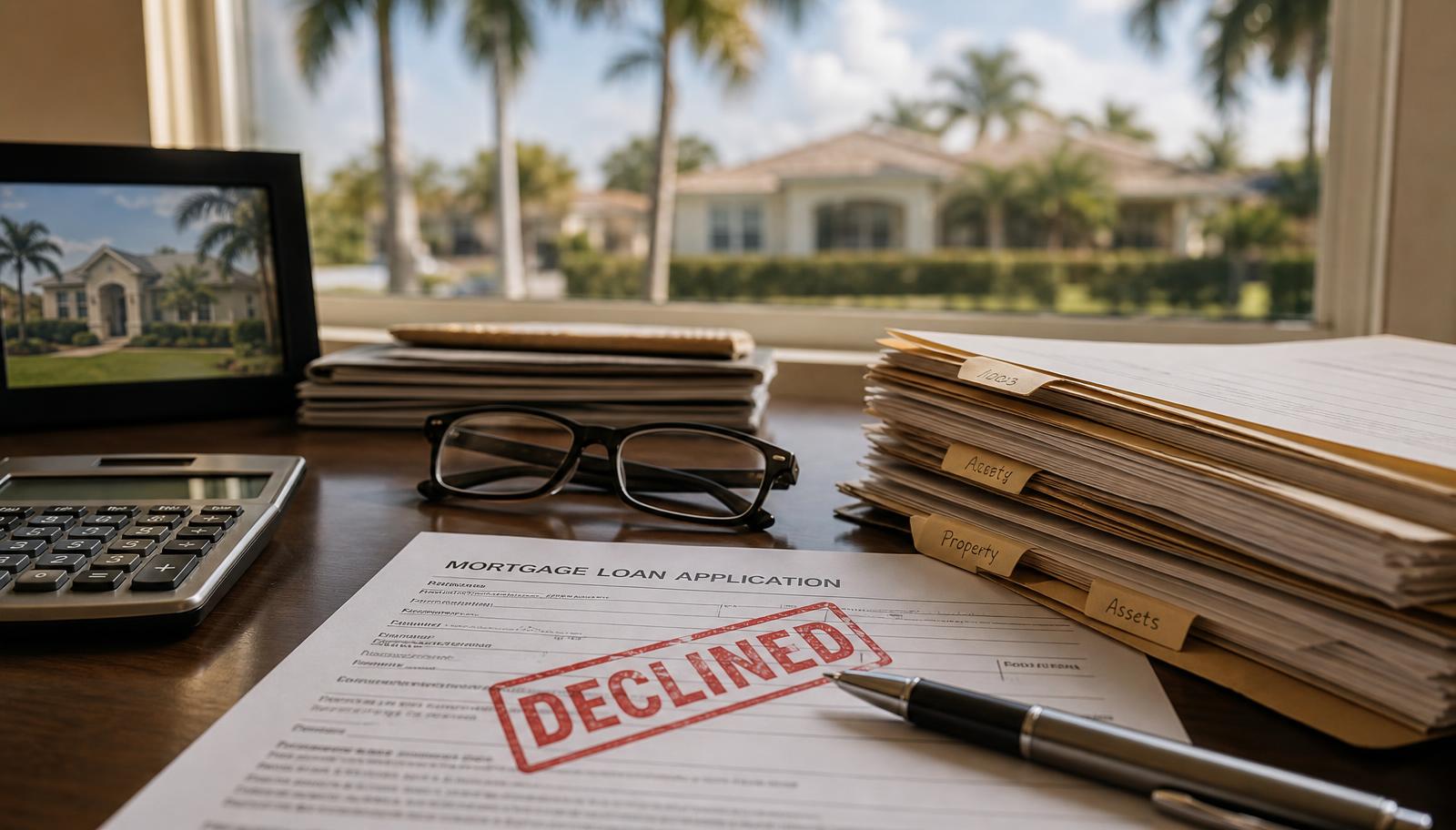
Insufficient equity, an ineligible property type, missing documents, or a weak exit strategy will sink a private loan request faster than a credit score will. Here are the 10 most common reasons applications get declined, and how to fix each one.
Private lenders are often the answer when a bank says no, but private lending is still underwriting. Not every request gets approved. Many borrowers assume a credit score decides the outcome. In asset-based lending, the entire transaction is what gets evaluated: property type, available equity, loan purpose, timeline, documentation, and the exit strategy.
How Private Lenders Review Loan Applications
Unlike banks, which lead with credit and income, private lenders and hard money financing sources lead with collateral. The underwriting process usually centers on:
- Property value and condition
- Available equity and loan-to-value ratio
- Exit strategy
- Loan purpose, typically a business-purpose loan
- Borrower and sponsor experience
- Documentation completeness
- Timeline and closing pressure
- Overall risk of the transaction
Guidelines vary from lender to lender. The common thread in collateral-based lending is reducing risk while delivering short-term real estate financing quickly.
Key Takeaway: Private lending declines are usually a mismatch between your request and a specific lender's program, not a verdict on you as a borrower.
The Top 10 Reasons Private Lenders Decline Loan Applications
1. Insufficient Equity
Thin equity is the single most common reason a request is declined. In equity financing against real property, the asset carries the loan, so the cushion between value and debt is what protects the lender.
For example:
- Property value: $500,000
- Mortgage balance: $420,000
- Available equity: $80,000
If the requested loan pushes past the lender's maximum LTV, approval is unlikely regardless of how strong the borrower is.
Can this be fixed? ✅ Possibly, by reducing the requested loan amount, paying down the existing lien, or adding collateral through a cross-collateralized structure.
2. The Property Is a Primary Residence
Many private lenders finance investment property loans only. Owner-occupied homes trigger consumer mortgage rules and additional compliance obligations that most asset-based lenders do not take on. Eligible collateral usually includes:
- Rental properties
- Commercial real estate
- Vacant land
- Construction projects
- Multifamily investments
- Fix-and-flip projects
Can this be fixed? ❌ Usually no with an investment-focused lender. A consumer mortgage lender is the correct path for a primary home.
3. The Property Type Falls Outside Guidelines
Some collateral simply carries too much risk or is too hard to resell. Property types frequently declined include:
- Manufactured and mobile homes
- Unpermitted structures and additions
- Properties with significant environmental issues
- Condemned properties
- Properties with unresolved title complications
Can this be fixed? ❌ Usually no, though title defects and permit issues can sometimes be cured before closing.
4. The Loan Purpose Does Not Match Available Programs
Private lenders fund defined scenarios. Commonly approved purposes include bridge financing, construction loan approval, land loans, cash-out refinancing, business-purpose real estate loans, and investment property acquisitions. A request that falls outside those programs is declined even when the collateral is strong.
Can this be fixed? ✅ Yes, by matching the request to the right program or lender.
5. Unrealistic Property Values
Overstating value stalls a file fast. Lenders verify value through comparable sales, Broker Price Opinions, automated valuation models, property appraisal reports, and internal underwriting review. Inflated expectations reduce available leverage and often end in a decline.
Can this be fixed? ✅ Yes, by pricing the request off a defensible, third-party supported value.
6. Incomplete Documentation
Speed is the product in private lending, and missing paperwork is the most avoidable delay. Commonly requested items:
- Government-issued ID
- Purchase contract, if applicable
- Construction budget
- Plans and permits
- Insurance information
- Current mortgage statement
- LLC formation documents
- Operating agreement
- Property photos
Can this be fixed? ✅ Yes, and it is the easiest fix on this list.
7. A Weak or Undefined Exit Strategy
Private loans are short term. Repayment has to come from somewhere specific: a property sale, a conventional refinance, a portfolio refinance, outside cash flow, or asset liquidation. An unclear payoff plan reads as risk.
Can this be fixed? ✅ Yes, by documenting a realistic, dated payoff path.
8. Construction Projects Without Adequate Planning
A lot alone is not a construction file. Most lenders want approved plans, builder information, a detailed budget, a draw schedule, permits, and a credible timeline before funding.
Can this be fixed? ✅ Yes, once the project package is complete.
9. Applying Outside the Lender's Geographic Area
Many private lenders operate in defined territories. Luminary, for instance, lends only on Florida investment property. Confirm the lending footprint before you spend time on an application.
Can this be fixed? ❌ No. Find a lender licensed and active in that market.
10. The Loan Amount Does Not Meet Program Minimums
Underwriting, valuation, title, and closing costs make very small loans uneconomical, so most lenders publish minimum and maximum loan sizes. Requests below the minimum are declined on size alone.
Can this be fixed? ✅ Sometimes, by consolidating needs into one larger request or blanketing multiple properties. You can size a request quickly with our loan calculator and pre-qualification tool.
Loan-to-Value (LTV) Explained
Loan-to-value compares the total loan amount to the property's current market value. A $300,000 loan against a $500,000 property is 60% LTV. Lower LTVs mean a larger equity cushion, which reduces lender risk and generally improves both approval odds and pricing. When more than one lien exists, lenders look at combined loan-to-value across every recorded lien, which is why second mortgage loans are sized off total leverage rather than the new loan alone.
Real Borrower Scenarios
Example 1: Strong Equity, Likely Approvable
John owns a Tampa rental property worth $400,000 with a $180,000 first mortgage. He requests a $70,000 bridge loan to fund a renovation. Combined leverage lands near 63% LTV, the property is non-owner-occupied, and his exit is a refinance after lease-up. This file has room to work.
Example 2: Thin Equity on a Primary Home, Likely Decline
Sarah owns a primary residence in Broward County with roughly 8% equity and wants cash out. There is no meaningful collateral cushion, and the property is owner-occupied. Most investment-focused private lenders will decline this request.
Does Bad Credit Automatically Disqualify You?
Not necessarily. Asset-based lending weighs available equity, property value, loan-to-value ratio, exit strategy, and project strength heavily. Credit history is one input among several, not the gate. Borrowers with past foreclosures or bankruptcies are sometimes approved when the collateral and structure fit the program.
Common Misconceptions
Myth: Private lenders approve everyone.
Reality: Private lenders still underwrite risk. They simply evaluate it differently than banks, leaning on collateral and exit rather than income documentation.
Myth: No credit check means no underwriting.
Reality: Valuation, title, insurance, entity review, and exit analysis all still happen, usually on a compressed timeline.
Bank vs. Private Lender
| Bank | Private Lender |
|---|---|
| Credit driven | Asset driven |
| 30 to 60 days to close | Often days, not weeks |
| Strict income verification | May emphasize property strength |
| Primary homes and consumer loans | Often investment focused |
| Long amortization | Short-term real estate financing with a defined exit |
How to Improve Your Chances of Approval
- Know your property's current market value before you request an amount
- Calculate available equity and your resulting LTV
- Gather supporting documents in advance
- State clearly how loan proceeds will be used
- Present a realistic, dated exit strategy
- Apply to the program that actually fits the project
Approval Checklist
- ✅ Verify property value with comps or a BPO
- ✅ Pull your current mortgage statement
- ✅ Write down your exit strategy and target date
- ✅ Confirm property type eligibility
- ✅ Organize permits, plans, and budget for construction files
- ✅ Have entity documents and insurance ready
Market Context and Statistics
American homeowners collectively hold trillions of dollars in tappable home equity, which is why equity-based lending has expanded well beyond banks. Private and alternative real estate lending has continued to grow as investors seek faster execution than conventional financing allows. Public data from the Federal Housing Finance Agency and FRED tracks the value and equity trends behind that shift.
Definitions
- LTV (loan-to-value ratio): loan amount divided by current property value.
- ARV (after-repair value): projected value once renovation or construction is complete.
- Bridge loan: short-term financing that spans the gap between acquisition and sale or permanent financing.
- Asset-based lending: underwriting driven primarily by collateral value rather than borrower income.
- Hard money loan: private financing secured by real property, often on transitional or distressed collateral.
- Exit strategy: the documented plan to repay the loan, typically sale or refinance.
- Underwriting: the review of collateral, leverage, documentation, and repayment risk.
- Draw schedule: the staged release of construction funds tied to completed work and inspections.
Author's Perspective
After reviewing thousands of investment property financing requests, we have found that most declined applications involve equity, documentation, or property eligibility, not simply a credit score. The borrowers who get approved are usually the ones who arrive with a value they can defend, a complete file, and a payoff plan with a date on it.
About Luminary Private Lending
Luminary Private Lending is a direct private lender focused exclusively on Florida. We underwrite bridge loans, construction financing, second mortgages, and vacant land loans for investors, builders, and entity borrowers across every major Florida county. Learn more about our team or contact us directly.
Frequently Asked Questions
See the FAQ section below for detailed answers on borrower eligibility, loan approval factors, and private lending guidelines in Florida.
The Bottom Line
Every private lender has unique underwriting guidelines, so being declined by one lender does not necessarily mean your project is not financeable. Understanding how lenders evaluate equity, collateral, property eligibility, documentation, and exit strategy allows you to strengthen future applications and choose financing programs that better match your investment goals.
Sources & References
- Consumer Financial Protection Bureau, mortgages and home equity
- Federal Housing Finance Agency, house price and equity data
- U.S. Department of Housing and Urban Development
- Freddie Mac Research
- Fannie Mae Research and Insights
- FRED, Federal Reserve Bank of St. Louis
Related Reading
- Bridge Loan vs. HELOC for Florida Investors
- What Is a Bridge Loan in Florida?
- Vacant Land Financing
- Florida Private Lending by County
- Get started with a pre-qualification
Reviewer & Author
Author. Ivan Padilla, Director of Growth and Real Estate Lending Specialist, Luminary Private Lending. Ivan works daily with Florida real estate investors on bridge, construction, second mortgage, and vacant land financing, including residential, land, and commercial collateral.
Reviewed by. Kevin Mazzola, Founder of Luminary Private Lending. Kevin has structured asset based financing for Florida investors and entity borrowers statewide, with a focus on time sensitive acquisitions and equity-based lending.
Published: August 4, 2026. Last updated: August 4, 2026. Last reviewed: August 4, 2026. Editorial and lending review completed by Luminary Private Lending. This article is educational and is not a commitment to lend or an offer of credit.
Related Florida Lending Resources
Keep Reading
Latest Insights
Keep exploring Florida private lending insights.

Broker Resources
Florida Private Lending Partner for Real Estate Brokers
A practical guide for brokers bringing Florida real estate opportunities to Luminary, including eligible deal types, the submission checklist, review process, common delays and transaction specific limitations.

Investor Education
Can an LLC Get a Real Estate Loan Without Personal Credit? A Florida Private Lending Guide
An LLC real estate loan without personal credit as the deciding factor is possible with asset-based private lenders. This Florida guide covers what lenders review instead, LTV math with worked scenarios, new-LLC and free-and-clear situations, the difference between a credit pull and a personal guarantee, and a borrower document checklist.

Investor Education
What Do Private Lenders Look for in an Appraisal?
A private lender reads an appraisal for value, comparable sales, condition, marketability, zoning, and projected value at completion. Here are the 12 things Florida borrowers should know, with worked LTV, CLTV, and LTC examples.

Investor Education
What Is Cross Collateralization in Private Lending? A Complete Guide for Real Estate Investors
Cross collateralization lets investors combine equity from several properties to secure one loan. Here is how the collateral package works, who it fits, the risks, lender requirements, and a Florida example that closed in ten days.

Construction Financing
Construction Loan Draw Schedule Explained: How Private Lenders Release Funds
Construction loans do not fund in one lump sum. Funds release in stages tied to completed milestones. Here is the typical draw schedule, the documentation each request needs, how inspections and interest work, and why draws get delayed.

Commercial Real Estate
Florida Commercial Real Estate Market 2026: Why Investors Prefer Private Lending
Higher rates, tighter bank underwriting, and rising insurance costs are reshaping Florida's commercial real estate market in 2026. See the sectors, regions, and private lending strategies investors are using now.

Florida Market
Florida Private Lending: Why Orlando's Tech Growth Is Creating Real Estate Investment Opportunities in 2026
Orlando's tech boom, Gen Z migration, and Central Florida growth corridors are creating real opportunities for investors. See how Florida private lending, bridge, construction, land, and second-mortgage programs, helps close deals faster in 2026.

Florida Market
Why Orlando's Growth Is Creating New Opportunities for Private Lending in Central Florida
Orlando is attracting more high-net-worth buyers, investors, and developers than ever. Here's why private lending has become the go-to financing tool across Central Florida in 2026.

Investor Education
How Unclear Payoff Statements and Property Liens Can Delay a Private Real Estate Loan Closing
An unclear payoff or an unresolved lien can stall a Florida private loan even when the property has equity. This guide explains payoff statements, lien types, combined loan to value on second mortgages, paying liens at closing and how to prevent delays.

Investor Education
Can You Get a Private Real Estate Loan Without Tax Returns in Florida?
Tax returns do not always reflect an investor's real financial strength. This Florida guide explains how asset-based private lenders evaluate property value, equity, loan-to-value, liquidity, use of funds and exit strategy instead of conventional income documentation.

Investor Education
Can a Newly Formed LLC Qualify for a Private Real Estate Loan in Florida?
A newly formed LLC may still qualify for private real estate financing in Florida. This guide explains what asset-based lenders review instead of operating history: property value, equity, liens, liquidity, the principals, documentation and the exit strategy.

Investor Education
Title Issues & Code Violations: Can They Get a Private Real Estate Loan Denied in Florida?
Strong equity and a supportive appraisal do not guarantee a closing. This Florida guide explains how title defects, recorded liens, municipal code liens, open permits and unpermitted work affect private lending, which issues are usually curable, what documentation to send up front, and why lien position matters as much as value.