Florida Real Estate Market
Florida Housing Construction Trends 2026: What Fewer Building Permits Mean for Real Estate Investors
Published By Luminary Private Lending
- Author:
- Ivan Padilla
- Reviewed By:
- Kevin Mazzola
- Published:
- July 16, 2026
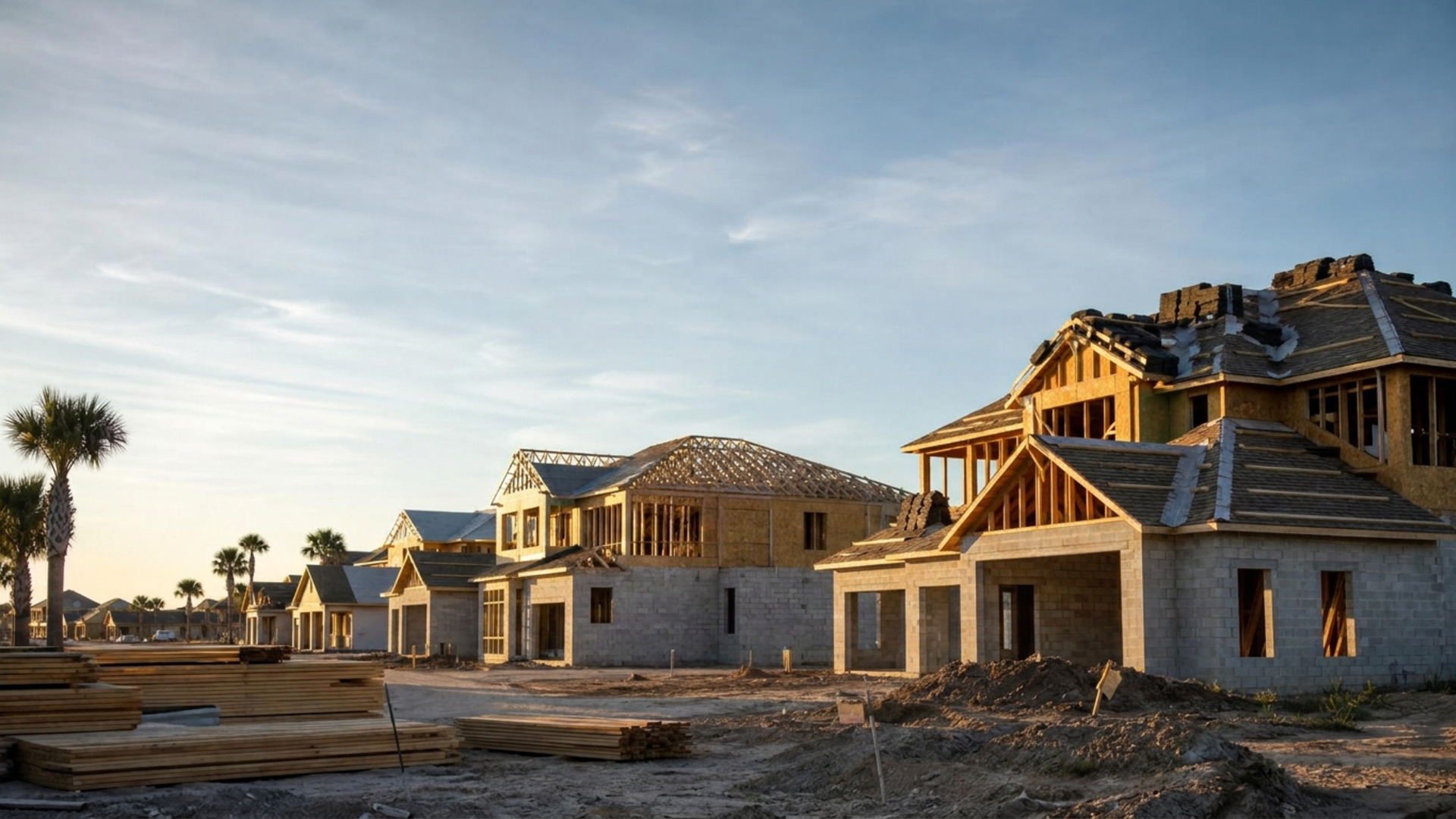
Florida building permits have slowed in 2026. Here's what fewer new construction starts mean for investors, plus the loan programs that help you move faster than traditional banks.
Florida has been one of the fastest-growing states in the country for years. Now the market is entering a different phase: building permits have slowed across several Florida metros, signaling fewer new construction starts than in previous years. For disciplined investors, cooler construction cycles often create the best long-term opportunities.
Who This Guide Is For
- Florida real estate investors
- Builders and developers
- Vacant land buyers
- House flippers and BRRRR investors
- Commercial and mixed-use investors
This guide focuses on investment real estate. It is not intended for primary home buyers, FHA, VA, or conventional owner-occupied financing.
Florida Construction Snapshot (2026)
Building permits are a leading indicator, issued before construction begins, so a drop in permits usually signals slower future supply, not a collapse in demand. Here's how the current cycle compares to last year.
| Metric | 2025 | 2026 | Trend |
|---|---|---|---|
| Single-Family Permits (FL) | ~125,000 | ~108,000 | ▼ |
| Housing Starts (FL) | ~118,000 | ~102,000 | ▼ |
| Population Growth (FL) | +365K | +310K | ▲ |
| 30-Yr Mortgage Rate | ~6.9% | ~6.6% | — |
| Active Inventory (FL) | Rising | Higher | ▲ |
Ranges are approximate. Sources: U.S. Census Bureau. Building Permits Survey, NAHB Housing Economics, Florida Realtors, Freddie Mac PMMS, FRED, Florida Office of Economic & Demographic Research. Verify current figures at time of underwriting.
What Are Building Permits?
A building permit is issued by a local government confirming that construction plans meet local codes and safety rules. Because permits are pulled before a project starts, permit activity is one of the earliest signals of where the housing market is headed. When permits rise, builders are optimistic. When they slow, builders are waiting on financing costs, materials, insurance, or buyer demand.
Why Building Permits Are Declining in Florida
There isn't one single cause, several economic factors are working together.
1. Higher Borrowing Costs
Elevated rates have raised borrowing costs for both builders and buyers, and many developers are being more selective about which projects break ground.
2. Elevated Construction Costs
Material and labor costs remain above historical averages. Builders want to protect margins before pulling permits.
3. Insurance Pressure
Rising Florida property insurance premiums are increasing carrying costs on both existing and planned projects.
4. Buyers Taking More Time
Today's buyers are negotiating, comparing homes, and exploring financing options, a slower pace that filters back into builder decisions.
5. Improving Inventory
More listings are available across many Florida markets. Some builders are pausing new starts to let existing inventory absorb.
Florida Market Breakdown
Florida is not one single market. Permit and inventory trends look very different across regions.
Central Florida
- Orlando, Orange County demand remains strong near Lake Nona and the tourism corridor.
- Kissimmee, Osceola County continues to attract short-term rental investors.
- Lakeland, Polk County benefits from the I-4 logistics corridor and steady population inflow.
Southwest Florida
- Naples, Collier County luxury market is more balanced heading into 2026.
- Fort Myers & Cape Coral, Lee County continues to see rebuilding and infill development.
South Florida
- Miami, Miami-Dade permit activity has cooled, but demand for infill product remains resilient.
- Fort Lauderdale, Broward County multifamily and mixed-use pipelines are being repriced.
- West Palm Beach, Palm Beach County continues to see wealth migration and boutique development.
Tampa Bay
- Tampa, Hillsborough County remains one of the strongest job markets in the state.
- Clearwater & St. Petersburg, Pinellas County continues to attract relocation buyers.
Northeast Florida
- Jacksonville, Duval County offers more affordable entry points for investors.
Does Fewer Construction Projects Mean a Bad Market?
Not necessarily. Real estate moves in cycles, and adjustments help stabilize prices and reduce excessive competition. For investors, slower construction markets often produce better buying conditions, more motivated sellers, more time for due diligence, and less competition from other buyers.
Advantages and Challenges
| Advantages | Challenges |
|---|---|
| Less competition | Higher insurance costs |
| Better negotiations | Elevated construction costs |
| More inventory | Interest-rate uncertainty |
| Flexible financing opportunities | Longer sales timelines |
What This Means for Each Luminary Loan Product
Construction Loans
As traditional banks tighten, many builders are looking for faster, asset-based capital. Construction financing is designed for investors developing ground-up residential and commercial projects across Florida.
Vacant Land Financing
When permits slow, motivated sellers show up with discounted lots and pad-ready parcels. Vacant land financing helps investors acquire and hold strategic land as future development picks back up.
Bridge Loans
Timing is everything in a shifting market. Bridge loans give investors the speed to close on discounted properties, distressed assets, or auction opportunities before traditional buyers can react.
Second Mortgages
Investors sitting on appreciated equity often use a business-purpose second mortgage to unlock capital for a new deal without disturbing their existing first-lien financing.
| Traditional Bank | Private Lending |
|---|---|
| 30–60 day approvals | Faster closings |
| Heavy documentation | Asset-focused review |
| Strict underwriting | Flexible structures |
| Lower flexibility | Tailored financing |
Real-World Scenario
An investor identifies a discounted vacant lot in Orange County because another developer delayed construction. With financing already in place, they purchase the parcel below recent comparable sales and hold it while infrastructure improvements continue nearby, positioning for a stronger exit as the next cycle picks up.
What Investors Should Watch in the Next 12 Months
- Mortgage rate direction (see Freddie Mac PMMS).
- Building permit activity by county (see Census BPS).
- Active inventory and months of supply in your target submarket.
- Net domestic migration into Florida (see Florida EDR).
- Property insurance premium trends.
Investment Timeline
- Next 30 Days, Research local inventory and permit activity.
- Next 90 Days, Get financing pre-qualified and lender relationships in place.
- Next 6 Months, Monitor county-level permits and pricing.
- Next 12 Months, Evaluate long-term appreciation and refinance exits.
Five Common Mistakes Investors Make
- Waiting for the "perfect" market.
- Ignoring carrying costs (taxes, insurance, HOA/CDD).
- Underestimating Florida insurance premiums.
- Overpaying for vacant land without an exit plan.
- Shopping before securing financing.
Investment Checklist
- ☐ Research county growth trends
- ☐ Review permit activity by ZIP
- ☐ Verify zoning and entitlements
- ☐ Estimate insurance and taxes
- ☐ Model construction and carrying costs
- ☐ Secure financing pre-approval
- ☐ Define primary and backup exit strategies
Ivan Padilla's Perspective
"Market slowdowns often create opportunities for investors who already have financing in place. Rather than trying to perfectly time the market, the investors we see winning in Florida focus on finding strong properties with long-term potential, and they move quickly when the right deal appears." Ivan Padilla, Director of Growth and Real Estate Lending Specialist, Luminary Private Lending
Luminary Market Insight
Although building permits have slowed across parts of Florida, demand for investment properties remains supported by population growth, continued business relocation, and limited long-term housing supply. Investors who secure financing during slower construction cycles may benefit from reduced competition and stronger negotiating leverage, particularly for vacant land, distressed acquisitions, and value-add repositions.
Glossary
- Building Permit, a local approval required before construction can begin.
- Housing Starts, the number of new residential projects that have broken ground.
- Inventory, active homes for sale in a given market.
- Bridge Loan, short-term financing used to acquire, refinance, or reposition property.
- LTV, loan-to-value ratio, the loan amount as a percentage of property value.
- Appreciation, the increase in a property's value over time.
About the Author
Ivan Padilla is the Director of Growth and Real Estate Lending Specialist at Luminary Private Lending and works with Florida real estate investors on bridge financing, construction, second mortgages, and vacant land investments. Reviewed by Kevin Mazzola. Learn more about Luminary or contact our team.
Last Updated: July 2026, reviewed periodically to reflect current Florida real estate and lending trends. This article is for educational purposes only and is not financial, legal, or investment advice. Market figures are approximate and change frequently.
Related Florida Lending Resources
Keep Reading
Latest Insights
Keep exploring Florida private lending insights.
Florida Real Estate Market
Southwest Florida Foreclosures Are Rising in 2026: What It Means for Florida Real Estate Investors
Cape Coral and Fort Myers are leading Florida in foreclosure filings. It's not another 2008, it's a market reset. Here's what Florida real estate investors need to know, and how to move fast.
Florida Real Estate Market
Fastest-Growing Home Prices Around Orlando in 2026: What Florida Investors Need to Know
Where Orlando-area home prices are rising fastest in 2026, which suburbs to watch, and how bridge, construction, second-mortgage, and vacant-land financing help investors act.
Florida Real Estate Market
Central Florida Real Estate Market 2026: Is Now the Right Time to Buy Investment Property?
Central Florida inventory is rising, negotiations are more balanced, and investors have new opportunities in 2026, here's what's changing and how to finance your next deal.
Florida Housing Market
Florida Housing Market Update 2026: What Rising Northeast Florida Home Prices Mean for Real Estate Investors
Northeast Florida home prices climbed ~5.1% while inventory improved and homes sold faster. See what this means for investors using bridge loans, construction financing, and value-add strategies across Jacksonville, St. Augustine, and surrounding counties.
Florida Housing Market
Florida Housing Market 2026: Is Now a Better Time for Real Estate Investors?
Florida's housing market is rebalancing in 2026, more inventory, longer days on market, and real negotiating room. See what it means for investors, builders, and the bridge and construction financing that wins deals.
Florida New Construction
Why Florida's New Construction Market Offers Opportunities for Real Estate Investors in 2026
Population growth, job expansion, and tight inventory are fueling Florida's 2026 new construction boom. See market data, investor playbooks, and the private financing winning deals.
Commercial Real Estate
Florida Commercial Real Estate Market 2026: Why Investors Prefer Private Lending
Higher rates, tighter bank underwriting, and rising insurance costs are reshaping Florida's commercial real estate market in 2026. See the sectors, regions, and private lending strategies investors are using now.
Florida Housing Market
Is Florida Building Enough Homes? What Every Investor Needs to Know in 2026
Florida's home construction has slowed in Orlando and other markets while demand keeps climbing. See the latest data, investor playbooks, and the bridge and construction financing winning deals in 2026.
Florida Market
Florida Housing Market Growth in 2026: Key Insights for Investors
Florida's 2026 housing market is opening one of the best buying windows in years. See investor stats, city outlooks, county growth, and how private lending closes deals fast.
Florida Market
Miami-Dade Development Boom Creates New Opportunities for Florida Real Estate Investors in 2026
Miami-Dade's 2026 development boom is creating fresh opportunities for Florida Real Estate Investors. See how Florida Hard Money Lenders Residential financing, bridge, construction, land, and second mortgages, helps investors move first in Miami, Hialeah, Doral, Kendall, Coral Gables, and Homestead.
Florida Market
Osceola County Growth Update: Impact of 1,000 New Homes on Florida Real Estate Investors
Osceola County is set to add approximately 1,000 new homes, here's what the expansion could mean for Florida investors, builders, landowners, and developers watching Central Florida.
Florida Market
Will Florida End Property Taxes? What Real Estate Investors Need to Know
Florida is debating major property tax changes. Here's a factual, investor-focused breakdown of how the system works today, what reform could mean for cash flow and values, and what to do right now.