Real Estate Investing
Florida Real Estate Wire Fraud: How Investors Can Protect Their Closing Funds
Published By Luminary Private Lending
- Author:
- Ivan Padilla
- Reviewed By:
- Kevin Mazzola
- Published:
- July 18, 2026
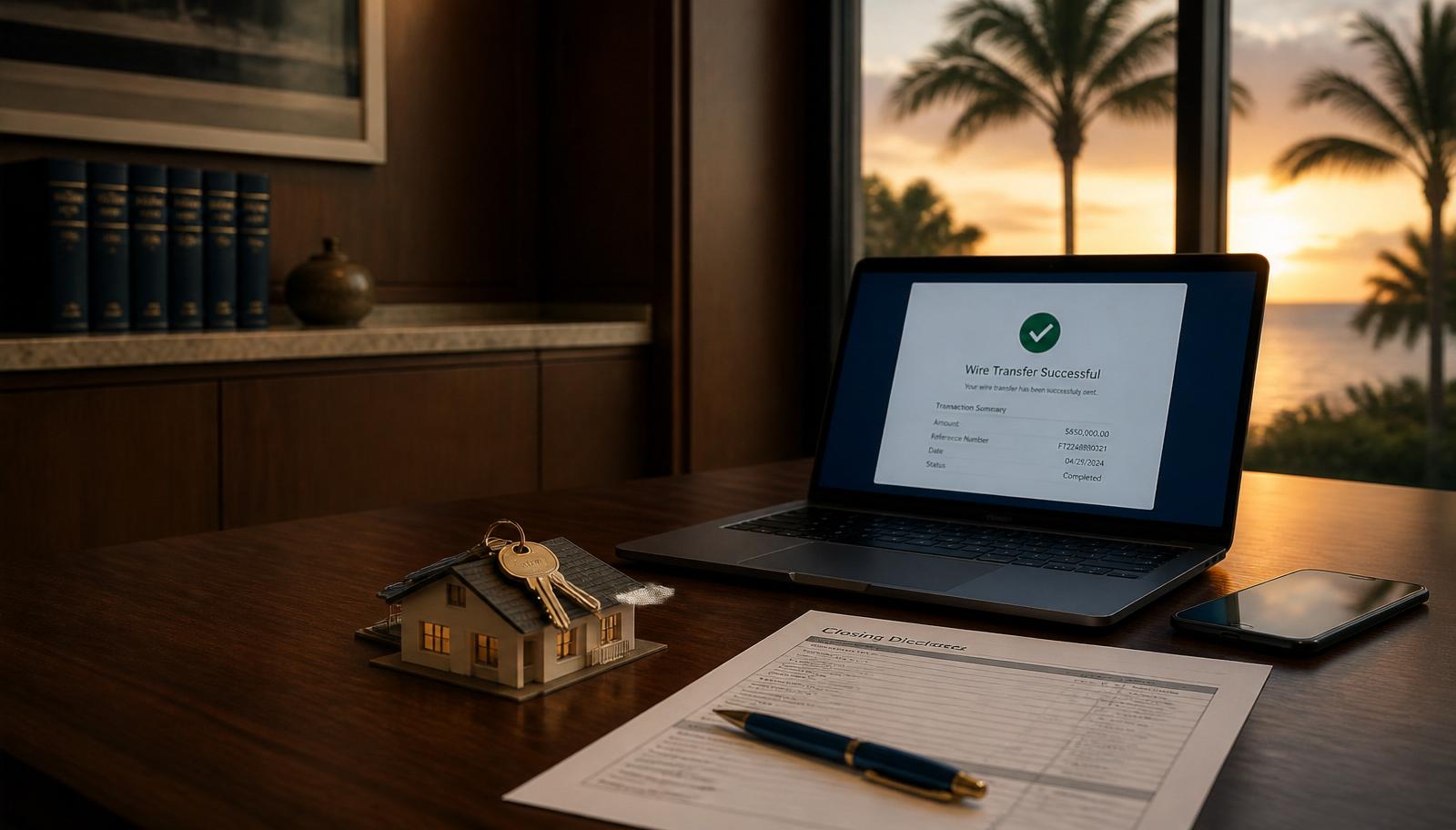
Florida real estate investors move millions through digital closings every year, making them a growing target for wire fraud. Here's how to spot the scams and protect your closing funds.
Florida real estate investors move millions of dollars every year through digital closings, which makes them a prime target for wire fraud. A single fraudulent email or a fake set of "updated" wiring instructions can redirect closing funds to a criminal account in minutes. This guide explains how Florida investors, builders, and property owners can identify wire fraud risk and protect their money before every closing.
What Is Florida Real Estate Wire Fraud?
Wire fraud in real estate occurs when a scammer deceives a buyer, investor, or borrower into sending closing funds to a fraudulent account instead of the legitimate title company, closing attorney, or escrow agent. Criminals often gain access to email threads, or send convincing look-alike emails, that appear to come from a trusted party in the transaction. The fake message typically contains "updated" wiring instructions, urgent language, and pressure to send funds before closing. Once the money leaves your account, recovering it is extremely difficult.
Why Florida Investors Are Targeted
Florida attracts scammers because of the sheer volume, speed, and size of real estate transactions across the state. Florida real estate investors purchasing properties often use bridge loans to move quickly, and builders managing draws rely on construction financing, both of which involve time-sensitive wires that criminals target. Common risk factors include:
- High volume of vacation and second-home purchases
- Large numbers of cash buyers and international buyers
- Active fix-and-flip and BRRRR investors
- New construction and hurricane rebuild projects
- Fast closings driven by competitive markets
- Heavy reliance on email between buyers, title companies, and lenders
Markets from Orlando and Tampa to Miami, Jacksonville, Fort Lauderdale, Naples, and Southwest Florida all see steady investor activity, and steady scam attempts. Investors using equity-based financing across the state can review our Florida private lending coverage for market context.
Florida Real Estate Wire Fraud Statistics
Florida is one of the most active real estate markets in the United States, and that scale makes it a repeat target for closing-related fraud. Even without publishing a single fabricated number, the structural factors are clear:
- Florida consistently ranks among the top states for total residential real estate transaction volume.
- The state attracts a high concentration of domestic relocation buyers and international investors.
- Cash-heavy transactions and short closing windows create attractive targets for criminals.
- High-value coastal and luxury properties raise the potential payout of a single successful fraud attempt.
- The FBI IC3 has consistently listed Florida among the top states by both victim count and reported losses across cybercrime categories, including BEC and real estate fraud.
See the FBI IC3 Annual Reports and ALTA Wire Fraud resources for the most current national figures.
Where Wire Fraud Happens During a Florida Closing
Understanding the closing timeline shows where scammers strike:
- Buyer signs the purchase agreement
- Title company opens escrow
- Closing documents are prepared
- Wiring instructions are sent ← primary attack point
- Buyer transfers funds
- Closing completes
Most attacks target step 4, when scammers impersonate the title company and send "corrected" instructions right before the wire is sent.
Who Sends Wire Instructions in a Florida Real Estate Transaction?
Florida investors often ask who is actually responsible for the wiring instructions on their closing. Several parties may play a role:
- Title company: In most Florida residential closings, the title company holds escrow and issues wiring instructions for the buyer's funds.
- Closing attorney: Florida allows both title companies and attorneys to close real estate transactions. When an attorney closes the deal, their trust account typically receives the wire.
- Escrow agent: An escrow agent, often part of the title company, safeguards funds and documents until closing conditions are met.
- Lender: Private lenders and banks send loan proceeds directly to the closing agent's escrow account. Lenders do not typically instruct the borrower where to send their down payment.
The key rule: no matter who sends the instructions, always verify the account details by phone using a number you already trust, never a number provided inside the same email.
How Criminals Get Your Information
Wire fraud rarely starts with a random guess. Criminals research their targets before striking:
- Email account hacking: Compromised inboxes of agents, buyers, or title staff give scammers real transaction details.
- Public property records: Recorded contracts and pending sales are searchable and reveal parties, prices, and timing.
- Social media research: Announcements about new properties, closings, or projects tell scammers exactly when to strike.
- Phishing emails: Fake login pages harvest credentials for email and cloud storage.
- Fake invoices and forwarding rules: Once inside an inbox, criminals set silent rules that hide their replies from the real user.
- Compromised agent accounts: Real estate agents juggle dozens of deals, making their inboxes a high-value target.
Five Warning Signs of Florida Real Estate Wire Fraud
1. Last-Minute Changes to Wiring Instructions
If you receive "updated" instructions hours before closing, stop and verify by phone. Legitimate title companies rarely change bank information at the last minute.
2. Pressure to Act Immediately
Scammers create false urgency, claiming the deal will fall through if you don't wire funds now. Real professionals welcome verification.
3. Slightly Different Email Addresses
Look closely at sender addresses. A single changed letter, added character, or look-alike domain is a classic sign of Business Email Compromise (BEC).
4. Requests for Secrecy
Any request to communicate only by email, or to avoid calling the office, should be treated as a red flag.
5. Unexpected Payment Requests
Verify anything unexpected, especially if the amount, timing, or account differs from what you were told.
Legitimate Title Company vs Fraudulent Email
| Legitimate Title Company | Fraudulent Email |
|---|---|
| Encourages you to call and verify | Sends urgent, "do not call" emails |
| Uses established, known contacts | Changes bank details late in the process |
| Never pressures you | Creates artificial urgency |
| Consistent email domain and signature | Slightly altered domain or display name |
| Documents match prior communications | New account, new bank, new routing number |
Wire Fraud vs Title Fraud vs Identity Fraud
| Fraud Type | What Happens |
|---|---|
| Wire Fraud | Closing funds are redirected to a criminal account |
| Title Fraud | Ownership documents are forged or manipulated |
| Identity Fraud | A scammer impersonates a real buyer or seller |
5 Things Florida Investors Should Never Do Before Closing
- ❌ Trust new wiring instructions sent only by email
- ❌ Use a phone number from a suspicious or "updated" email
- ❌ Wire money while distracted, traveling, or rushed
- ❌ Ignore small changes in email addresses or display names
- ❌ Assume title companies, attorneys, or lenders cannot be impersonated
Ivan Padilla's Perspective
How to Protect Yourself Before Sending Funds
Always Call to Verify
Never rely on emailed wiring instructions alone. Call the title company or closing attorney using a phone number from their official website or a document you received earlier, never a number in the "updated" email.
Verify Every Detail
- Bank name
- Account number
- Routing number
- Beneficiary name
- Wire amount
A single incorrect digit can send funds to the wrong account.
Be Cautious with Email
Treat any unexpected email about money as suspicious, especially those with attachments, links, or urgent language.
Confirm Large Transfers with Your Bank
Many banks offer additional verification for large outgoing wires. If unsure, ask your bank to add extra checks before releasing funds.
Wire Transfer Safety Checklist
Real Estate Investor Scenarios
Example 1: Fix-and-Flip Investor
An investor purchasing a $350,000 Tampa property receives an email one hour before closing saying the title company's bank details have changed. They wire the down payment. The email was fake, the funds are gone. Loss: over $100,000. A quick call to their bridge loan closing agent would have caught it.
Example 2: New Construction Draw
A builder receives "updated" payment instructions for a construction draw on a Central Florida project. The wire goes to a fraudulent account. Loss: an entire draw payment and weeks of delay. Verified draw procedures through the construction financing team are the fix.
Example 3: Second Mortgage Cash-Out
An investor closing a second mortgage receives fake wiring instructions from what appears to be their attorney's email. A quick phone call to the attorney's office would have caught the impersonation.
What To Do If You Think You've Been Scammed
Time is critical. If you suspect fraud:
- Contact your bank immediately and request a wire recall
- Notify the receiving bank if known
- Contact your title company, closing attorney, and lender
- Report to local law enforcement
- File a complaint with the FBI Internet Crime Complaint Center (IC3)
- Report to the Federal Trade Commission
The faster your bank acts, the better the chance of freezing funds before they are withdrawn.
Sources & References
- FBI Internet Crime Complaint Center (IC3) Annual Reports
- FTC. Business Email Imposters & Consumer Alerts
- American Land Title Association (ALTA) Wire Fraud Resources
- CFPB. Mortgage Closing Scams Consumer Guidance
People Also Ask
Is wire fraud common in Florida real estate?
Yes. Florida consistently ranks among the top U.S. states for reported real estate wire fraud, driven by high transaction volume, cash and international buyers, and fast closings.
Can a bank recover a fraudulent wire transfer?
Sometimes. Recovery is most successful when the sending bank is notified within hours. Once funds are withdrawn from the receiving account, recovery becomes very difficult.
Does title insurance protect against wire fraud?
Standard title insurance generally does not cover wire fraud losses. Some closing agents carry separate cyber-fraud coverage. Always ask what protections exist before closing.
Are cashier's checks safer than wire transfers?
Cashier's checks avoid the wiring-instructions attack vector but come with their own risks, including counterfeit checks. Verified wire transfers remain the standard for large real estate closings.
Can hackers change wiring instructions?
Yes. Hackers frequently compromise email accounts of buyers, agents, or title staff and send convincing look-alike instructions from within legitimate email threads.
Why Borrowers Work With Luminary
Looking for a Florida private lender for your next investment property, construction project, or land acquisition? Luminary Private Lending helps investors secure fast, asset-based financing with transparent communication from application to closing, and we walk every borrower through wire-verification best practices before funds move.
- Florida-focused private lender
- Equity-based lending for business-purpose investment properties
- Fast decisions and clear timelines
- Transparent communication from application to closing
- Investor-focused financing across bridge, construction, land, and second mortgages
Related Guides
- Bridge Loans
- Construction Financing
- Vacant Land Financing
- Second Mortgages
- Florida Private Lending
- Orange County
- Osceola County
- Seminole County
- Polk County
- Brevard County
- Hillsborough County
- Pinellas County
- Miami-Dade County
- Broward County
- Palm Beach County
- About Luminary
- Contact
About the Author
Written by Ivan Padilla, Director of Growth and Real Estate Lending Specialist, Luminary Private Lending. Ivan works with Florida real estate investors, builders, and property owners seeking asset-based financing. This article was reviewed by Kevin Mazzola, Founder of Luminary Private Lending.
Last updated: July 2026. Next scheduled review: January 2027. Statistics and recommendations are reviewed every 6 months to keep this guide current. This article is for educational purposes only and does not constitute legal, financial, or investment advice.
Related Florida Lending Resources
Keep Reading
Latest Insights
Keep exploring Florida private lending insights.
Investor Education
What Is a Balloon Payment? A Complete Guide for Real Estate Investors in Florida
A balloon payment is a large final payment due at the end of a short term loan. Here is how balloon loans work, which programs use them, real Florida examples, the risks, and how investors plan an exit strategy before borrowing.
Florida Bridge Loans
Bridge Loan vs. HELOC: Which Is Better for Florida Real Estate Investors? (2026)
Bridge loans fund in days and are underwritten on the asset and exit. HELOCs take weeks and require owner occupancy. Here is how Florida investors should choose, with a decision tree, cost breakdown, and 15 FAQs.
Florida Commercial Real Estate
Southwest Florida's Next Commercial Real Estate Boom? Why Institutional Investors Are Betting Big on the Gulf Coast
Institutional capital is quietly pouring into Southwest Florida's Gulf Coast, from Tampa to Naples. Here's why the I-75 corridor is Florida's next commercial real estate growth engine, and how investors can position for it.
Florida Real Estate Market
Southwest Florida Foreclosures Are Rising in 2026: What It Means for Florida Real Estate Investors
Cape Coral and Fort Myers are leading Florida in foreclosure filings. It's not another 2008, it's a market reset. Here's what Florida real estate investors need to know, and how to move fast.

Florida Real Estate Market
Florida Housing Construction Trends 2026: What Fewer Building Permits Mean for Real Estate Investors
Florida building permits have slowed in 2026. Here's what fewer new construction starts mean for investors, plus the loan programs that help you move faster than traditional banks.

Florida Real Estate Market
Fastest-Growing Home Prices Around Orlando in 2026: What Florida Investors Need to Know
Where Orlando-area home prices are rising fastest in 2026, which suburbs to watch, and how bridge, construction, second-mortgage, and vacant-land financing help investors act.

Florida Housing Market
Florida Housing Market Update 2026: What Rising Northeast Florida Home Prices Mean for Real Estate Investors
Northeast Florida home prices climbed ~5.1% while inventory improved and homes sold faster. See what this means for investors using bridge loans, construction financing, and value-add strategies across Jacksonville, St. Augustine, and surrounding counties.
Commercial Real Estate
Florida Commercial Real Estate Market 2026: Why Investors Prefer Private Lending
Higher rates, tighter bank underwriting, and rising insurance costs are reshaping Florida's commercial real estate market in 2026. See the sectors, regions, and private lending strategies investors are using now.

Florida Housing Market
Florida Housing Market 2026: Is Now a Better Time for Real Estate Investors?
Florida's housing market is rebalancing in 2026, more inventory, longer days on market, and real negotiating room. See what it means for investors, builders, and the bridge and construction financing that wins deals.

Florida Property Tax
What Florida's Proposed Property Tax Changes Could Mean for Real Estate Investors in 2026
Florida voters decide a major homestead exemption expansion in November 2026. See how it could move home prices, county infrastructure, and investor strategy, plus the bridge, construction, and land financing that wins in shifting markets.

Florida New Construction
Why Florida's New Construction Market Offers Opportunities for Real Estate Investors in 2026
Population growth, job expansion, and tight inventory are fueling Florida's 2026 new construction boom. See market data, investor playbooks, and the private financing winning deals.
Florida Land & Development
Florida's Buildable Land Is Running Out: What Real Estate Investors Need to Know in 2026
Florida's developable land is tightening across Orlando, Tampa, Jacksonville, Naples, and Palm Beach. See 2026 land data, investor scenarios, and the financing tools winning deals.