Construction Financing
Land Acquisition + Construction Financing in Florida: Can Both Be Included in One Loan?
Published By Luminary Private Lending
- Author:
- Ivan Padilla
- Reviewed By:
- Kevin Mazzola
- Published:
- September 3, 2026
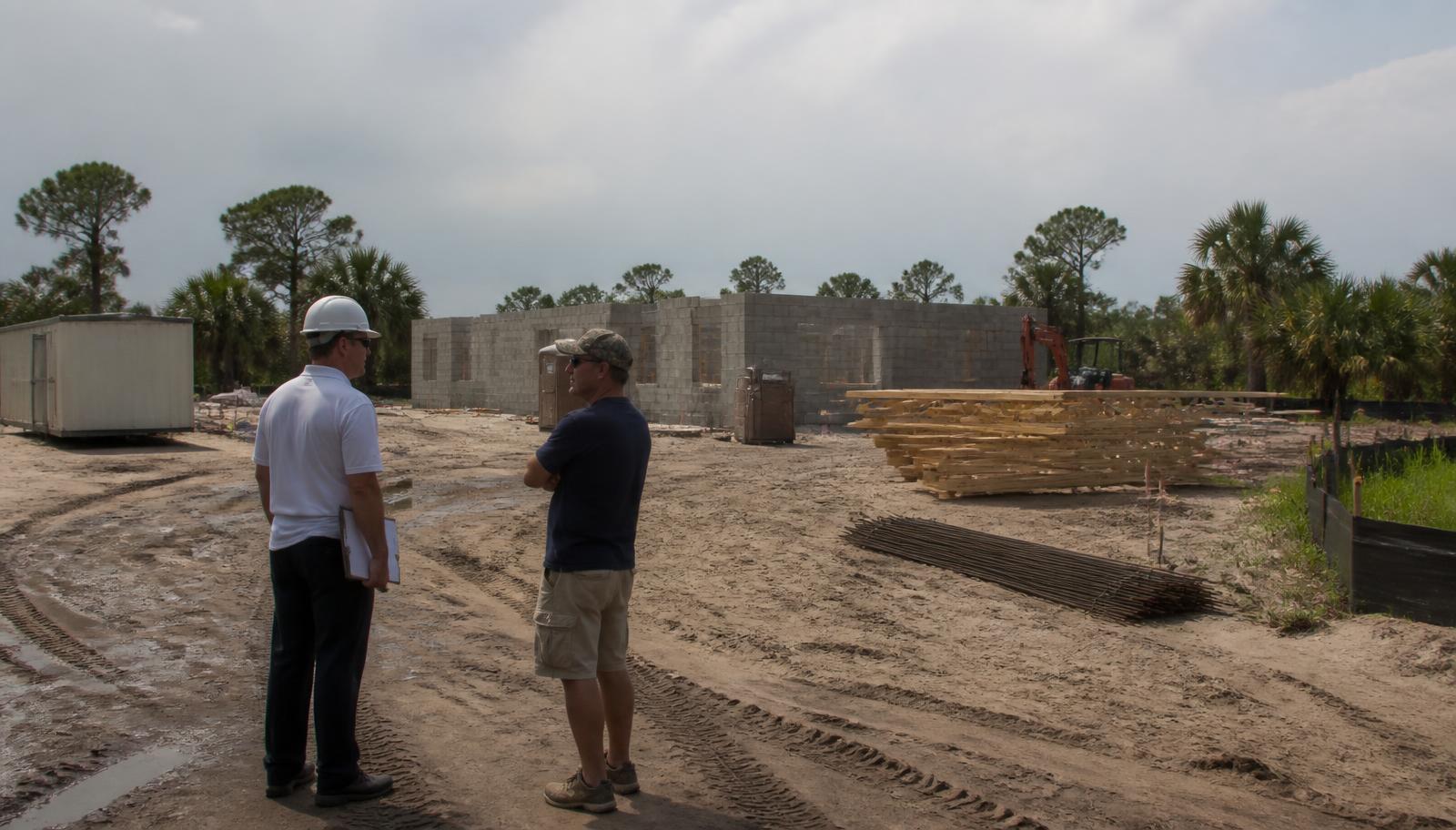
A Florida developer's guide to combining land acquisition and construction financing in one loan: how acquisition advances and construction draws work, LTC vs. LTV, land equity as contribution, what costs are and are not funded, and what lenders need to approve the request.
Commercial real estate deals do not always match a bank's usual lending rules. A developer may need to close on a parcel quickly, then start building before a bank finishes underwriting. That raises a practical question we hear constantly from Florida developers: can one loan include both the land acquisition and the construction financing?
Quick Answer: Can Land Acquisition and Construction Be Financed Together?
Potentially, yes. In many commercial transactions a single loan can fund the land purchase at closing and then fund approved construction costs through a draw schedule as work is completed. Combining both depends on underwriting: property value, total project cost, borrower equity, plans, budget, permits, contractor, appraisal, and a credible exit strategy.
Key Takeaways
- Acquisition funds can be advanced at closing. A portion of the loan may be used to purchase the parcel on the day the loan closes.
- Construction proceeds are generally draw-based. Approved construction dollars are typically held back and released against verified progress, not handed over at closing.
- LTC and LTV both matter. Lenders look at the loan against total project cost and against supportable value, not only at the projected finished value.
- Borrower equity is central. Cash contribution, or existing land equity in a free-and-clear parcel, shapes how a request can be structured.
- Appraisals often address more than today. Commercial development appraisals may consider as-is value and as-completed value.
- The exit strategy decides the deal. Refinance into permanent debt, sale of the finished asset, or unit sales must be realistic on the completed project's economics.
- Business purpose only. These are investment and business-purpose loans on Florida real estate, not consumer mortgages.
Land Acquisition + Construction Financing at a Glance
| Element | Typical profile |
|---|---|
| Purpose | Buy a development site and fund ground-up construction under one facility |
| Funding mechanics | Acquisition advance at closing, construction holdback released by draws |
| Primary leverage metric | Loan-to-cost, tested against loan-to-value |
| Collateral | The land and the improvements built on it |
| Appraisal | Commonly as-is and as-completed value scenarios |
| Borrower contribution | Cash equity, existing land equity, or a lender-approved source |
| Exit strategy | Permanent refinance, sale of the completed project, or unit sales |
| Common Florida use cases | Multifamily, industrial and warehouse, mixed-use, retail pads, self-storage, hospitality |
Illustrative profile only. Every transaction is different and actual terms depend on underwriting.
What This Guide Covers
- What land acquisition and construction financing is
- How a combined loan works, stage by stage
- The acquisition to completion process flow
- Worked deal example with a full scenario table
- Second scenario: you already own the land
- Land equity as borrower contribution
- LTC, with formula and calculator example
- LTC vs. LTV comparison table
- As-is and as-completed value
- What costs can be included
- What usually is not funded
- Florida-specific development considerations
- Who this financing is for
- What Luminary looks for in an acquisition + construction request
- Documents a construction lender needs
- How construction draws work
- Common exit strategies
- Why a bank may decline a construction loan
- Common mistakes developers should avoid
- Frequently asked questions
- Bottom line
What Is Land Acquisition and Construction Financing?
Land acquisition and construction financing gives a borrower capital to buy a development site and to build on it. Consider a developer who identifies a parcel suitable for a new commercial project. That developer needs money for two distinct components.
1. Acquisition
Capital to purchase and close on the land, including closing costs and the borrower's required contribution.
2. Development and construction
Additional capital to turn that land into a property that produces income or can be sold.
Traditional financing often handles these phases separately: a land loan first, then a construction loan later, with two underwriting processes, two closings, and two sets of costs. Private lenders can frequently evaluate the transaction as a single business plan. That is helpful when a borrower must close quickly, or when the development does not fit standard bank criteria.
Can a Construction Loan Include the Land Purchase? How the Structure Works
Every transaction is unique, but a combined structure generally moves through four stages.
Stage 1: Land acquisition
At closing, a portion of loan proceeds completes the land purchase. The lender generally expects the borrower to contribute equity. How much depends on purchase price, appraised land value, requested loan amount, total project cost, existing equity, property type, and development risk.
Stage 2: Construction holdback
The lender usually does not release the whole construction budget at closing. Approved construction funds are held back. That protects both parties and keeps funding aligned with real progress.
Stage 3: Construction draws
As construction progresses, the borrower requests funds through an approved construction draw schedule. Draws commonly track site preparation, foundation, structural work, framing, roofing, mechanical, electrical, plumbing, interior buildout, exterior improvements, and final completion. Inspections and documentation may be required before each release.
Stage 4: Completion
Once the project is complete, the borrower executes the exit: permanent refinance, sale of the finished project, unit sales, or another approved source of repayment.
The Acquisition to Completion Process Flow
- 1. Property identified — parcel, price, and project scope defined
- 2. Underwriting — budget, plans, equity, contractor, and exit reviewed
- 3. Appraisal — as-is and as-completed value scenarios
- 4. Closing — acquisition advance funds, construction holdback set
- 5. Land acquired — title recorded, lien in place
- 6. Construction draws — funds released against verified progress
- 7. Completion — final inspection and certificate of occupancy
- 8. Refinance or sale — the construction loan is repaid
Worked Example: Combining Land Acquisition and Construction Financing
Consider a simplified hypothetical Florida commercial development. The developer wants to purchase the parcel and start construction immediately, rather than arranging a $2 million land loan now and construction financing later.
| Line item | Scenario A: buying the land |
|---|---|
| Land purchase price | $2,000,000 |
| Construction budget | $6,000,000 |
| Total project cost | $8,000,000 |
| Borrower equity contribution | $2,800,000 |
| Hypothetical loan amount | $5,200,000 |
| Loan-to-cost (LTC) | 65% |
| Projected as-completed value | $10,400,000 |
| Implied loan-to-value at completion | 50% |
| Exit strategy | Refinance into permanent commercial debt after stabilization |
The lender would review the $2 million acquisition, the $6 million construction budget, the equity contribution, plans and specifications, timeline, contractor information, appraisal, projected completed value, development experience, and exit strategy. If approved, part of the financing could fund the land at closing while approved construction dollars are released in stages.
Educational example only. Actual structures, advance rates, borrower contributions, costs, and terms depend on the individual transaction and underwriting.
Second Scenario: What If You Already Own the Land?
This changes the structure meaningfully. Suppose a developer bought a parcel years ago and now owns it free and clear. If the land has appreciated, the borrower may hold substantial equity in the site before construction begins.
| Line item | Scenario B: land already owned |
|---|---|
| Current land value | $2,000,000 |
| Existing debt on the land | $0 |
| Construction budget | $4,500,000 |
| Total project cost basis | $6,500,000 |
| Land equity credited toward the capital stack | $2,000,000 |
| Hypothetical loan amount | $4,225,000 |
| Loan-to-cost (LTC) | 65% |
| Projected as-completed value | $8,450,000 |
| Exit strategy | Sale of the completed asset |
Owning valuable land does not guarantee a lender will fund every construction dollar. The lender still weighs project risk, cost accuracy, completed value, borrower strength, contractor capability, timeline, and exit.
Hypothetical illustration. Land equity treatment varies by lender and transaction.
Can Land Equity Count Toward a Construction Loan?
Potentially. When a borrower already owns the parcel, that ownership represents capital already in the deal. A lender may consider existing land equity as part of the borrower's contribution to the capital structure rather than requiring the same amount again in cash.
Several details drive that analysis:
- The current supportable value of the land, established by appraisal rather than by the owner's estimate
- Whether the land is free and clear or carries recorded liens, judgments, or unpaid taxes
- How long the borrower has owned the parcel and at what basis
- Entitlement and permit status, which affects whether the land is worth its highest and best use today
- Whether the project still needs cash for soft costs, closing costs, contingency, or carrying costs
Land equity rarely eliminates the need for liquidity. Even when equity is credited, most lenders want to see cash available to handle change orders, cost increases, and carrying costs during construction.
Understanding LTC: Loan-to-Cost
The central leverage metric in commercial construction lending is loan-to-cost.
LTC = Loan Amount ÷ Total Project Cost × 100
LTC calculator example
Total project cost of $8,000,000 with a loan amount of $5,200,000:
$5,200,000 ÷ $8,000,000 = 65% LTC
The borrower generally covers the remaining $2,800,000 with equity or another lender-approved source. LTC expresses how much of the project the lender is funding compared with how much the borrower is funding. For a fuller treatment of leverage math, see LTV vs. LTC vs. ARV.
Educational and hypothetical. Acceptable leverage varies by lender, project, and borrower.
LTC vs. LTV: What Is the Difference?
| Metric | Loan-to-Cost (LTC) | Loan-to-Value (LTV) |
|---|---|---|
| Definition | Loan measured against what the project costs to build | Loan measured against what the property is worth |
| Formula | Loan ÷ total project cost × 100 | Loan ÷ appraised value × 100 |
| Based on | Land basis plus hard costs, soft costs, and contingency | Appraised as-is or as-completed value |
| Why lenders use it | Confirms the borrower has real capital at risk | Confirms the collateral supports the debt |
| Risk it controls | Cost overrun and thin sponsor equity | Value shortfall at sale or refinance |
| When it binds | Often on ground-up development | Often once the asset is complete or stabilized |
Development requests are commonly tested against both, and the lower resulting loan amount typically governs. A project can show a strong projected finished value and still require significant borrower contribution because of its cost basis.
Keep Reading
Latest Insights
Keep exploring Florida private lending insights.
Construction Financing
Soft Cost Financing in Florida: Funding Your Project Before Construction
Soft cost financing helps Florida borrowers pay eligible predevelopment expenses such as architectural drawings, engineering, surveys, site investigations and permit fees before construction begins. Eligibility depends on the property, the borrower and the project review.
Construction Financing
What Happens When a Construction Loan Expires Before the Project Is Finished? | Florida Guide
An unfinished construction project does not automatically extend a maturing loan. This Florida guide explains extensions, modifications, refinancing, unused draws, updated appraisals, cost overruns and the documents lenders may review.
Construction Financing
Ground-Up Construction vs. Heavy Rehab Financing in Florida
Ground-up construction financing builds a new property from vacant land or after demolition. Heavy rehab financing funds major renovation of an existing structure. Here is how Florida private lenders underwrite each, with worked LTC and ARV examples.
Construction Financing
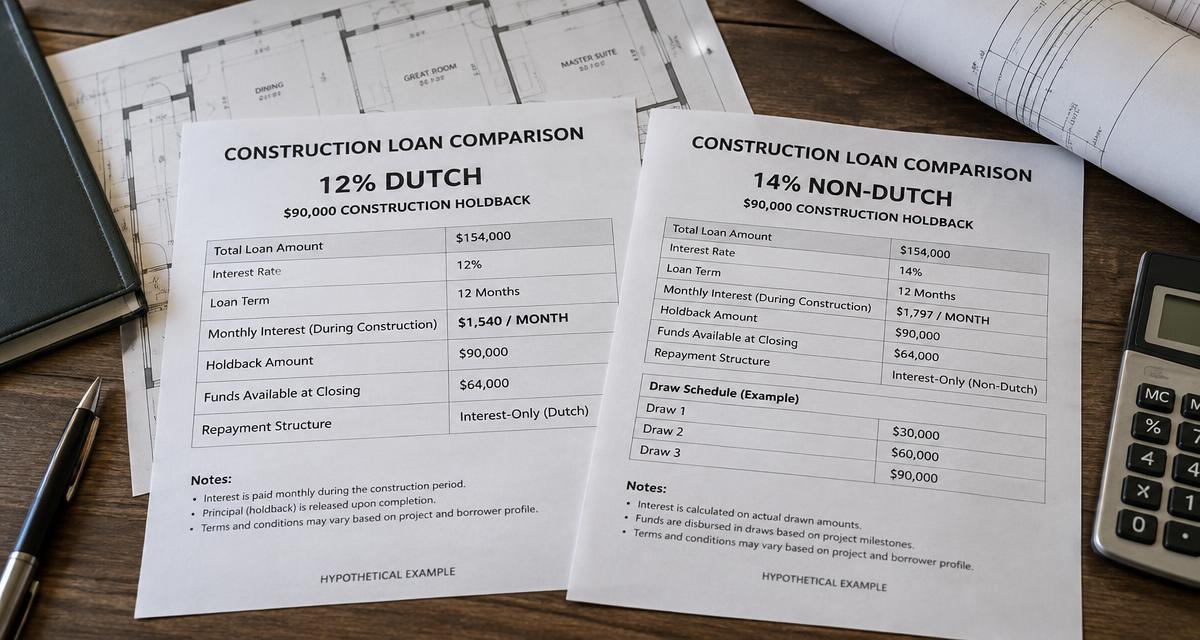
12% vs. 14% Construction Loans: Which Costs Less?
Interest rates matter, but fees, construction draws and payoff timing determine total cost. Compare 12% full commitment interest with 14% on disbursed funds using a transparent hypothetical example.
Construction Financing
You Split One Property Into Two Lots, but the Lender's Lien Is Still on Both. What Happens to Your Construction Loan?
A lot split does not automatically split an existing lien. This Florida guide explains partial lien releases, why an updated appraisal cannot remove a recorded lien, who approves a release, how construction lenders evaluate lien position, and the documents to have ready before applying.

Construction Financing
Dutch vs. Non-Dutch Interest on Construction Loans: What Borrowers Need to Know
Dutch interest is calculated on the full construction loan commitment. Non-Dutch interest is calculated on funds actually advanced. Worked $2 million examples, a full 12-month draw table, a Naples scenario and an interactive calculator show why a 12% loan can cost less than a 10% loan.
Construction Financing
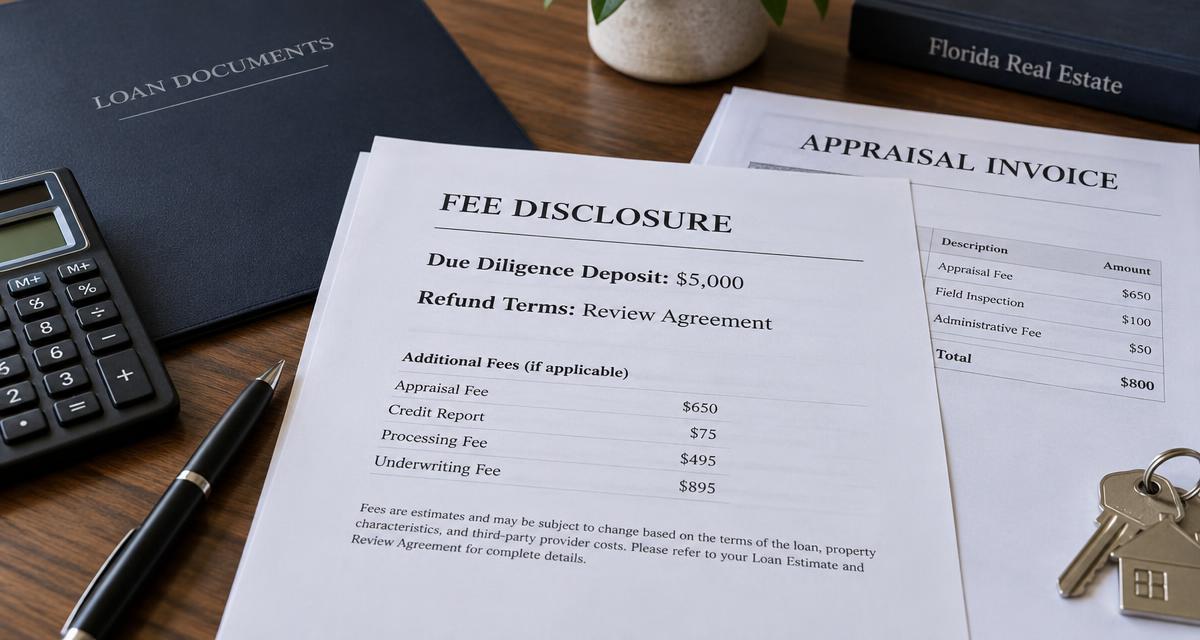
Construction Loan Draw Schedule Explained: How Private Lenders Release Funds
Construction loans do not fund in one lump sum. Funds release in stages tied to completed milestones. Here is the typical draw schedule, the documentation each request needs, how inspections and interest work, and why draws get delayed.
Investor Education
Upfront Due Diligence Deposits: How Florida Borrowers Can Avoid Costly Financing Mistakes
Know who receives your money, what work it covers and what happens if financing fails. A practical Florida guide to upfront deposits, written fee terms and independent verification.
Bridge Loans
Commercial Bridge Loans in Florida: A Complete Guide to $5M to $20M Financing
The pillar guide to commercial bridge loans in Florida: what they are, who they fit, how LTV sizes a $5M to $20M request, what documents lenders need, how appraisals and exit strategies drive approval, and when bridge financing is the wrong tool.
Florida Real Estate Market
Florida Housing Construction Trends 2026: What Fewer Building Permits Mean for Real Estate Investors
Florida building permits have slowed in 2026. Here's what fewer new construction starts mean for investors, plus the loan programs that help you move faster than traditional banks.

Vacant Land Financing
Vacant Land Financing in Florida (2026 Investor Guide)
A complete 2026 guide to vacant land financing in Florida, how it works, qualifying land types, exit strategies, comparison to construction and bridge loans, real investment examples, common mistakes, and a full investor checklist.
Construction Loans
What Is a Construction Loan in Florida? The Complete Investor Guide (2026)
A complete 2026 guide to construction loans in Florida, how draw schedules work, who qualifies, private vs. bank financing, LTC and LTV, Florida-specific building challenges, real examples, and the mistakes investors should avoid.