Bridge Loans
Commercial Bridge Loans in Florida: A Complete Guide to $5M to $20M Financing
Published By Luminary Private Lending
- Author:
- Ivan Padilla
- Reviewed By:
- Kevin Mazzola
- Published:
- September 2, 2026
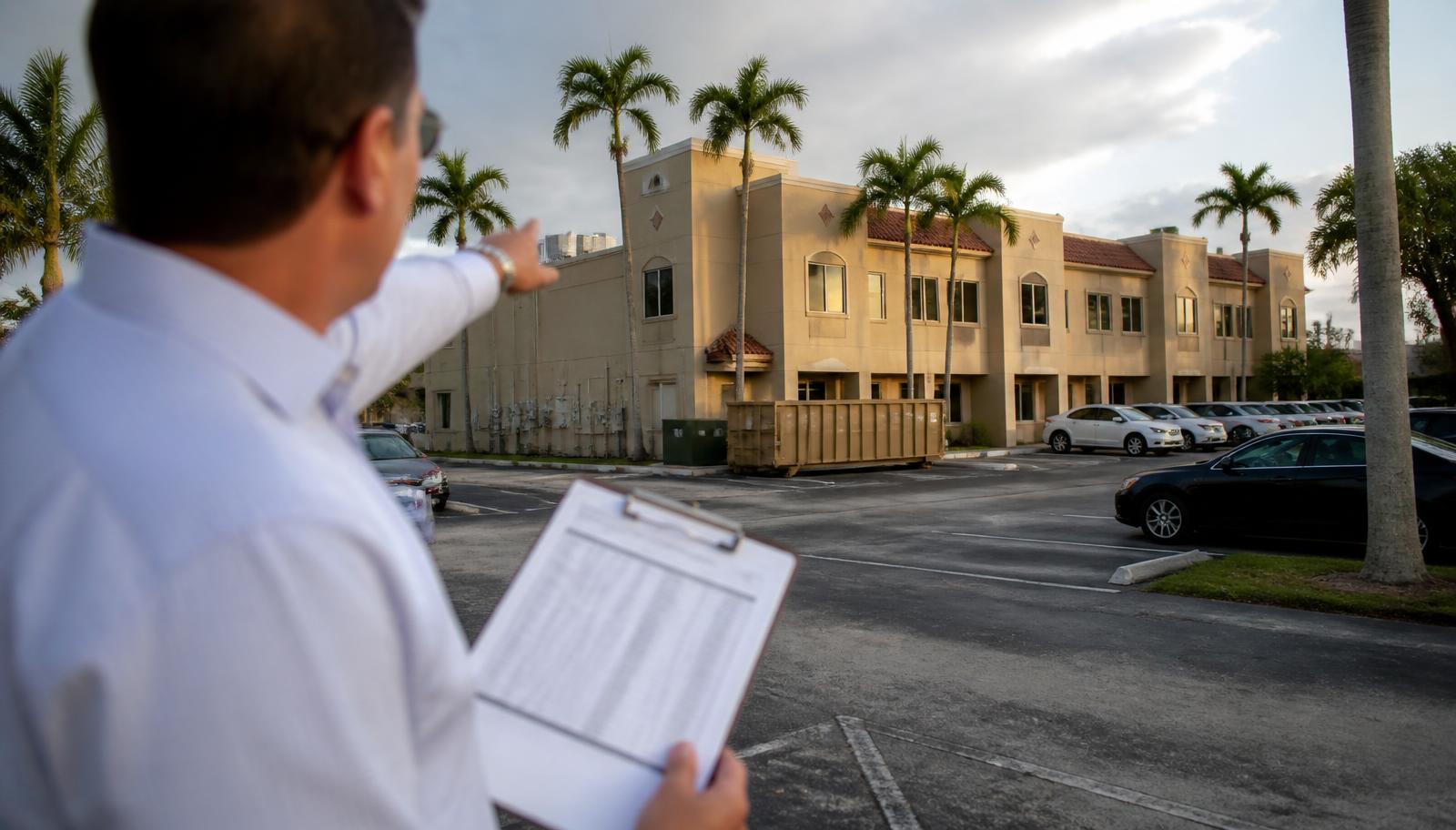
The pillar guide to commercial bridge loans in Florida: what they are, who they fit, how LTV sizes a $5M to $20M request, what documents lenders need, how appraisals and exit strategies drive approval, and when bridge financing is the wrong tool.
Commercial real estate deals do not always match a bank's usual lending rules. A borrower may need to close quickly. A property may be mid-renovation or mid-repositioning. Current income may not reflect the property's potential. A developer may need temporary capital while arranging permanent financing. That is where a commercial bridge loan can help.
Quick Answer: What Is a Commercial Bridge Loan?
A commercial bridge loan is short-term financing secured primarily by commercial real estate. It gives a borrower capital now, before a permanent loan, a sale, a completed renovation, or another exit is in place. For larger Florida transactions, including loans from $5 million to $20 million, bridge financing is used to acquire, refinance, reposition, or unlock equity from commercial property when conventional underwriting does not fit the deal.
Key Takeaways
- Short-term and collateral-led. Commercial bridge loans are temporary loans secured by commercial real estate, underwritten primarily on the asset.
- Built for transitional property. They can fit Florida assets in lease-up, renovation, repositioning, or management transition that a bank may consider unstabilized.
- Leverage drives sizing. Loan amount generally follows the loan-to-value ratio applied to a supportable appraised value.
- Approval is multi-factor. Collateral value, leverage, existing debt, borrower strength, use of proceeds, and a credible exit strategy all matter.
- Bridge to bank, not instead of bank. Most bridge loans are repaid by a sale or by permanent financing once the asset performs.
- Business purpose only. These are investment and business-purpose loans on Florida commercial real estate, not consumer mortgages.
Commercial Bridge Loan at a Glance
| Element | Typical profile |
|---|---|
| Purpose | Acquisition, refinance, maturing debt payoff, cash-out, renovation, repositioning, lease-up |
| Structure | Short-term loan, interest-focused payments, balloon at maturity |
| Collateral | Commercial real estate: multifamily, retail, office, industrial, mixed-use, hospitality, land |
| Primary underwriting focus | Property value, leverage, lien position, use of proceeds, exit |
| Appraisal | Commonly required, particularly on larger transactions |
| Exit strategy | Sale, permanent refinance, construction completion, stabilization, liquidity event |
| Common Florida use cases | Fast-closing purchases, bank declines, unstabilized assets, maturing loans, equity access |
Illustrative profile only. Every transaction is different and actual terms depend on underwriting.
What This Guide Covers
- How commercial bridge loans work in Florida
- Who commercial bridge loans are best for
- Why investors use commercial bridge financing
- What asset-based commercial lending means
- Which commercial property types can be considered
- LTV, with the formula and worked examples
- $5M to $20M hypothetical transaction table
- Can you get a $10 million bridge loan in Florida
- How to qualify for a large commercial bridge loan
- Why the commercial appraisal matters
- Cash-out on commercial property
- Documents needed for a $5M to $20M request
- What a term sheet is
- How fast a commercial bridge loan can close
- Why the exit strategy matters
- Bridge vs. bank, bridge vs. construction, bridge vs. permanent
- When a bridge loan may not make sense
- What can cause a decline
- How to prepare before contacting a lender
- Frequently asked questions
- Bottom line
How Commercial Bridge Loans Work in Florida
A bridge loan provides temporary financing for a commercial real estate transaction. The borrower receives funds secured by the property and comes in with a clear plan to repay the loan. That repayment plan is the exit strategy.
An exit strategy could include selling the property, refinancing with a bank, refinancing into permanent commercial debt, completing renovations and then refinancing, stabilizing occupancy, completing a development milestone, or receiving proceeds from another transaction.
Florida adds its own variables to that timeline. Wind and flood insurance costs, coastal elevation requirements under FEMA flood mapping, municipal permitting speed, hurricane-code compliance under the Florida Building Code, and county-level tax and lien records all affect how a lender underwrites collateral and how realistically a Florida borrower can hit an exit date. Deal conditions in Miami-Dade and Broward rarely look like Polk, Lee, or Duval County, even for the same asset class.
Because bridge loans are temporary, the lender must understand two things well: what the property is worth today, and how the borrower plans to repay.
Commercial Bridge Loan Example
Consider a Florida investor acquiring a commercial property for $12 million who needs roughly $7 million in financing and cannot wait months for a traditional lender to finish underwriting.
A private lender may review purchase price, current value, requested loan amount, existing liens, property condition, borrower liquidity, borrower experience, the appraisal, use of proceeds, the business plan, and the exit strategy. When collateral, leverage, borrower profile, and exit align with the lender's criteria, a commercial bridge loan can provide the capital. Every transaction is different and actual loan terms depend on underwriting.
Who Are Commercial Bridge Loans Best For?
- Commercial investors acquiring Florida property on a short closing deadline.
- Developers who need capital between land control and permanent or construction financing.
- Sponsors raising a capital stack where the senior loan must move faster than a bank can.
- Property owners with substantial equity and a maturing loan, a partner buyout, or a time-sensitive obligation.
- Owner-users and commercial borrowers whose income documentation or property condition falls outside bank guidelines.
- Value-add buyers repositioning retail, office, industrial, or multifamily assets before refinancing.
Why Do Investors Use Commercial Bridge Financing?
Commercial bridge financing is often needed when speed, flexibility, or property condition make traditional financing difficult. A borrower may own valuable Florida property and have a solid business plan and still sit outside a bank's lending criteria.
1. A closing deadline is approaching
Commercial acquisitions can carry strict closing dates. When conventional financing cannot close in time, bridge financing becomes an option.
2. The property is not fully stabilized
Banks generally prefer predictable operating histories and stable occupancy. A bridge lender may consider properties in renovation, lease-up, repositioning, management change, tenant turnover, or operational improvement.
3. Existing debt is maturing
A borrower may own a valuable Florida commercial property with a loan approaching maturity. Bridge financing can buy time to refinance, sell, or execute another exit.
4. The borrower needs cash out
Commercial owners often have large equity tied up in real estate. A bridge loan can help access that equity, depending on value, existing debt, use of proceeds, and lender requirements. Owners with no mortgage at all should also read our guide to borrowing against a free-and-clear property.
5. A bank declined the transaction
A bank decline does not necessarily mean the transaction is unfinanceable. Traditional lenders may decline on property type, borrower income, debt-service requirements, stabilization, loan size, construction status, experience, timing, or documentation. Private lenders can apply different underwriting standards. Our article on why lenders decline applications covers the other side of that review.
What Does Asset-Based Commercial Lending Mean?
Asset-based real estate lending looks first at the value and quality of the collateral. The property becomes one of the most important components of underwriting. That does not make the borrower irrelevant.
Private lenders may still review personal financial statements, business financial statements, liquidity, real estate owned, borrower experience, existing liabilities, project history, entity structure, exit strategy, and use of proceeds. The difference is weighting: real estate collateral carries far more of the decision.
What Types of Commercial Properties Can Be Considered?
Depending on the lender and the transaction, eligible Florida collateral may include multifamily properties, apartment complexes, retail centers, office buildings, industrial properties, warehouses, mixed-use developments, hospitality properties, commercial land, development sites, self-storage facilities, special-purpose properties, commercial condominium projects, and residential development projects.
Special-purpose assets often need extra underwriting because comparable sales, income data, and exit options are harder to establish.
What Is LTV on a Commercial Bridge Loan?
Loan-to-value, or LTV, compares the loan amount to the property's value. The formula is:
LTV = Loan Amount ÷ Property Value × 100
Worked example: a Florida commercial property is valued at $15,000,000 and the requested loan is $9,000,000.
$9,000,000 ÷ $15,000,000 × 100 = 60% LTV
Lower leverage generally gives the lender a larger equity cushion, which is why a 55% LTV request on a well-located asset is usually easier to underwrite than an 80% request on the same building. On larger transactions the lender may also weigh purchase price, existing mortgage balance, property income, condition, borrower equity, marketability, location, exit strategy, property type, and current and projected use. For how leverage metrics differ across deal types, see LTV vs. LTC vs. ARV.
$5M to $20M Hypothetical Transaction Examples
| Scenario | Property value | Existing debt | Loan request | Calculated LTV |
|---|---|---|---|---|
| Retail center acquisition | $10,000,000 | $0 | $5,500,000 | 55% |
| Multifamily refinance | $14,000,000 | $4,000,000 | $8,400,000 | 60% |
| Industrial cash-out | $16,000,000 | $5,000,000 | $8,000,000 | 50% |
| Office repositioning | $20,000,000 | $9,000,000 | $13,000,000 | 65% |
| Hospitality maturing loan payoff | $30,000,000 | $16,000,000 | $18,000,000 | 60% |
| Commercial land | $18,000,000 | $0 | $7,200,000 | 40% |
Every example above is hypothetical and provided to illustrate the arithmetic only. It is not an offer, a quote, or an indication of available leverage. Actual leverage depends on appraisal, property type, condition, market, borrower profile, and final underwriting.
Can I Get a $10 Million Commercial Bridge Loan in Florida?
Potentially, yes. A $10 million bridge request is a normal size in Florida commercial lending, and it is evaluated the same way a $5 million or $20 million request is: what is the collateral worth, how much leverage does $10 million represent, what debt already exists, what will the proceeds accomplish, and how does the loan get repaid.
At 60% LTV, a $10,000,000 loan generally implies supportable value near $16,700,000. At 50% LTV it implies roughly $20,000,000. That is why the first question on a large request is usually about the appraisal and the existing lien stack rather than the loan amount itself. Requests of this size also draw heavier third-party diligence: commercial appraisal, title work, environmental review, entity documentation, and insurance.
How Do You Qualify for a Large Commercial Bridge Loan?
Qualification generally comes down to six things: supportable collateral value, conservative leverage, clear title and lien position, documented use of proceeds, a borrower with liquidity and relevant experience, and a credible exit strategy.
Expanding on each:
- Collateral. An appraisal or credible valuation supports the value the request depends on.
- Leverage. The requested amount leaves meaningful borrower equity in the deal.
- Title. Ownership is clear and liens, judgments, and unpaid taxes are disclosed up front.
- Use of proceeds. The lender can trace where a $5 million to $20 million disbursement goes.
- Borrower. Liquidity for closing costs, reserves, and carry, plus a track record on comparable assets.
- Exit. A specific, dated, evidence-backed repayment plan rather than a general intention.
Why Does the Commercial Appraisal Matter?
For an asset-based lender, the appraisal is central. A commercial appraisal may help establish current market value, property condition, comparable sales, income-approach valuation, highest and best use, market conditions, and property characteristics. Complex properties often need an appraiser with experience in that specific asset class, because valuing an apartment complex is not the same exercise as valuing a hotel, a marina, a development site, or a specialized commercial facility. For the borrower's side of that process, see what private lenders look for in an appraisal.
Purchase Price vs. Appraised Value
Borrowers often assume the loan amount will follow the property's future value. That is not always the case. Depending on the transaction and the lender, several valuation benchmarks may be considered, and lenders do not all treat them identically:
- Purchase price. What the buyer is actually contracting to pay today.
- As-is value. Value in current condition, with current occupancy and current income.
- Subject-to-completion value. Value assuming a defined scope of work is finished as planned.
- Stabilized value. Value once occupancy and income reach a normalized level.
- Completed value. Value of the finished asset at the end of the business plan.
A property purchased for $10 million and appraised at $14 million does not guarantee financing off the higher figure. The lender needs to understand why the gap exists before deciding which valuation is appropriate for underwriting.
Can You Get Cash Out of a Commercial Property?
Potentially, yes. A cash-out commercial bridge loan can refinance existing debt and also release part of the property's equity.
For example: property value $16,000,000, existing mortgage $5,000,000, requested bridge loan $8,000,000. If approved, part of the new loan pays off the existing $5 million mortgage. What remains after loan costs, closing costs, reserves, and other deductions can be released to the borrower. Approval depends on value, leverage, lien position, borrower profile, use of proceeds, and other underwriting details.
What Can Proceeds Be Used For?
Depending on the lender and transaction, commercial bridge proceeds may fund purchasing commercial real estate, paying off existing real estate debt, renovations, property improvements, construction-related expenses, business expansion, working capital, acquisition costs, time-sensitive obligations, or preparing a property for sale or permanent financing. A lender reviewing a $10 million request will want to know precisely where the money goes.
What Documents Are Needed for a $5M to $20M Commercial Bridge Loan?
Larger commercial transactions require more documentation than small residential investment loans. Organizing documents before contacting a lender speeds up review.
Property information
Property address, parcel identification numbers, current ownership information, purchase contract if applicable, existing appraisal if available, property photos, surveys, title information, and existing environmental reports when applicable.
Existing debt
Current mortgage statements, payoff information, existing lien information, seller financing documents, and any other debt secured by the property.
Financial information
Personal financial statement, business financial statements, tax returns when required, schedule of real estate owned, liquidity information, and bank statements or proof of funds when required.
Income-producing properties
Rent roll, trailing 12-month operating statement, profit and loss statement, existing leases, occupancy information, tenant information, and historical operating statements.
Construction or development transactions
Construction budget, plans, permits, general contractor agreement, development timeline, sources and uses, cost-to-complete analysis, and a draw schedule. Deals with capitalized carry should also review how an interest reserve works.
Not every transaction requires every document. The goal is to give the lender a clear picture of collateral, borrower, capital structure, and exit strategy.
What Is a Term Sheet?
A term sheet is a preliminary outline of proposed financing terms. Depending on the transaction it may include proposed loan amount, interest rate, loan term, origination points or fees, LTV, payment structure, collateral, appraisal requirements, closing conditions, and due diligence requirements. Many bridge structures end in a balloon payment at maturity, which is worth confirming at term sheet stage.
A term sheet is generally not final loan approval or a binding commitment to fund. Final financing relies on underwriting, appraisal, title, documentation, due diligence, and other lender requirements.
How Fast Can a Commercial Bridge Loan Close?
Closing time depends on transaction complexity and how quickly the required information arrives. Factors include the appraisal, title work, environmental reports, entity documentation, property complexity, existing liens, borrower responsiveness, legal review, insurance, construction documentation, and third-party reports. For a $5 million to $20 million transaction, organization is usually the deciding variable.
Why the Exit Strategy Matters
Bridge financing is temporary, so one of the most important questions a lender asks is how the loan will be repaid. Potential exits include:
- Sale. The borrower improves, repositions, or holds the property for a period, then sells.
- Permanent refinance. The borrower stabilizes the asset and refinances into conventional long-term debt.
- Construction completion. The borrower finishes a project and refinances on the completed asset.
- Lease-up and stabilization. Occupancy and income improve enough to support permanent financing.
- Liquidity event. Proceeds arrive from a property sale, a business transaction, or another confirmed source.
A strong exit strategy is realistic, measurable, and supported by the transaction itself.
Commercial Bridge Loan Comparisons
Commercial Bridge Loan vs. Traditional Bank Loan
| Factor | Commercial bridge loan | Traditional bank loan |
|---|---|---|
| Underwriting focus | Collateral, leverage, exit | Credit, cash flow, debt service |
| Speed | Potentially faster | Usually longer process |
| Property condition | Can accommodate transitional assets | Often favors stabilized property |
| Loan duration | Short-term | Typically longer-term |
| Flexibility | More flexible deal structures | More standardized criteria |
| Exit strategy | Central to approval | Less emphasized, loan is the long-term plan |
| Documentation | Focused on property and deal | Broader borrower and financial package |
| Cost of capital | Generally higher | Generally lower |
Bridge financing is not necessarily a replacement for bank financing. Often it is the bridge to bank financing.
Commercial Bridge Loan vs. Construction Loan
Borrowers frequently confuse the two. A bridge loan is generally funded at closing against existing value. A construction loan is funded progressively against completed work.
| Factor | Bridge loan | Construction loan |
|---|---|---|
| Funding | Generally funded at closing | Released in draws as work is completed |
| Valuation basis | As-is or stabilized value | Budget, cost, and completed value |
| Documentation | Property, debt, financials, exit | Plus plans, permits, budget, contractor, draw schedule |
| Oversight | Limited after closing | Inspections and draw administration throughout |
| Best fit | Acquisition, refinance, cash-out, repositioning | Ground-up building or heavy rehab |
Some development transactions use both, and our comparison of ground-up construction vs. heavy rehab financing covers where each fits.
Commercial Bridge Loan vs. Permanent Commercial Financing
| Factor | Bridge financing | Permanent financing |
|---|---|---|
| Purpose | Solve a short-term capital need | Hold the asset long term |
| Property status | Transitional acceptable | Usually stabilized |
| Term | Short, with a defined exit | Multi-year amortizing or fixed period |
| Cost | Higher | Lower |
When a Commercial Bridge Loan May Not Make Sense
Bridge financing is not the right tool for every deal, and saying so up front saves everyone time. It may not make sense when:
- The property is already stabilized and qualifies for cheaper permanent debt.
- There is no defined exit, only a hope that conditions improve.
- The requested leverage leaves no equity cushion if value or timing moves against the plan.
- The borrower lacks liquidity for closing costs, reserves, and carry through the term.
- The business plan needs more time than a short-term loan realistically allows.
- Projected income depends on assumptions the appraisal or market data does not support.
Cross-collateralizing additional assets can sometimes solve a leverage gap, and our guide to cross-collateralization explains the trade-offs.
What Can Cause a Commercial Bridge Loan to Be Declined?
Private lenders decline transactions too. Common problems include insufficient property value, excessive leverage, unclear ownership, title problems, undisclosed liens, a weak or unrealistic exit strategy, incomplete financial information, unclear use of proceeds, property issues, environmental concerns, unsupported valuation assumptions, insufficient borrower equity, and transaction structure problems.
Transparency helps. Finding issues early lets both sides decide how to structure the deal effectively rather than discovering a problem days before closing. Owners weighing lien position should also review first lien vs. second lien.
How to Prepare Before Contacting a Commercial Bridge Lender
Borrowers seeking $5 million to $20 million should prepare a concise transaction summary covering at minimum:
- Property address. Where is the collateral?
- Property type. Multifamily, retail, industrial, land, hospitality, office, mixed-use.
- Estimated value. What do you believe the property is worth?
- Purchase price. If an acquisition, what are you paying?
- Existing debt. What liens currently exist?
- Loan request. How much financing do you need?
- Use of proceeds. Where will the money go?
- Ownership. Who owns or will acquire the property?
- Borrower experience. What relevant projects has the sponsor completed?
- Appraisal or financials. What valuation or operating data already exists?
- Exit strategy. How will the bridge loan be repaid?
- Timeline. When does the transaction need to close?
Providing these items upfront makes the initial review substantially more productive.
Commercial Bridge Financing for Large Florida Transactions
Florida's commercial market is not one market. Miami-Dade and Broward pricing, insurance cost, and condo-related regulation differ from Tampa Bay industrial, Orlando hospitality and mixed-use, Southwest Florida retail, and Northeast Florida logistics along the I-95 and I-10 corridors. Population and construction data from the U.S. Census Bureau and rate context from the Federal Reserve Bank of St. Louis help frame demand, while the Florida Department of Revenue property data portal and county property appraiser records support assessment and ownership review.
Whatever the submarket, a lender needs the same picture: what the collateral is worth, how much leverage is requested, what debt already exists, what the proceeds accomplish, what the borrower has done before, and how the loan is repaid.
Frequently Asked Questions About Commercial Bridge Loans in Florida
The questions below are the ones Florida commercial borrowers ask most on $5 million to $20 million requests.
Bottom Line
Commercial bridge financing is for Florida investors, developers, sponsors, and property owners who have real estate value and a clear plan but do not fit a bank's timeline or stabilization requirements. Approval is determined by supportable collateral value, conservative leverage, clear title and lien position, documented use of proceeds, borrower liquidity and experience, and a credible exit strategy. Before contacting a lender, a Florida borrower should have the property address and type, estimated value, purchase price if applicable, existing liens, requested loan amount, use of proceeds, borrowing entity, any appraisal or property financials, borrower track record, exit strategy, and target closing date ready.
Keep Reading
Latest Insights
Keep exploring Florida private lending insights.

Bridge Loans
What Is a Bridge Loan in Florida? Complete 2026 Investor Guide
A complete 2026 guide to bridge loans in Florida, how they work, LTV, ARV, exit strategies, costs, timelines, three real case studies, common mistakes, and when a bridge loan is (and isn't) the right tool.
Construction Loans
What Is a Construction Loan in Florida? The Complete Investor Guide (2026)
A complete 2026 guide to construction loans in Florida, how draw schedules work, who qualifies, private vs. bank financing, LTC and LTV, Florida-specific building challenges, real examples, and the mistakes investors should avoid.

Construction Financing
What Happens When a Construction Loan Expires Before the Project Is Finished? | Florida Guide
An unfinished construction project does not automatically extend a maturing loan. This Florida guide explains extensions, modifications, refinancing, unused draws, updated appraisals, cost overruns and the documents lenders may review.
Investor Education
What Is a Balloon Payment? A Complete Guide for Real Estate Investors in Florida
A balloon payment is a large final payment due at the end of a short term loan. Here is how balloon loans work, which programs use them, real Florida examples, the risks, and how investors plan an exit strategy before borrowing.
Florida Bridge Loans
Bridge Loan vs. HELOC: Which Is Better for Florida Real Estate Investors? (2026)
Bridge loans fund in days and are underwritten on the asset and exit. HELOCs take weeks and require owner occupancy. Here is how Florida investors should choose, with a decision tree, cost breakdown, and 15 FAQs.

Vacant Land Financing
Vacant Land Financing in Florida (2026 Investor Guide)
A complete 2026 guide to vacant land financing in Florida, how it works, qualifying land types, exit strategies, comparison to construction and bridge loans, real investment examples, common mistakes, and a full investor checklist.

Florida Affordability
How Much Income Do You Really Need to Buy a Home in Florida in 2026? Complete Affordability Guide
Most Florida buyers need $70K–$140K to buy a $300K–$500K home in 2026. See city-by-city income thresholds for Orlando, Tampa, Jacksonville, Miami, and Fort Lauderdale, plus financing options for investors and self-employed buyers.

Florida Market
Florida Bridge Loans: How Investors Are Winning More Deals With Private Capital in 2026
Florida bridge loans are helping investors, builders, and developers close faster in Orlando, Tampa, Miami, Jacksonville, and Fort Lauderdale. Charts, comparisons, and a real bridge-loan case study for 2026.
Construction Financing
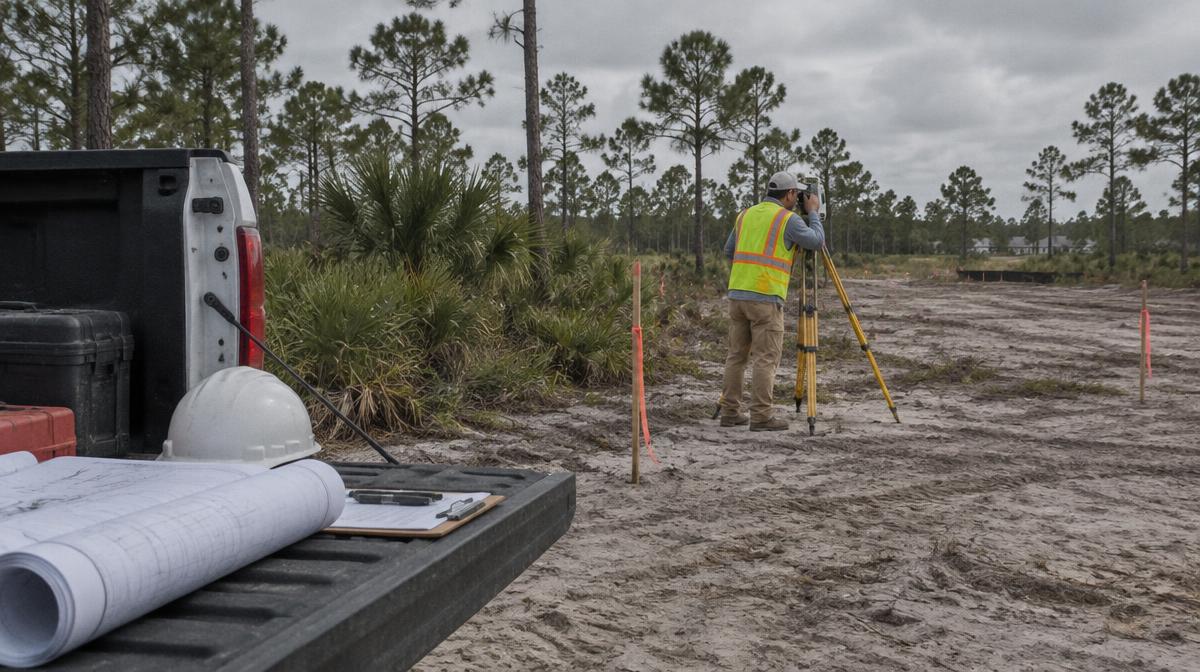
Soft Cost Financing in Florida: Funding Your Project Before Construction
Soft cost financing helps Florida borrowers pay eligible predevelopment expenses such as architectural drawings, engineering, surveys, site investigations and permit fees before construction begins. Eligibility depends on the property, the borrower and the project review.

Investor Education
What Does 125% Lender’s Title Insurance Mean? Florida Private Lending Guide
A 125% lender’s title insurance requirement means the policy amount equals 125% of the loan principal. It does not mean the borrower receives 25% more money or pays a 25% fee. On a $1,950,000 loan, 125% coverage equals $2,437,500; actual protection depends on the policy terms.
Investor Education
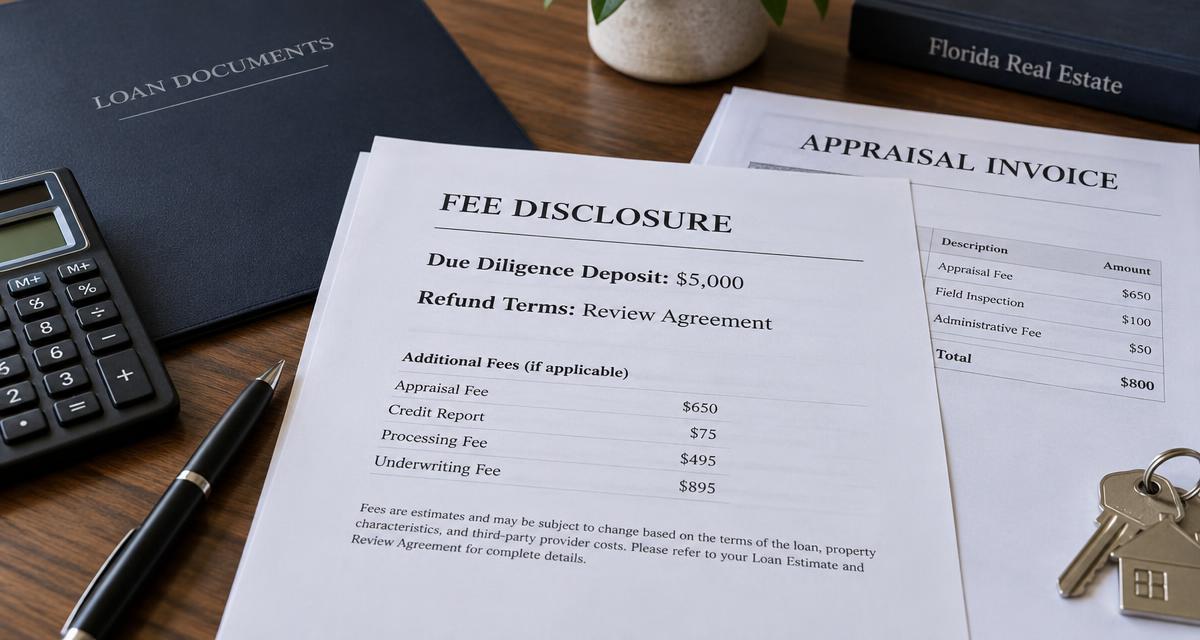
Upfront Due Diligence Deposits: How Florida Borrowers Can Avoid Costly Financing Mistakes
Know who receives your money, what work it covers and what happens if financing fails. A practical Florida guide to upfront deposits, written fee terms and independent verification.
Construction Financing
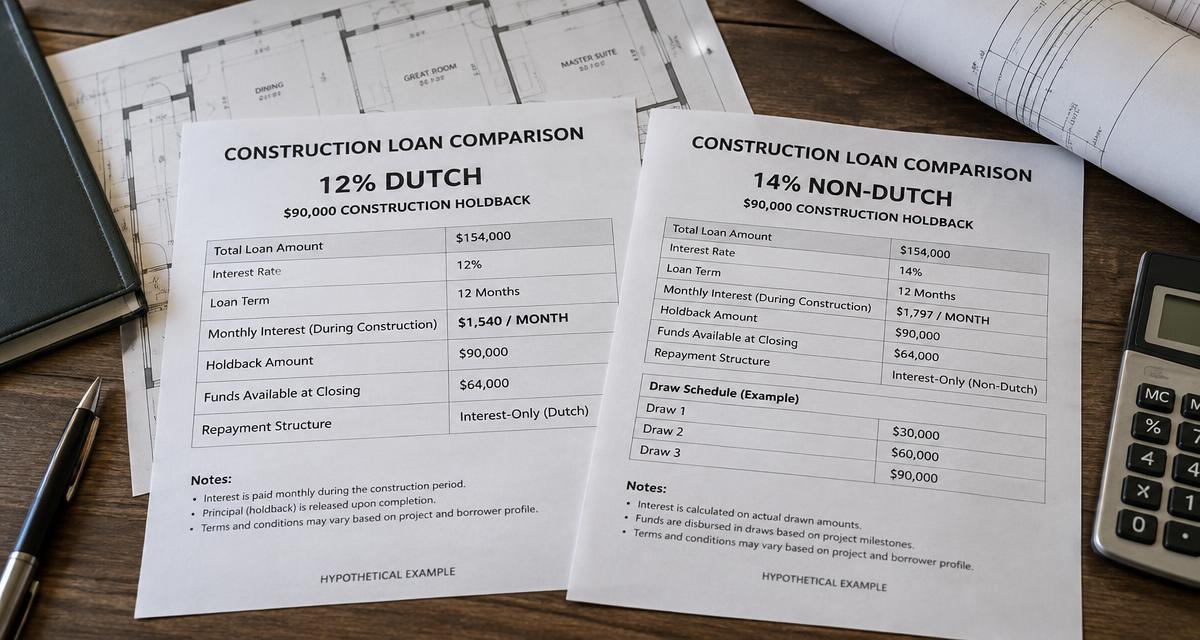
12% vs. 14% Construction Loans: Which Costs Less?
Interest rates matter, but fees, construction draws and payoff timing determine total cost. Compare 12% full commitment interest with 14% on disbursed funds using a transparent hypothetical example.