Second Mortgages
How Much Can You Borrow With a Second Mortgage in Florida?
Published By Luminary Private Lending
- Author:
- Ivan Padilla
- Reviewed By:
- Kevin Mazzola
- Published:
- October 15, 2026
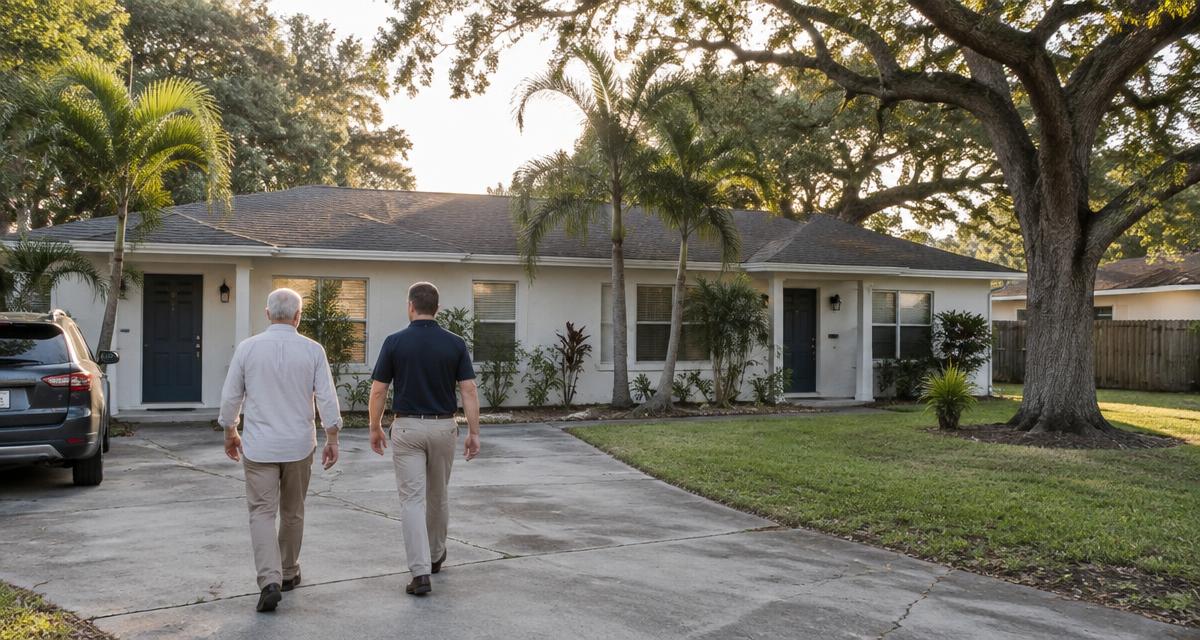
Your potential second mortgage depends on the lender accepted property value, existing secured debt and the maximum combined loan to value. Under Luminary’s 50% CLTV guideline, an $800,000 property with a $250,000 first mortgage has $150,000 of preliminary capacity before underwriting adjustments and closing costs—not guaranteed approval or net cash.
Quick Answer
Potential capacity = property value × 50% − existing first mortgage balance. Use the lender accepted value, not an unconfirmed estimate. This simplified formula assumes one existing mortgage; other relevant liens or secured obligations must be reviewed, not ignored.
On an $800,000 Florida investment property with a $250,000 first mortgage: $800,000 × 0.50 − $250,000 = $150,000 of preliminary second mortgage capacity. Underwriting and closing deductions can change the result.
Key Takeaways
- Luminary’s 50% maximum CLTV applies to combined mortgage debt, not an extra 50% loan.
- Property equity, borrowing capacity and net cash are different amounts.
- A larger first mortgage or lower accepted valuation reduces capacity.
- A positive result still must satisfy the $40,000 minimum loan and $200,000 minimum property value checks.
- Approval also depends on property eligibility, title, actual business use and repayment.
What Is a Second Mortgage?
A second mortgage is an additional loan secured by property that already has a first mortgage. “Second” describes lien position, not the amount borrowed. The CFPB describes second mortgages as junior liens: the first mortgage generally has priority in foreclosure proceeds. Actual priority depends on the recorded documents and applicable law.
A second mortgage may let an eligible borrower access equity without replacing the first mortgage. Keeping the first loan means continuing its payments and obligations while meeting the second loan’s terms.
How Are Equity, LTV and CLTV Different?
- Equity: property value minus existing secured debt. Equity is not automatically available to borrow.
- LTV: a loan balance divided by property value, expressed as a percentage.
- CLTV: combined mortgage debt divided by property value, expressed as a percentage.
For one first mortgage and one proposed second mortgage: CLTV = (first mortgage balance + second mortgage amount) ÷ property value × 100. The Federal Reserve’s interagency mortgage guidance discusses combined LTV and the added risk of second liens. It is general supervisory guidance, not a source of Luminary’s specific 50% ceiling.
Which Guideline Applies to Luminary’s Florida Program?
This guide addresses Luminary’s business purpose second mortgage financing secured by eligible Florida properties. The 50% maximum CLTV is Luminary’s guideline, not a universal limit used by every lender. Total first and second mortgage debt must fit within that ceiling.
The existing screening calculator uses a $40,000 minimum loan amount and $200,000 minimum property value. These are preliminary checks, not the complete underwriting policy. Confirm the current approved program terms directly with Luminary before relying on them.
Investment property improvements, business expansion or another real estate investment may be proposed uses, subject to review. Do not assume every residential, commercial, land or owner occupied property qualifies. Identify the exact property type, occupancy and actual use of funds for the lending team; calling a transaction “business purpose” does not establish eligibility.
How Much Could You Borrow? Three Florida Examples
Every scenario in this article is hypothetical. None is a completed Luminary transaction, financing commitment or fee quote. Assume one existing first mortgage, no other relevant liens and no closing deductions unless stated.
Example 1: An Orlando Investment Property With Substantial Equity
Accepted value: $800,000. First mortgage: $250,000. Maximum combined debt: $800,000 × 50% = $400,000. Preliminary second mortgage capacity: $400,000 − $250,000 = $150,000.
| Item | Amount |
|---|---|
| Accepted property value | $800,000 |
| Maximum combined debt | $400,000 |
| Existing first mortgage | $250,000 |
| Potential second mortgage capacity | $150,000 |
If approved at that gross amount, combined debt would be $400,000, exactly 50% of accepted value. The borrower may receive less cash after applicable fees, reserves and deductions.
Example 2: A Tampa Property With Equity but No Available Capacity
A $600,000 property with a $350,000 first mortgage has $250,000 in equity. But $600,000 × 50% = $300,000 of permitted combined debt. The first mortgage already exceeds that ceiling by $50,000. There is no available capacity under this guideline; a negative formula result is not a negative loan offer.
Having equity does not mean all of it is borrowable. Even a positive result below the program minimum can fail the numerical screening.
Example 3: A Higher Value South Florida Property
For a $2,000,000 accepted value and an $800,000 first mortgage: $2,000,000 × 50% = $1,000,000; $1,000,000 − $800,000 = $200,000 of preliminary capacity. A higher property value can support a larger loan, but existing debt still limits the amount. Final program limits and underwriting apply.
Does My First Mortgage Reduce How Much I Can Borrow?
Yes. Holding accepted value constant at $800,000 shows how each increase in existing debt reduces preliminary capacity:
| Accepted property value | First mortgage | Capacity at 50% CLTV |
|---|---|---|
| $800,000 | $150,000 | $250,000 |
| $800,000 | $200,000 | $200,000 |
| $800,000 | $250,000 | $150,000 |
| $800,000 | $300,000 | $100,000 |
| $800,000 | $350,000 | $50,000 |
| $800,000 | $400,000 | $0 |
The table excludes additional liens and closing deductions. At a $400,000 first mortgage balance, the property still has equity but no capacity under a 50% combined debt ceiling. Confirm current debt with recent statements and any required payoff information, rather than relying on an old balance.
How Much Property Value Do You Need for Your Requested Loan?
You can work backward: Required property value = (first mortgage balance + requested second mortgage) ÷ 0.50. This assumes no other relevant secured obligations.
Example 4: Requesting a $150,000 Second Mortgage
With a $250,000 first mortgage, combined debt would be $250,000 + $150,000 = $400,000. Required accepted value: $400,000 ÷ 0.50 = $800,000. That is the value needed for this CLTV calculation, not an approval guarantee.
Why Might Your Estimated Value Differ From the Lending Value?
An owner’s estimate starts the conversation, but underwriting uses a lender accepted value. An asking price, online estimate, nearby listing or projected renovation value can differ. Property condition, comparable sales, location and marketability may affect the assessment. Confirm the required valuation process before ordering an appraisal.
Example 5: A Lower Valuation Reduces Capacity
| Scenario | Property value | First mortgage | Potential capacity |
|---|---|---|---|
| Owner estimate | $900,000 | $300,000 | $150,000 |
| Lender accepted value | $800,000 | $300,000 | $100,000 |
$900,000 × 50% − $300,000 = $150,000; $800,000 × 50% − $300,000 = $100,000. A $100,000 lower valuation reduces capacity by $50,000. Check that funds based on the accepted value can cover your needs before committing to a purchase or contractor payment. Read our private lender appraisal guide.
Will I Receive the Full Loan Amount in Cash?
Not necessarily. The gross loan is the principal borrowed. Net proceeds are the funds remaining after applicable closing deductions. Lender, broker and attorney fees, title charges, recording costs, required reserves and approved payoffs can affect usable cash.
Example 6: A $150,000 Loan With Closing Deductions
| Illustrative item | Amount |
|---|---|
| Gross loan amount | $150,000 |
| Fees and closing costs | −$12,000 |
| Required reserve | −$9,000 |
| Estimated net proceeds | $129,000 |
The $12,000 costs and $9,000 reserve are illustrative, not Luminary’s fee schedule. $150,000 − $12,000 − $9,000 = $129,000. If the borrower needs $150,000 of usable cash, this creates a $21,000 funding gap.
If expenses or reserves are financed within the loan, they consume borrowing capacity; they do not sit outside the CLTV ceiling. Request an itemized estimate distinguishing gross principal, each deduction and funds actually delivered.
What Else Can Affect Second Mortgage Approval?
First Mortgage Status and Payment History
Provide recent statements and be ready to explain payment issues. The lender may review payment history and the status and terms of the first mortgage.
Title and Existing Liens
Title review identifies ownership, encumbrances and proposed lien position. Other mortgages, judgments or title issues may need resolution before closing. Do not omit secured obligations from the discussion. See our Florida property liens and payoff statement guide.
Property Condition and Business Use
Repairs or unfinished work can affect value and marketability. Explain what the funds will accomplish: “Complete the investment property renovation using the attached contractor budget” is more useful than “I need working capital.” Documentation must support the actual business use.
Can You Keep Your Existing First Mortgage?
A second mortgage is a separate loan rather than a replacement of the first. However, first loan terms and title conditions still need review. Do not assume subordinate financing fits every existing loan agreement. Consider both payment obligations together.
What If the Property Is Free and Clear?
If no mortgage exists and the new loan has first priority, it is generally first mortgage financing, not a second mortgage. Review the applicable first lien program instead of assuming these terms apply. Read about borrowing against a free and clear Florida property.
Does the Borrowing Amount Support Your Repayment Plan?
A Florida investor with a $1,000,000 rental property and a $300,000 first mortgage has $1,000,000 × 50% − $300,000 = $200,000 of preliminary capacity. A requested $120,000 gross loan for another investment renovation fits that arithmetic, but the project still needs a complete funding and repayment plan.
- Will net proceeds cover the renovation budget and contingency?
- Can the borrower meet obligations under both mortgages?
- Does a documented sale, refinance or other repayment source fit the loan term?
- What happens if work, a sale or refinancing is delayed?
Review maturity, any balloon obligation, interest and other payments, total borrowing cost and applicable prepayment provisions. A future refinance is not guaranteed. A delayed exit may require an approved extension, another repayment source or a sale; do not assume an extension will be available. Our balloon payment guide explains the maturity risk.
A second mortgage adds debt secured by your property. Failure to meet obligations can put the collateral at risk, including foreclosure. The CFPB’s junior lien explanation discusses foreclosure priority. Its consumer education helps explain general concepts but does not define eligibility for this business purpose program. Passing a CLTV check does not establish that a loan is suitable for you.
Frequently Asked Questions About Second Mortgage Borrowing Amounts
How much can I borrow with a second mortgage?
Under Luminary’s 50% maximum CLTV guideline, multiply the lender accepted property value by 0.50 and subtract the existing first mortgage balance. Other relevant secured obligations must also be reviewed. The result is preliminary gross capacity, not approval or net cash.
Can I borrow 50% of my property’s value in addition to my first mortgage?
No. Luminary’s 50% ceiling applies to combined debt, not an additional 50% on top of the first mortgage. The first mortgage plus the proposed second mortgage must fit within the permitted combined amount.
How much could I borrow against a $500,000 property?
At 50% CLTV, maximum combined debt is $250,000. With a $150,000 first mortgage and no other relevant liens, preliminary second mortgage capacity is $100,000 before underwriting adjustments and closing deductions.
Does substantial equity guarantee approval?
No. Equity establishes potential capacity, not guaranteed financing. Eligibility, accepted valuation, title, existing debt, business use of funds and repayment must still be reviewed.
Do I need an appraisal?
Valuation requirements depend on the lender and the specific file. Confirm the required process before ordering an appraisal or assuming one is unnecessary. Your online estimate is not automatically an accepted lending value.
Will I receive the full loan amount in cash?
Not necessarily. Fees, reserves, approved payoffs and other deductions can reduce net proceeds. Request an itemized estimate, including whether any expenses will be financed within the loan.
Can a second mortgage fund another investment property?
A qualifying business purpose transaction may be reviewed for that use. The lender must assess the collateral, acquisition or renovation plan, actual use of funds and repayment strategy; the proposed use alone does not guarantee eligibility.
Does Luminary offer the same terms as a bank HELOC?
Do not assume that it does. A bank HELOC and a private second mortgage can differ in structure and requirements. Evaluate Luminary’s business purpose program using the actual approved terms, not another lender’s product description.
Does this article cover properties outside Florida?
No. This article describes Luminary’s Florida focused second mortgage program. It does not establish eligibility in other states.
What if the calculation produces less than $40,000?
A positive amount below $40,000 does not meet the existing minimum loan requirement. The calculator also applies a $200,000 minimum property value. Passing those numerical checks alone is not a loan approval.
Sources, Author and Policy Review Status
- CFPB: second mortgage and junior lien definition, including foreclosure priority.
- Federal Reserve: interagency guidance on mortgage risks and combined LTV.
- Luminary second mortgage program and the existing screening calculator: company specific preliminary requirements. Obtain current transaction terms from the lending team.
Author: Ivan Padilla, Director of Growth and Real Estate Lending Specialist, part of the Luminary Private Lending team. Meet the Luminary team. Editorial reviewer attribution: Kevin Mazzola, Founder.
Published: October 15, 2026. The numerical guidelines in this guide were checked against the existing shared calculator and supplied program explanation. An authorized specialist’s completed policy review has not been documented; the editorial reviewer attribution does not certify that review. Property type eligibility and final program terms require direct confirmation.
Review workflow: obtain an authorized lending specialist’s signoff on CLTV, minimum amounts, eligible property types, geography and business use; record the reviewer, date and corrections before adding “Last Reviewed.” Change the modified date only after substantive updates. After publication, inspect the actual URL’s indexing in Google Search Console, validate structured data and monitor queries and contact outcomes. No indexing or ranking result is guaranteed.
Request a Preliminary Second Mortgage Review
Prepare the property address and type, occupancy, estimated current value, first mortgage balance and recent statement, other liens, requested gross loan and required net proceeds, written business use of funds, and repayment or exit strategy. These details help the lending team identify whether further review is appropriate and what documentation is needed.
Contact Luminary Private Lending for a preliminary second mortgage review or call (321) 621-1280. You can also get started with your Florida financing request.
All examples are hypothetical and educational. The 50% maximum CLTV is a lending ceiling, not a commitment to lend. Eligibility, valuation, loan amounts, fees, reserves and final terms depend on program rules and underwriting. This article is not approval or individualized financial or legal advice.
Related Florida Lending Resources
Keep Reading
Latest Insights
Keep exploring Florida private lending insights.

Second Mortgages
When Should You Take a Second Mortgage? Florida Investor Guide (2026)
A 2026 guide for Florida real estate investors on business-purpose second mortgages, when they make sense, when to avoid them, comparisons to bridge loans and cash-out refinancing, real Florida examples, and a full FAQ.
Investor Education
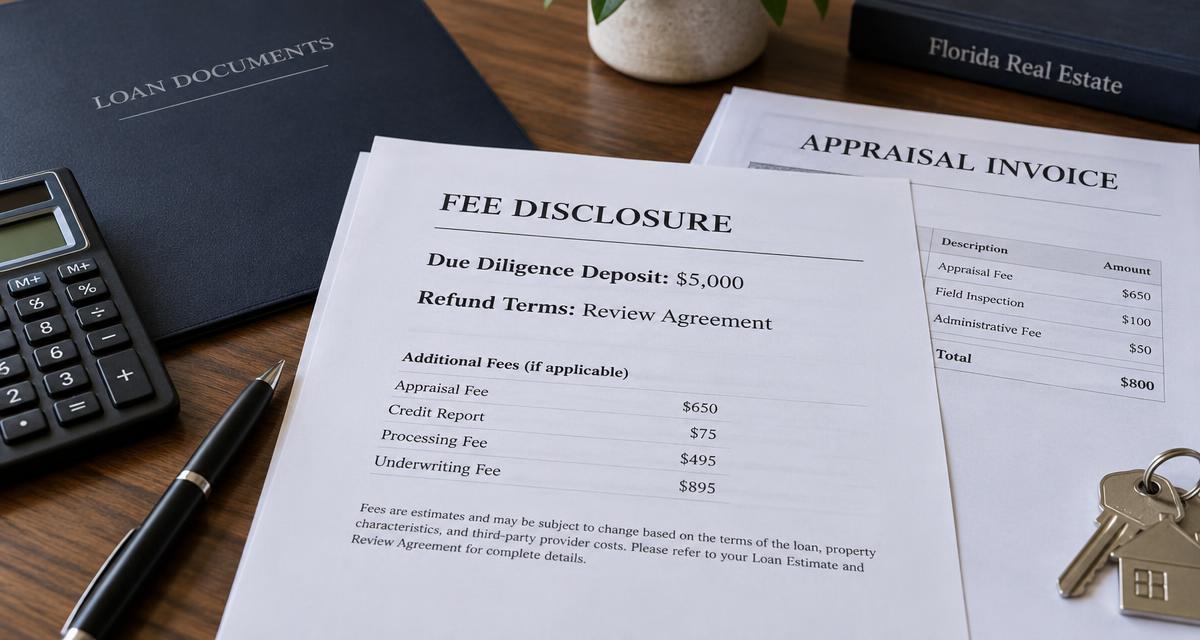
Upfront Due Diligence Deposits: How Florida Borrowers Can Avoid Costly Financing Mistakes
Know who receives your money, what work it covers and what happens if financing fails. A practical Florida guide to upfront deposits, written fee terms and independent verification.
Investor Education
Can You Borrow Against a Free-and-Clear Property in Florida?
A 2026 guide to unlocking equity in Florida real estate you own free and clear: first lien position, LTV sizing tables, worked residential, commercial, multifamily, and land examples, plus a private loan vs. cash-out refinance vs. HELOC comparison.

Construction Financing
Soft Cost Financing in Florida: Funding Your Project Before Construction
Soft cost financing helps Florida borrowers pay eligible predevelopment expenses such as architectural drawings, engineering, surveys, site investigations and permit fees before construction begins. Eligibility depends on the property, the borrower and the project review.

Investor Education
What Does 125% Lender’s Title Insurance Mean? Florida Private Lending Guide
A 125% lender’s title insurance requirement means the policy amount equals 125% of the loan principal. It does not mean the borrower receives 25% more money or pays a 25% fee. On a $1,950,000 loan, 125% coverage equals $2,437,500; actual protection depends on the policy terms.

Broker Resources
Florida Private Lending Partner for Real Estate Brokers
A practical guide for brokers bringing Florida real estate opportunities to Luminary, including eligible deal types, the submission checklist, review process, common delays and transaction specific limitations.

Investor Education
Can You Get a Private Real Estate Loan Without Tax Returns in Florida?
Tax returns do not always reflect an investor's real financial strength. This Florida guide explains how asset-based private lenders evaluate property value, equity, loan-to-value, liquidity, use of funds and exit strategy instead of conventional income documentation.

Construction Financing
What Happens When a Construction Loan Expires Before the Project Is Finished? | Florida Guide
An unfinished construction project does not automatically extend a maturing loan. This Florida guide explains extensions, modifications, refinancing, unused draws, updated appraisals, cost overruns and the documents lenders may review.

Investor Education
Can a Newly Formed LLC Qualify for a Private Real Estate Loan in Florida?
A newly formed LLC may still qualify for private real estate financing in Florida. This guide explains what asset-based lenders review instead of operating history: property value, equity, liens, liquidity, the principals, documentation and the exit strategy.

Investor Education
Title Issues & Code Violations: Can They Get a Private Real Estate Loan Denied in Florida?
Strong equity and a supportive appraisal do not guarantee a closing. This Florida guide explains how title defects, recorded liens, municipal code liens, open permits and unpermitted work affect private lending, which issues are usually curable, what documentation to send up front, and why lien position matters as much as value.

Investor Education
Can an LLC Get a Real Estate Loan Without Personal Credit? A Florida Private Lending Guide
An LLC real estate loan without personal credit as the deciding factor is possible with asset-based private lenders. This Florida guide covers what lenders review instead, LTV math with worked scenarios, new-LLC and free-and-clear situations, the difference between a credit pull and a personal guarantee, and a borrower document checklist.

Construction Financing
Dutch vs. Non-Dutch Interest on Construction Loans: What Borrowers Need to Know
Dutch interest is calculated on the full construction loan commitment. Non-Dutch interest is calculated on funds actually advanced. Worked $2 million examples, a full 12-month draw table, a Naples scenario and an interactive calculator show why a 12% loan can cost less than a 10% loan.