Construction Financing
You Split One Property Into Two Lots, but the Lender's Lien Is Still on Both. What Happens to Your Construction Loan?
Published By Luminary Private Lending
- Author:
- Ivan Padilla
- Reviewed By:
- Kevin Mazzola
- Published:
- September 14, 2026
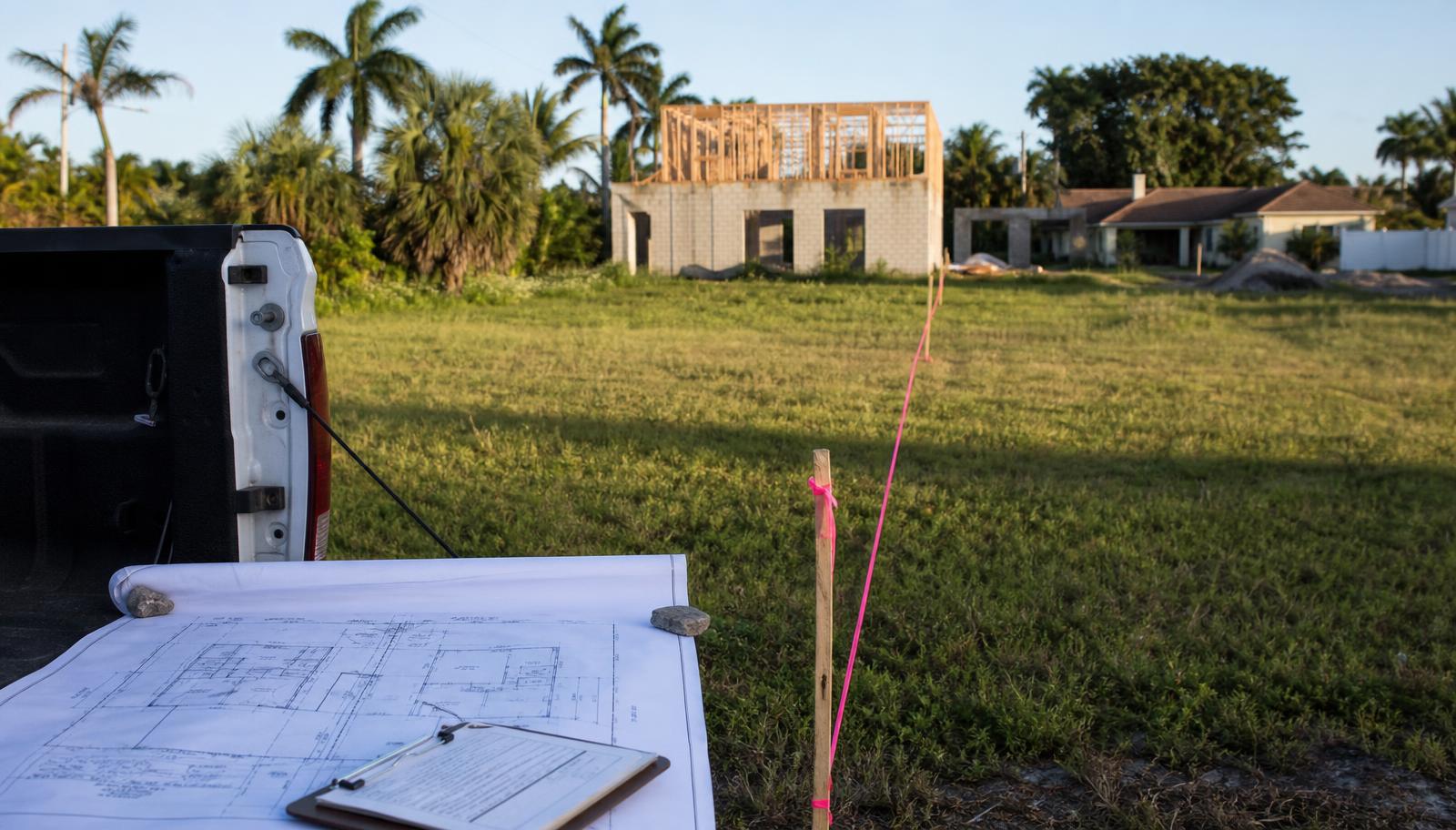
A lot split does not automatically split an existing lien. This Florida guide explains partial lien releases, why an updated appraisal cannot remove a recorded lien, who approves a release, how construction lenders evaluate lien position, and the documents to have ready before applying.
Dividing one piece of land into two lots opens new options for Florida real estate investors and developers. It does not, by itself, divide the lien a lender already recorded against the original parcel. That distinction decides whether a construction loan on one of the new lots can actually close.
Construction Loans After a Lot Split: The Direct Answer
If a Florida property is divided into two lots after a lender recorded a lien against the original parcel, the lien may continue to affect both resulting lots. Financing construction on one lot may require the existing lender to execute a partial release before the new construction lender can obtain its required lien position.
Quick Answer
A lot split is not an automatic lien release. Creating two parcels does not remove a previously recorded lien from either one.
An appraisal is not a lien release. An updated appraisal establishes value. It has no effect on a recorded interest in the property.
The existing lender's approval may be necessary. A partial release is generally the current lienholder's decision, subject to its loan documents and applicable law.
Title must confirm the new lender's acceptable lien position. The construction lender and the closing agent have to see the position the loan requires before funding.
Key Takeaways
- Splitting one property into two lots does not automatically release an existing lien.
- An existing lien may continue to affect both resulting parcels.
- An updated appraisal can establish the value of the construction parcel, but it does not remove a lien.
- A partial release may be required before a new construction lender can obtain its required lien position.
- The existing lender ultimately determines whether it will agree to the requested release, subject to the applicable loan documents and law.
- Reviewing title, parcel information and existing debt early can help identify these issues before closing.
What This Guide Covers
- How the transaction is structured
- A real-world example: one property becomes two lots
- What is a partial release of lien?
- Can I build on one lot if my mortgage covers both lots?
- Does subdividing land remove an existing mortgage?
- Does a new parcel ID remove an old lien?
- Can an appraisal remove or override a lien?
- Who approves a partial release?
- Why would the existing lender agree to release one lot?
- Why an updated appraisal on the construction lot matters
- Updated appraisal versus partial release
- What happens to the new construction lender?
- Hypothetical numbers
- What if the existing lender refuses?
- Naples and Collier County context
- What we see in real deals
- Before applying for a construction loan after a lot split
- Documents to have ready
- Where Florida records answer these questions
- Frequently asked questions
How the Transaction Is Structured
- Original parcel, with the existing lender's lien recorded against it.
- The parcel is legally divided into Lot A and Lot B.
- The existing lien may still affect both Lot A and Lot B.
- The borrower requests a partial release of Lot B.
- The existing lender evaluates the collateral remaining on Lot A.
- Release documents and title requirements are satisfied at closing.
- The construction lender funds the project on Lot B in its required lien position.
A Real-World Example: One Property Becomes Two Lots
Consider a scenario like one encountered in private construction lending. A Florida investor owns land that was originally held as one parcel. An existing lender made a loan secured by that property and recorded a lien against it. The property was later legally divided into two separate lots, and the borrower now wants to develop one of them with a construction loan.
There is one problem. The original lender's lien still affects both lots. The borrower may own two separate parcels, but the lender's collateral rights still apply, because dividing the land does not erase rights that were already recorded. A new lender has to resolve the existing lien on the construction lot before financing the build. One potential solution is a partial release of lien.
What Is a Partial Release of Lien?
A partial release is an agreement in which a lienholder releases its lien on part of the collateral while keeping its lien on the rest. Structurally, the original parcel carried one lien. After the split, the borrower asks the existing lender to keep its lien on Lot A and release Lot B, so a construction lender can finance the project on Lot B in an acceptable position.
The documentation and structure depend on the existing loan documents, title requirements, the lenders involved and the closing professionals handling the transaction. Related reading: first lien versus second lien position and cross-collateralization in private lending.
Can I Build on One Lot if My Mortgage Covers Both Lots?
Potentially, but generally not until the mortgage covering the construction lot is addressed. If the existing mortgage encumbers both parcels, the construction lender has to determine whether that prior lien is acceptable or whether a partial release, subordination, payoff or other structure is required. The answer turns on the existing loan documents, the title commitment and the lien position the construction loan requires.
Does Subdividing Land Remove an Existing Mortgage?
No, not automatically. A parcel split changes how the property is described legally or administratively. It does not change rights an existing lender already holds. Both newly created lots can remain subject to the original lien until a release or other instrument is recorded.
Does a New Parcel ID Remove an Old Lien?
No. A new parcel identification number is an assessment and administrative record. It does not release a recorded mortgage, judgment or other encumbrance. Title work, not the property appraiser's parcel number, determines what encumbers each lot.
Can an Appraisal Remove or Override a Lien?
No. An appraisal provides an opinion of value; it does not release a recorded lien. Value and title are separate parts of a lending file. An updated appraisal can support the collateral analysis for the construction parcel, and a recorded lien still has to be resolved through title.
Who Approves a Partial Release?
- Existing lienholder. Decides whether it will release the parcel, subject to its loan documents and applicable law.
- Borrower. Requests the release and supplies the parcel, valuation and project information supporting the request.
- New construction lender. Determines what lien position it requires and whether the proposed structure satisfies it.
- Title company and closing agent. Confirm what encumbers each lot and which recorded instruments are required at closing.
- Legal counsel. Reviews the loan documents, release language and legal descriptions.
Why Would the Existing Lender Agree to Release One Lot?
This is where the remaining collateral matters. The lender originally secured the entire property. After the split, the borrower asks it to release Lot B and keep its lien on Lot A, and the lender has to decide whether the collateral remaining after that release is acceptable.
Its decision may depend on the original loan agreement, the remaining balance, current property values, internal lending policies, collateral requirements and payment history. One important distinction: significant remaining equity does not guarantee a partial release. The borrower cannot simply assert that the other lot is enough collateral. The existing lender has to agree.
Why an Updated Appraisal on the Construction Lot Matters
When a larger property is divided, a construction lender needs to understand the specific collateral tied to its loan. An updated appraisal can establish the current value of the construction parcel and, depending on scope, address the proposed improvements.
- As-is value. The property's value in its current condition.
- Land value. The value of the underlying site.
- Cost to complete. The estimated amount required to finish construction.
- After-completion value. The expected value when the project is done, where applicable.
For more on how these figures are used, see LTV versus LTC versus ARV and what a private lender looks for in an appraisal. If the value comes in under expectations, see what happens when a property appraises lower than expected.
Updated Appraisal Versus Partial Release
| Document or action | Purpose | Who provides it | What it establishes | What it does not do |
|---|---|---|---|---|
| Updated appraisal | Value the specific construction parcel | Licensed appraiser, ordered for the lender | As-is value, land value, cost and completed-value context | Does not release, subordinate or alter any recorded lien |
| Partial release of lien | Remove the lien from one parcel while retaining it on the other | Existing lienholder, recorded through the closing | Which parcel remains encumbered after recording | Does not establish value or approve the construction loan |
| Title commitment | Identify what encumbers each lot | Title company or closing agent | Recorded liens, requirements and exceptions | Does not remove liens on its own |
| Survey or plat | Describe the new lot boundaries | Licensed surveyor | Legal descriptions for Lot A and Lot B | Does not change lender collateral rights |
What Happens to the New Construction Lender?
Construction lenders focus closely on lien position, because the real estate securing the loan is central to the transaction. If another lender holds a lien on Lot B, the construction lender has to determine whether that lien is acceptable. An unresolved prior lien can delay closing, particularly when the construction loan requires a first-priority position.
Borrowers should disclose existing mortgages and liens immediately. Discovering the problem days before closing creates delays. Discovering it during underwriting gives the borrower, the existing lender, the construction lender, the title company and counsel time to find a workable solution.
Hypothetical Numbers
All figures below are illustrative only and do not represent Luminary underwriting guidelines or an offer of credit.
Assume an original parcel was divided into Lot A and Lot B. Hypothetically, Lot A is valued at $900,000 and Lot B at $600,000, and the existing loan balance is $500,000. The borrower wants construction financing on Lot B and asks the existing lender to release that parcel.
The existing lender would evaluate whether $900,000 of remaining collateral on Lot A adequately supports its $500,000 balance under its own documents and policies. Even at that hypothetical coverage level, the release remains the lender's decision, and it could approve, condition, require a principal reduction or decline.
What If the Existing Lender Refuses the Partial Release?
A refusal does not make the project impossible, but it can change the financing strategy substantially. Depending on the situation, alternatives may include restructuring the proposed financing, satisfying or refinancing the existing debt, modifying collateral arrangements, or pursuing another structure lenders and title professionals will accept. A bridge loan is sometimes used to retire existing debt before construction financing is placed. Every transaction is different, and the release has to be confirmed rather than assumed.
Naples and Collier County Context
A Naples-area investor developing one of two recently divided parcels may encounter this issue when an older mortgage remains associated with the original collateral. Southwest Florida land is frequently held for years before it is developed, so the recorded loan can predate the split by a long stretch. Geography does not determine the legal outcome. It simply means the borrower should pull title and parcel records early with the county clerk and property appraiser, alongside Collier County private lending guidance and the statewide Florida private lending hub.
What We See in Real Deals
In private construction lending, Luminary has reviewed a scenario in which one original parcel had been divided into two lots, an existing lender's lien still affected both, and the borrower had already obtained an updated appraisal on the parcel proposed for construction. The borrower and property are not identified here.
What made the file workable was sequencing. The appraisal answered the value question. It did not answer the title question, and the transaction could not be evaluated for closing until the release requirements were understood. Files that surface the existing lien during underwriting move considerably more smoothly than files where it appears in the title commitment a week before the scheduled closing.
Before Applying for a Construction Loan After a Lot Split
- Confirm the parcel split is complete and recognized in the applicable records.
- Pull a current title search or commitment on both lots.
- Identify every recorded lien, judgment, easement and tax matter.
- Obtain the new legal descriptions for Lot A and Lot B.
- Gather the updated appraisal on the construction parcel.
- Contact the existing lender about a partial release.
- Determine the release requirements, conditions and timing.
- Submit the construction financing package with all of the above.
Documents to Have Ready
- Updated appraisal on the construction parcel
- Survey or recorded plat showing both lots
- Legal descriptions for Lot A and Lot B
- Existing mortgage and note information
- Title commitment or current title search
- Current payoff or balance information, where applicable
- Construction plans and scope
- Construction budget and cost breakdown
- Permits and approvals, where applicable
- Borrower entity documents
Where Florida Records Answer These Questions
Mortgages, releases, judgments and plats are recorded with the clerk of the circuit court in the county where the property sits. Parcel identification, ownership and assessed value come from the county property appraiser, and tax status from the tax collector. Florida's official recording and property-record framework sits under Chapter 695, Florida Statutes, governing conveyances and recording, while construction lien matters are addressed in Chapter 713. County-level guidance is available through the Florida Department of Revenue local property officials directory.
The Bigger Lesson for Florida Real Estate Investors
Land can change dramatically between acquisition and development. It can be subdivided, new parcel numbers can be created, new appraisals can be completed and construction plans can be approved. None of those events automatically erases lender rights that were recorded earlier. For investors and developers, understanding title, collateral and lien position matters as much as understanding construction costs and property value.
Construction Financing With Luminary Private Lending
Luminary Private Lending works with Florida investors and developers seeking asset-based financing, including construction transactions with complex collateral structures. Already split your property and discovered an existing lien on both lots? Send Luminary your updated appraisal, survey or plat, existing mortgage information and construction plans so our team can review the proposed financing structure. Start with construction financing or request a construction loan review.
Author and Reviewer
Author. Ivan Padilla, Director of Growth and Real Estate Lending Specialist, Luminary Private Lending. Ivan works daily with Florida investors and builders on bridge, construction, second mortgage and vacant land financing. Meet the team.
Reviewed by. Kevin Mazzola, Founder of Luminary Private Lending. About Kevin.
Published: September 14, 2026. Last updated: September 2026. Last reviewed: September 14, 2026. Loan approval and terms depend on several factors, including lien position, collateral requirements and funding, and all are subject to underwriting, title review, appraisal, documentation and lender approval. Nothing in this article constitutes legal, tax, title or financial advice. Borrowers should consult qualified legal and title professionals regarding liens, releases, subdivisions and property rights.
Related Florida Lending Resources
Keep Reading
Latest Insights
Keep exploring Florida private lending insights.
Construction Financing
What Happens When a Construction Loan Expires Before the Project Is Finished? | Florida Guide
An unfinished construction project does not automatically extend a maturing loan. This Florida guide explains extensions, modifications, refinancing, unused draws, updated appraisals, cost overruns and the documents lenders may review.
Construction Financing
Construction Loan Draw Schedule Explained: How Private Lenders Release Funds
Construction loans do not fund in one lump sum. Funds release in stages tied to completed milestones. Here is the typical draw schedule, the documentation each request needs, how inspections and interest work, and why draws get delayed.

Construction Financing
Dutch vs. Non-Dutch Interest on Construction Loans: What Borrowers Need to Know
Dutch interest is calculated on the full construction loan commitment. Non-Dutch interest is calculated on funds actually advanced. Worked $2 million examples, a full 12-month draw table, a Naples scenario and an interactive calculator show why a 12% loan can cost less than a 10% loan.
Construction Financing
Land Acquisition + Construction Financing in Florida: Can Both Be Included in One Loan?
A Florida developer's guide to combining land acquisition and construction financing in one loan: how acquisition advances and construction draws work, LTC vs. LTV, land equity as contribution, what costs are and are not funded, and what lenders need to approve the request.
Construction Financing
Ground-Up Construction vs. Heavy Rehab Financing in Florida
Ground-up construction financing builds a new property from vacant land or after demolition. Heavy rehab financing funds major renovation of an existing structure. Here is how Florida private lenders underwrite each, with worked LTC and ARV examples.

Investor Education
What Happens If a Property Appraises Lower Than Expected?
A low appraisal changes the numbers, not always the deal. How a lower-than-expected value affects LTV, loan proceeds, the appraisal gap, construction and refinance requests, and what Florida investors can do next.

Investor Education
How Unclear Payoff Statements and Property Liens Can Delay a Private Real Estate Loan Closing
An unclear payoff or an unresolved lien can stall a Florida private loan even when the property has equity. This guide explains payoff statements, lien types, combined loan to value on second mortgages, paying liens at closing and how to prevent delays.
Bridge Loans
Commercial Bridge Loans in Florida: A Complete Guide to $5M to $20M Financing
The pillar guide to commercial bridge loans in Florida: what they are, who they fit, how LTV sizes a $5M to $20M request, what documents lenders need, how appraisals and exit strategies drive approval, and when bridge financing is the wrong tool.
Investor Education
Can You Borrow Against a Free-and-Clear Property in Florida?
A 2026 guide to unlocking equity in Florida real estate you own free and clear: first lien position, LTV sizing tables, worked residential, commercial, multifamily, and land examples, plus a private loan vs. cash-out refinance vs. HELOC comparison.
Investor Education
What Do Private Lenders Look for in an Appraisal?
A private lender reads an appraisal for value, comparable sales, condition, marketability, zoning, and projected value at completion. Here are the 12 things Florida borrowers should know, with worked LTV, CLTV, and LTC examples.
Investor Education
What Is an Interest Reserve in a Construction Loan? A Complete Guide for Builders and Contractors
An interest reserve covers construction loan interest from loan proceeds while the property produces no income. Here is how lenders size it, how it interacts with the draw schedule, and what happens when a build runs long.
Private Lending Guidelines
10 Reasons Private Lenders Decline Loan Applications (And How to Avoid Them)
Insufficient equity, an ineligible property type, missing documents, or a weak exit strategy will sink a private loan request faster than a credit score will. Here are the 10 most common reasons applications get declined, and how to fix each one.