Construction Financing
Lien Waivers and Draw Requests: What Florida Builders Should Have Ready
Published By Luminary Private Lending
- Author:
- Ivan Padilla
- Reviewed By:
- Kevin Mazzola
- Published:
- November 25, 2026
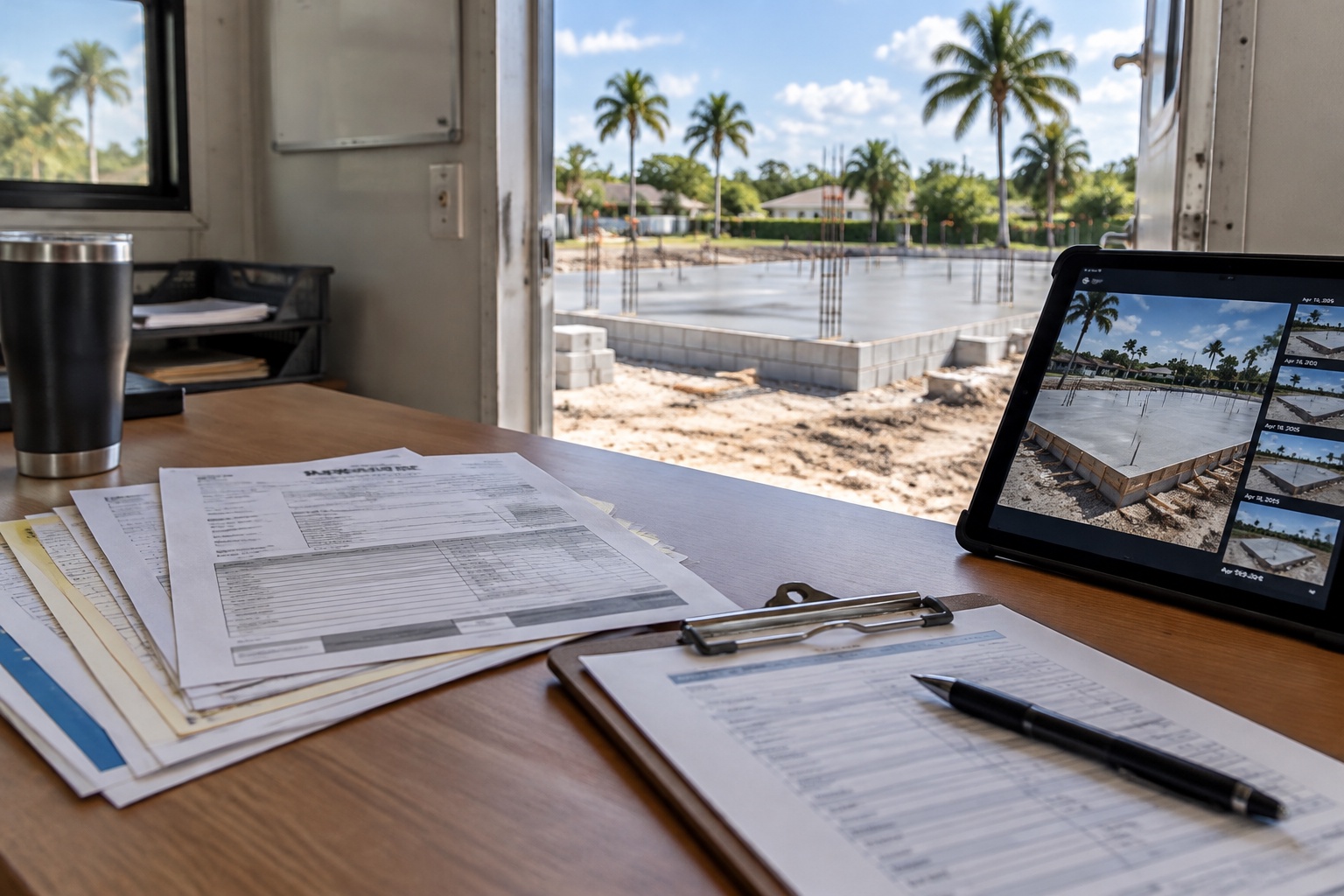
A signed request, updated budget, invoices, progress evidence and the right lien releases. A draw checklist, waiver tracker, Orlando slab example and final-draw guide under Florida Statutes Chapter 713.
Quick Answer
For a Florida construction draw, have a signed draw request, an updated budget, invoices for the billed work, evidence of progress and any lien waivers or releases your draw instructions require. Before you submit, check that amounts, property details, billing periods and payment status match across the whole package.
A draw can stall even after the work passes inspection. The inspector may confirm the slab was poured, but the lender or title company may still need to know who supplied the concrete, which invoices the draw covers and whether the releases cover the right work.
This guide is for Florida builders, general contractors and real estate investors using private construction financing. Your loan documents and draw instructions set the lender's requirements; Florida's construction lien law (Chapter 713) governs lien rights and releases.
Florida construction draw checklist
Use this list to assemble your package. Items such as dated photos, draw inspections and budget formats are lender requirements, so confirm which apply with your lender or draw administrator, especially for the first and final draws.
| Item | What to have |
|---|---|
| Signed draw request | Loan or project number, property address, draw number, requested amount and all required signatures. |
| Updated construction budget | Approved budget, prior draws, current request and remaining balance for each line item, plus any retainage the loan requires. |
| Invoices and pay applications | Contractor, subcontractor and supplier invoices matched to the correct property and budget line, showing prior payments or credits. |
| Progress evidence | Dated photos, site access for the lender's inspector and permit inspection records if needed. |
| Lien waivers or releases | Required documents for the relevant contractor, subcontractors or suppliers. Verify the signer, property description, payment amount and scope of each release. |
| Prior payment records | Proof of payment for earlier draws if required, and a record of any outstanding payment conditions. |
| Notices to Owner and title items | Send notices and recorded lien information to the lender or title company as instructed. Track who served each notice and any unpaid balance. |
| Change orders | Signed documents recording changes to scope or cost, with written lender approval when required. |
What goes in a Florida construction draw request?
A draw request asks the lender to release part of an approved loan for completed work. It lists the work done, the amount requested and where the funds will go. If your schedule pays after the slab is poured, the package may include labor and concrete invoices, photos of the finished slab, inspection records and releases from the parties named in your draw instructions. If you want to include a materials deposit for the next phase, confirm your loan allows it first.
What is a Florida construction lien waiver?
A lien waiver, or release of lien, is a document in which a party gives up construction lien rights for work it has been paid for. Florida Statutes § 713.20 provides progress-payment and final-payment forms (subsections 4 and 5) and makes advance waivers unenforceable: lien rights can only be waived for labor, services or materials already furnished.
| Document | When it comes up | What to verify |
|---|---|---|
| Progress waiver or release | The contractor, subcontractor or supplier receives a partial payment. | The payment amount and the date through which the work was performed. |
| Final waiver or release | The signing party is receiving final payment for the job. | Reconcile the final balance, approved changes and any retainage before closing the account. |
| Release conditioned on payment of a check | The signer provides a release in exchange for a check, effective only if the check is paid. | Confirm the check has cleared before treating the condition as satisfied. |
Retainage is the portion of each payment held back until a later stage or completion. A progress release should state any retainage or unpaid amounts it excludes, so match it to your contract's payment terms. Florida law says no one may require a lienor to sign a waiver that differs from the statutory forms, although a substantially different waiver can still be enforceable. Ask counsel to review any proposed form that broadens the release or uses unfamiliar terms before you proceed (Florida Statutes § 713.20).
A Notice to Owner and a recorded claim of lien are different documents. Florida Statutes § 713.06 covers notice requirements and proper payments. If a new notice arrives or a payment dispute arises, flag it before the next disbursement.
Sample lien waiver tracker
A simple log by payee helps you see which releases are in hand and which are still conditional. A release signed by the general contractor does not prove subcontractors and suppliers have been paid.
| Payee | Trade | Invoice | Payment | Release type | Work through | Status |
|---|---|---|---|---|---|---|
| Foundation subcontractor | Slab | $30,000 | $30,000 | Progress | Oct 15 | Received |
| Concrete supplier | Materials | $12,000 | $12,000 | Conditioned on check | Oct 15 | Pending until cleared |
Example: a slab-stage draw in Orlando
Illustrative example. These figures are hypothetical and are not a Luminary loan offer. A builder requests $42,000 after finishing the slab on an Orlando investment property: $30,000 for the foundation subcontractor and $12,000 for the concrete supplier, both allowed by the approved draw schedule. The subcontractor's invoice does not include the supplier's charges.
| Approved budget line | Invoice | Amount |
|---|---|---|
| Foundation: labor | Foundation subcontractor | $30,000 |
| Foundation: concrete | Concrete supplier | $12,000 |
| Total request | $42,000 |
The builder attaches both invoices against the budget, adds photos and the required inspection record, and tracks the supplier's check-conditioned release as pending until the check clears.
Duplicate billing check: now suppose the $30,000 subcontractor invoice already includes the concrete. Listing the supplier's invoice separately would count $12,000 twice, and the correct request would be $30,000. An itemized invoice and payment breakdown resolves this before the reviewer sends the draw back.
How to catch common draw delays before you submit
- Match every dollar to an approved budget line. If a bill includes an upgrade or extra scope, attach the signed change order and show how the added cost will be funded. See who pays when construction costs run over.
- Check the release against the invoice. A release covering work through October 15 does not cover an invoice billed through October 31. Identify the uncovered work before submitting.
- Track subcontractors and suppliers individually with a payment log, and collect the releases your instructions require.
- Label inspections by purpose. Upload a county permit inspection and a lender draw inspection as separate, clearly named files.
- Send one complete package through the requested channel, using the same address and draw number on the request, budget and supporting documents.
Lenders also review who is doing the work before the first draw; see how private construction lenders evaluate your general contractor or our Florida construction financing program.
What should be ready for the final construction draw?
Start with a final accounting: the original contract amount, approved change orders, prior payments, remaining balances and retainage. Then confirm which final releases, closeout inspections, permit records and occupancy documents your lender requires.
Florida Statutes § 713.06 also covers the contractor's final payment affidavit, due when final payment under a direct contract is due. It states whether lienors have been paid and whether any timely served a Notice to Owner, and identifies unpaid parties and amounts. Coordinate the affidavit and final payment with the owner, title company or Florida construction counsel.
Before setting payment dates with your contractor, ask how the lender handles draw milestones, inspections and releases. Knowing early that an invoice may come due before the draw is ready helps you plan crew payments.
Frequently asked questions
Can I sign a Florida lien waiver before I receive payment?
Under Florida Statutes § 713.20, a lienor may exchange a waiver for a check and may condition the release on payment of that check. The waiver can only cover labor, services or materials already furnished. If the project pays by wire or ACH, confirm the wording and procedure with the title company or Florida construction counsel.
Do I need a lien waiver from every subcontractor and supplier on every draw?
Your draw instructions control which releases the lender or title company requires for each disbursement. Keep a current list of subcontractors and suppliers with their balances and any Notices to Owner, and use it to identify the documents you need before submitting.
Does passing the draw inspection mean the lender will release funds?
No. A passed inspection documents progress. The lender may still need to check invoices, budget balances, payment records, releases and title items before authorizing payment.
What if the draw does not cover an entire invoice?
Show the amount requested, what has already been paid and what remains outstanding. Before signing, make sure the progress release matches the agreed scope, the work-through date and any exceptions.
Can I include materials delivered to the site but not yet installed?
Check your loan documents for rules on stored materials and deposits. If the lender allows it, ask what evidence it needs, such as invoices, delivery records or dated photos of the materials on site.
Planning a Florida construction project?
Contact Luminary Private Lending to discuss your construction budget, proposed draw schedule and financing needs.
Sources and review
- Florida Legislature: Statutes § 713.20, lien waivers and releases
- Florida Legislature: Statutes § 713.06, Notice to Owner and final payment affidavit
Author: Ivan Padilla, Director of Growth and Real Estate Lending Specialist, part of the team at Luminary Private Lending. Reviewed by: Kevin Mazzola, Founder of Luminary Private Lending. The lien law sections have not been reviewed by construction counsel. Published: November 25, 2026. Last reviewed: November 25, 2026.
This article is general information, not legal advice or a loan commitment. Consult Florida construction counsel about lien matters. All financing is subject to eligibility, underwriting and approval. The example is illustrative.
Related Florida Lending Resources
Keep Reading
Latest Insights
Keep exploring Florida private lending insights.
Construction Financing
Soft Cost Financing in Florida: Funding Your Project Before Construction
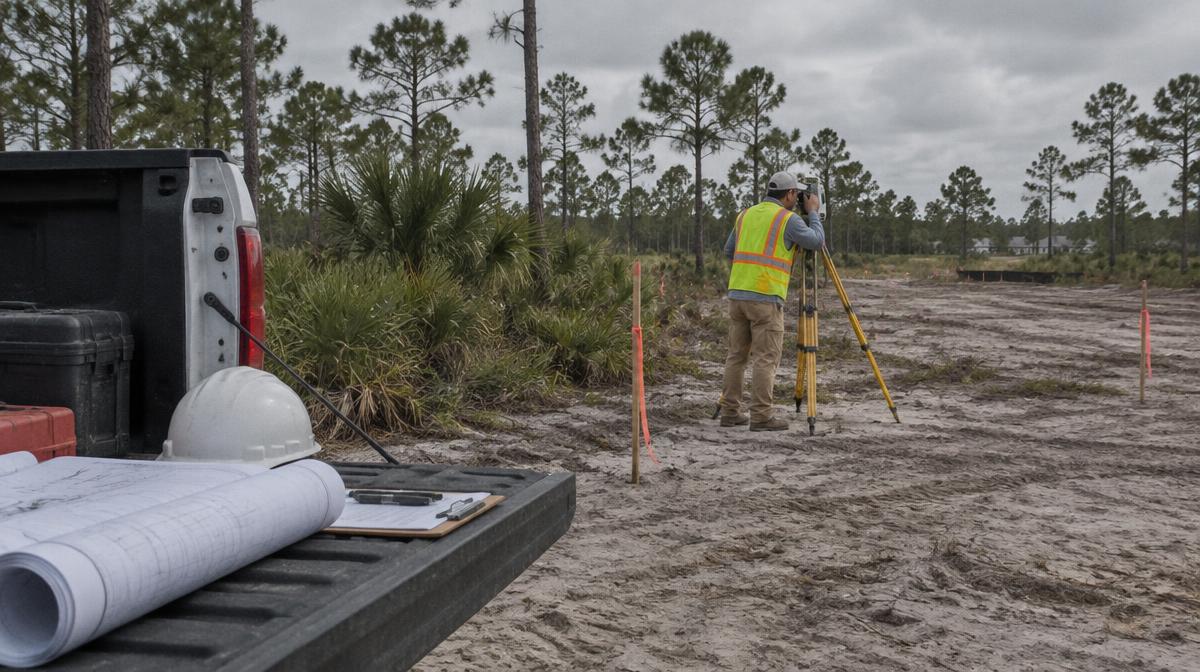
Soft cost financing helps Florida borrowers pay eligible predevelopment expenses such as architectural drawings, engineering, surveys, site investigations and permit fees before construction begins. Eligibility depends on the property, the borrower and the project review.
Construction Financing
What Happens When a Construction Loan Expires Before the Project Is Finished? | Florida Guide
An unfinished construction project does not automatically extend a maturing loan. This Florida guide explains extensions, modifications, refinancing, unused draws, updated appraisals, cost overruns and the documents lenders may review.
Construction Financing
Land Acquisition + Construction Financing in Florida: Can Both Be Included in One Loan?
A Florida developer's guide to combining land acquisition and construction financing in one loan: how acquisition advances and construction draws work, LTC vs. LTV, land equity as contribution, what costs are and are not funded, and what lenders need to approve the request.
Construction Financing
Ground-Up Construction vs. Heavy Rehab Financing in Florida
Ground-up construction financing builds a new property from vacant land or after demolition. Heavy rehab financing funds major renovation of an existing structure. Here is how Florida private lenders underwrite each, with worked LTC and ARV examples.
Construction Financing
How Private Construction Lenders Evaluate Your General Contractor
Private construction lenders review your contractor's license, insurance, comparable experience, contract, budget and draw schedule. Here is what they check, a first-draw cash-gap example and a checklist.
Construction Financing
Who Pays When Your Construction Project Goes Over Budget?
Your construction contract usually determines who owes the extra cost. Your loan agreement determines whether draw funds can cover it. Here is how fixed price, cost-plus and GMP contracts handle overruns, with hypothetical examples.
Construction Financing
12% vs. 14% Construction Loans: Which Costs Less?
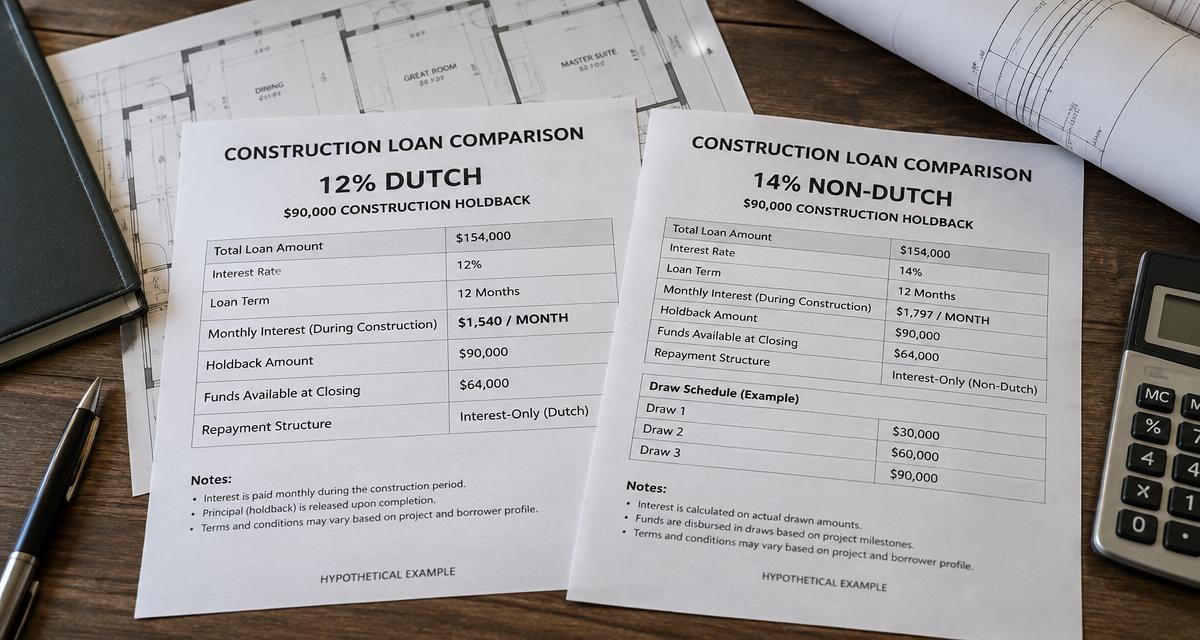
Interest rates matter, but fees, construction draws and payoff timing determine total cost. Compare 12% full commitment interest with 14% on disbursed funds using a transparent hypothetical example.
Construction Financing
You Split One Property Into Two Lots, but the Lender's Lien Is Still on Both. What Happens to Your Construction Loan?
A lot split does not automatically split an existing lien. This Florida guide explains partial lien releases, why an updated appraisal cannot remove a recorded lien, who approves a release, how construction lenders evaluate lien position, and the documents to have ready before applying.

Construction Financing
Dutch vs. Non-Dutch Interest on Construction Loans: What Borrowers Need to Know
Dutch interest is calculated on the full construction loan commitment. Non-Dutch interest is calculated on funds actually advanced. Worked $2 million examples, a full 12-month draw table, a Naples scenario and an interactive calculator show why a 12% loan can cost less than a 10% loan.
Construction Financing
Construction Loan Draw Schedule Explained: How Private Lenders Release Funds
Construction loans do not fund in one lump sum. Funds release in stages tied to completed milestones. Here is the typical draw schedule, the documentation each request needs, how inspections and interest work, and why draws get delayed.

Florida Market
Construction Loan Florida: Miami's New Construction Market Offers Builders Opportunities in 2026
Miami's new construction market continues to expand in 2026, with new-build premiums above 300%. See how a Construction Loan Florida program helps builders win land, fund draws, and finish projects faster across Miami-Dade and the rest of South Florida.
Investor Education
Upfront Due Diligence Deposits: How Florida Borrowers Can Avoid Costly Financing Mistakes
Know who receives your money, what work it covers and what happens if financing fails. A practical Florida guide to upfront deposits, written fee terms and independent verification.