Construction Financing
How Private Construction Lenders Evaluate Your General Contractor
Published By Luminary Private Lending
- Author:
- Ivan Padilla
- Reviewed By:
- Kevin Mazzola
- Published:
- November 20, 2026
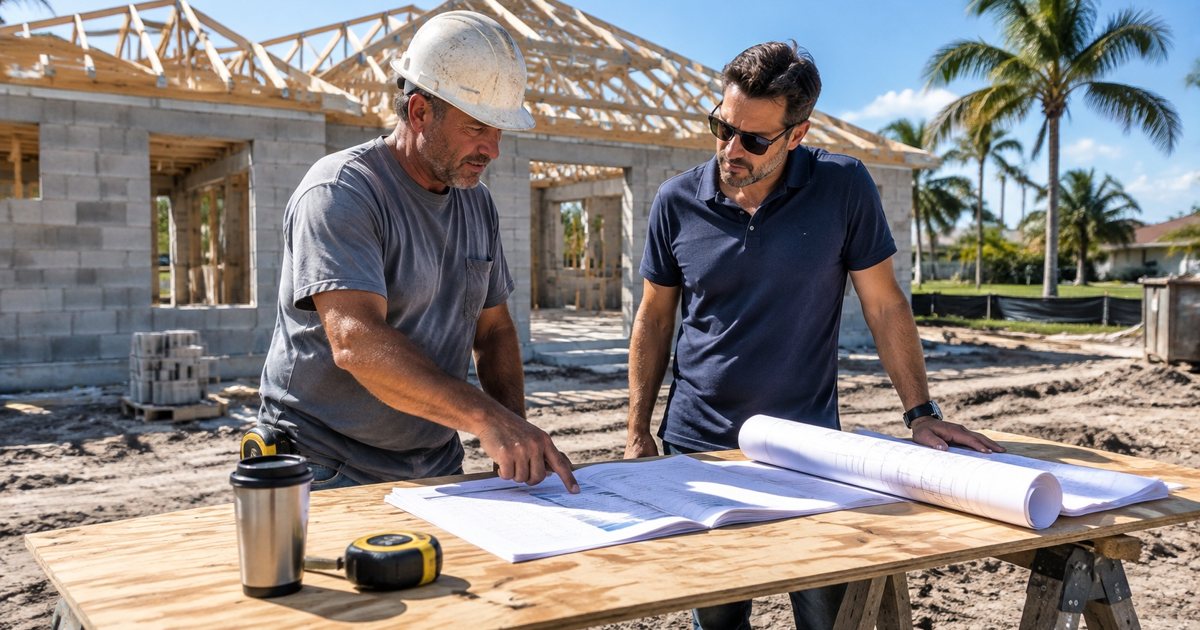
Private construction lenders review your contractor's license, insurance, comparable experience, contract, budget and draw schedule. Here is what they check, a first-draw cash-gap example and a checklist.
Quick Answer
Private construction lenders review your general contractor's license, insurance, similar project experience, contract, budget and draw schedule. They want to know whether the contractor can complete the build and keep it funded between draws.
Essentials to gather
- Legal business name, license number and qualifying contractor
- Insurance certificates
- Comparable completed projects
- Current plans and specifications
- Construction contract
- Line-item budget
- Schedule and proposed draw plan
Key takeaways
- Florida law governs contractor licensing; each lender sets its own underwriting requirements.
- Plans, contract and line-item budget must describe the same project.
- Payments due before the first eligible draw can create a cash gap even when the budget balances.
- Lien releases should match the payment they cover.
Why does the lender care who builds the property?
The lender advances funds while the property is still being built, so the contractor's ability to finish on budget is part of the collateral story. An appraisal estimates what the finished property may be worth; the contractor review shows whether the team, budget and schedule can deliver it. The OCC's construction lending guidance for banks describes evaluating contractor capability and monitoring progress. Private lenders set their own requirements.
Consider two borrowers each planning a $700,000 investment home. One submits a one-page estimate with a lump sum for site work. The other submits plans, a line-item budget and written quotes naming who handles clearing, grading, fill and utility connections. The homes may share a value, but the second file shows what it takes to finish and how much cash the borrower needs along the way.
Can the contractor legally perform the work in Florida?
The lender usually needs the license number, the legal name of the business signing the contract and the name of the qualifying contractor: the licensed individual who qualifies that business. Florida has certified contractors, who may work statewide within their classification, and registered contractors, limited to their registered areas (Florida Statutes § 489.113).
How to verify a Florida contractor license
- Open the DBPR MyFloridaLicense search and search by license number, person's name or business name.
- Confirm the license status is current and the classification fits the job.
- Confirm the qualifying contractor is linked to the same LLC or company named in your contract.
- For a registered contractor, confirm geographic authority for the project address; ask the local building department about permitting.
Use the same legal business name across the contract and related documents. Explain any differences upfront.
Has the contractor completed projects like yours?
Lenders look for experience that matches the proposed work, not just years in business. A ground-up build adds site development, foundations, structural inspections and more trades than an interior remodel. A useful project list shows, for each example: location, property type, size and approximate budget; the scope the contractor managed; completion date with photos, permit records or an owner reference; the superintendent or project manager assigned to your build; and how the team handled a significant delay or change order.
Match examples to the hard parts of your project: elevated foundations and inspections for a coastal build, utility tie-ins and tight staging for an inland infill lot.
Does the contractor carry the insurance the project requires?
Lenders may request proof of general liability and, where required, workers' compensation; exact limits and endorsements depend on the project and loan. Builder's risk usually covers specified physical damage during construction, so confirm who arranges it and when it must be in place. Check the insured business name and policy dates early, and ask how renewal evidence will be provided if a policy expires mid-build.
What contractor documents do construction lenders require?
Lenders compare the plans, the construction contract and the line-item budget to confirm they describe the same project. If the plans show a driveway, retaining wall or utility connection, someone must be contracted to do it and the budget must pay for it.
| Document | What it helps the lender verify | Example of a gap |
|---|---|---|
| Plans and specifications | What will be built and which major systems and finishes are included | The plans show an upgraded foundation the bid did not price. |
| Construction contract | Who does the work, how payments are made and how scope changes are approved | The contract excludes utility connections and there is no separate bid. |
| Line-item budget | Costs for each phase and the funds assigned to them | Site work is one lump sum with no breakdown for clearing, fill or grading. |
| Schedule and draw plan | When work happens and when funding is requested | A supplier deposit is due weeks before the lender inspects the work. |
An allowance is an amount set aside for an item whose final selection or cost is still open. With a $15,000 cabinet allowance and a $22,000 selection, there is a $7,000 difference to cover. An exclusion is work the contractor will not perform; if the driveway is excluded, the borrower needs a separate scope, price and payment plan. Also confirm the contractor priced the current plans; if the roofline, foundation or square footage changed, ask for a new price.
Can the team handle its workload and the gap between payments?
Project history shows what the contractor has done; the active schedule shows what it can do now. The lender may ask who supervises the site, when key subcontractors can start and whether the contractor can pay crews and suppliers while waiting for a draw. Some projects may call for financial details or bonding capacity. Compare the proposed start date with permit status, subcontractor availability and material lead times.
Who pays for work before the first construction draw?
Work due before the first eligible draw is usually paid by the borrower unless the loan terms say otherwise. A construction draw is a release of loan funds during the build, typically after an inspection, invoices, photos or other documents confirm progress. Deposits and stored materials follow loan-specific rules.
Illustrative example: first-draw cash gap
$25,000 site prep + $40,000 foundation = $65,000 due before the first eligible draw.
$65,000 − $45,000 set aside = $20,000 cash gap the borrower must cover or renegotiate. Hypothetical figures; draw eligibility depends on your loan terms.
| Contractor payment | Contract due date | Lender's eligible milestone | Documentation | Who funds any gap |
|---|---|---|---|---|
| Site preparation | Before work starts | Per your loan terms | Invoice, photos | Borrower ($25,000 in the example) |
| Foundation | At pour | First draw after inspection | Invoice, inspection, lien release | Loan funds if eligible; otherwise the borrower |
| Supplier deposits | At order | Depends on stored-materials rules | Purchase order, invoice | Agree in writing before signing |
Before signing, agree on who pays deposits and early costs, the milestone for the first draw and the documents needed to release it. See how a construction loan draw schedule works.
Can the contractor document progress, payments and changes?
A draw package may include itemized payment requests, invoices, photos, an inspection report and lien releases, depending on loan and title requirements. Lenders compare remaining loan funds with the cost to complete: the amount still needed to finish the project. Two Florida details matter:
- A building department inspection checks permit and code compliance; a lender draw inspection confirms progress and supports the payment requested. They serve different purposes.
- Match lien releases to the payment they cover. Florida Statutes § 713.20 addresses progress and final releases and makes advance lien waivers unenforceable. Coordinate forms with the lender and title company. See our Florida lien waiver and draw checklist.
If excavation shows the foundation needs an extra $18,000, expect the lender to ask for the new scope, cost, schedule change and source of the extra funds. Related reading: who pays when your construction project goes over budget.
What can delay general contractor approval?
Common causes are an incomplete license record, limited experience with the scope, a contract that leaves out essential work and payment terms that clash with the draw schedule.
| If underwriting flags this | Send or resolve this |
|---|---|
| The license search shows an individual, but the contract names a company | Records connecting the qualifying contractor to the contracting business. |
| The contractor's portfolio is mostly renovations | Relevant ground-up examples and who will supervise those phases. |
| The budget leaves out a required trade or site cost | A written quote and an updated budget, funding plan and schedule. |
| The contractor requests a deposit before the first eligible draw | Who will fund it, or revised payment terms. |
| The start date assumes permits are ready | The actual permit status and a revised start date if needed. |
| A replacement contractor is taking over mid-project | Status report, remaining-scope contract, updated budget and outstanding payment or lien information. |
General contractor review checklist for Florida construction loans
- ☐ Contractor's legal business name, license number and qualifying contractor information
- ☐ Insurance certificates and any project-specific coverage documents requested
- ☐ Examples of comparable completed projects and references, if requested
- ☐ Current plans and specifications, plus the permit status
- ☐ Construction contract covering scope, exclusions, allowances, payment terms and the change-order process
- ☐ Line-item budget with a separate contingency and the source of funds for excluded work
- ☐ Construction timeline, key milestones and proposed draw schedule
- ☐ A written plan for deposits and costs due before the first eligible draw
- ☐ Name of the person in charge of on-site supervision and draw requests
This is a preparation list. Luminary confirms the documents and timing required for your specific request; items depend on the project and loan.
Frequently asked questions
Do private construction lenders approve the general contractor separately?
Often, yes. Many lenders review the contractor as part of underwriting and may need to accept the contractor and construction package before closing or before releasing construction funds. Ask your lender when that review happens and which documents apply to your loan.
Can a first-time investor get a Florida ground-up construction loan?
Yes, some lenders consider first-time investors. Luminary Private Lending states that prior construction experience is not required for its ground-up program; the property, construction plan and financing request remain subject to underwriting. An experienced contractor with comparable projects can strengthen a first-time borrower's file.
How do I verify my general contractor's Florida license?
Search Florida DBPR's MyFloridaLicense records by license number, contractor name or business name. Check the license status and classification, confirm the qualifying contractor is linked to the contracting business, and confirm authority to work at your project location.
Can I use my own construction company as the general contractor?
It depends on the lender. Disclose the relationship early and be ready to show the company's license, relevant experience, budget and capacity. The lender may add independent inspections or contract controls for a related-party arrangement.
Can I change general contractors after closing?
Contact your lender and review the loan documents before making any change. The lender may need to review the replacement contractor, work completed, unpaid invoices or liens, the new cost to complete and the timing of the next draw.
Does the lowest contractor bid help me get approved?
Only if it covers the work the project needs. Compare bids priced on the same plans and check allowances, exclusions, deposits, permits and utility connections. A low bid that leaves out major costs can make a loan harder to underwrite.
Preparing to finance a Florida construction project?
Have plans, a contractor bid and a proposed draw schedule? Send them to Luminary Private Lending to discuss Florida construction financing for your investment project. Contact Luminary Private Lending. All financing is subject to underwriting.
Sources and review
- Florida DBPR: MyFloridaLicense license search
- Florida Statutes § 489.113: contractor certification and registration
- Florida Statutes § 713.20: lien waivers and releases
- OCC Comptroller's Handbook: Construction Lending
- Google Search Central: AI features and your website
Author: Ivan Padilla, Director of Growth and Real Estate Lending Specialist, part of the team at Luminary Private Lending. Reviewed by: Kevin Mazzola, Founder of Luminary Private Lending. This article has not been reviewed by an attorney. Published: November 20, 2026. Last reviewed: November 20, 2026.
This article is educational and is not legal advice or a loan commitment. Requirements vary by lender and project; all financing is subject to underwriting, property review, title review and final approval.
Related Florida Lending Resources
Keep Reading
Latest Insights
Keep exploring Florida private lending insights.
Construction Financing
Construction Loan Draw Schedule Explained: How Private Lenders Release Funds
Construction loans do not fund in one lump sum. Funds release in stages tied to completed milestones. Here is the typical draw schedule, the documentation each request needs, how inspections and interest work, and why draws get delayed.
Construction Financing
Lien Waivers and Draw Requests: What Florida Builders Should Have Ready
A signed request, updated budget, invoices, progress evidence and the right lien releases. A draw checklist, waiver tracker, Orlando slab example and final-draw guide under Florida Statutes Chapter 713.
Construction Financing
Who Pays When Your Construction Project Goes Over Budget?
Your construction contract usually determines who owes the extra cost. Your loan agreement determines whether draw funds can cover it. Here is how fixed price, cost-plus and GMP contracts handle overruns, with hypothetical examples.
Construction Financing
Soft Cost Financing in Florida: Funding Your Project Before Construction
Soft cost financing helps Florida borrowers pay eligible predevelopment expenses such as architectural drawings, engineering, surveys, site investigations and permit fees before construction begins. Eligibility depends on the property, the borrower and the project review.
Construction Financing
12% vs. 14% Construction Loans: Which Costs Less?
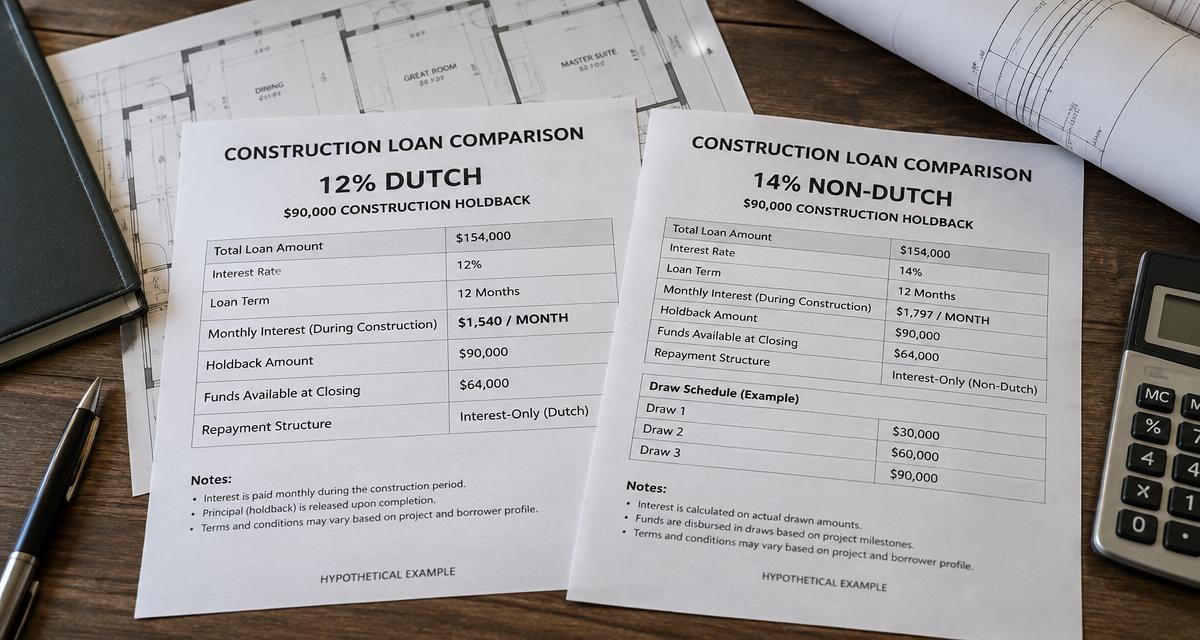
Interest rates matter, but fees, construction draws and payoff timing determine total cost. Compare 12% full commitment interest with 14% on disbursed funds using a transparent hypothetical example.
Construction Financing
What Happens When a Construction Loan Expires Before the Project Is Finished? | Florida Guide
An unfinished construction project does not automatically extend a maturing loan. This Florida guide explains extensions, modifications, refinancing, unused draws, updated appraisals, cost overruns and the documents lenders may review.
Construction Financing
You Split One Property Into Two Lots, but the Lender's Lien Is Still on Both. What Happens to Your Construction Loan?
A lot split does not automatically split an existing lien. This Florida guide explains partial lien releases, why an updated appraisal cannot remove a recorded lien, who approves a release, how construction lenders evaluate lien position, and the documents to have ready before applying.

Construction Financing
Dutch vs. Non-Dutch Interest on Construction Loans: What Borrowers Need to Know
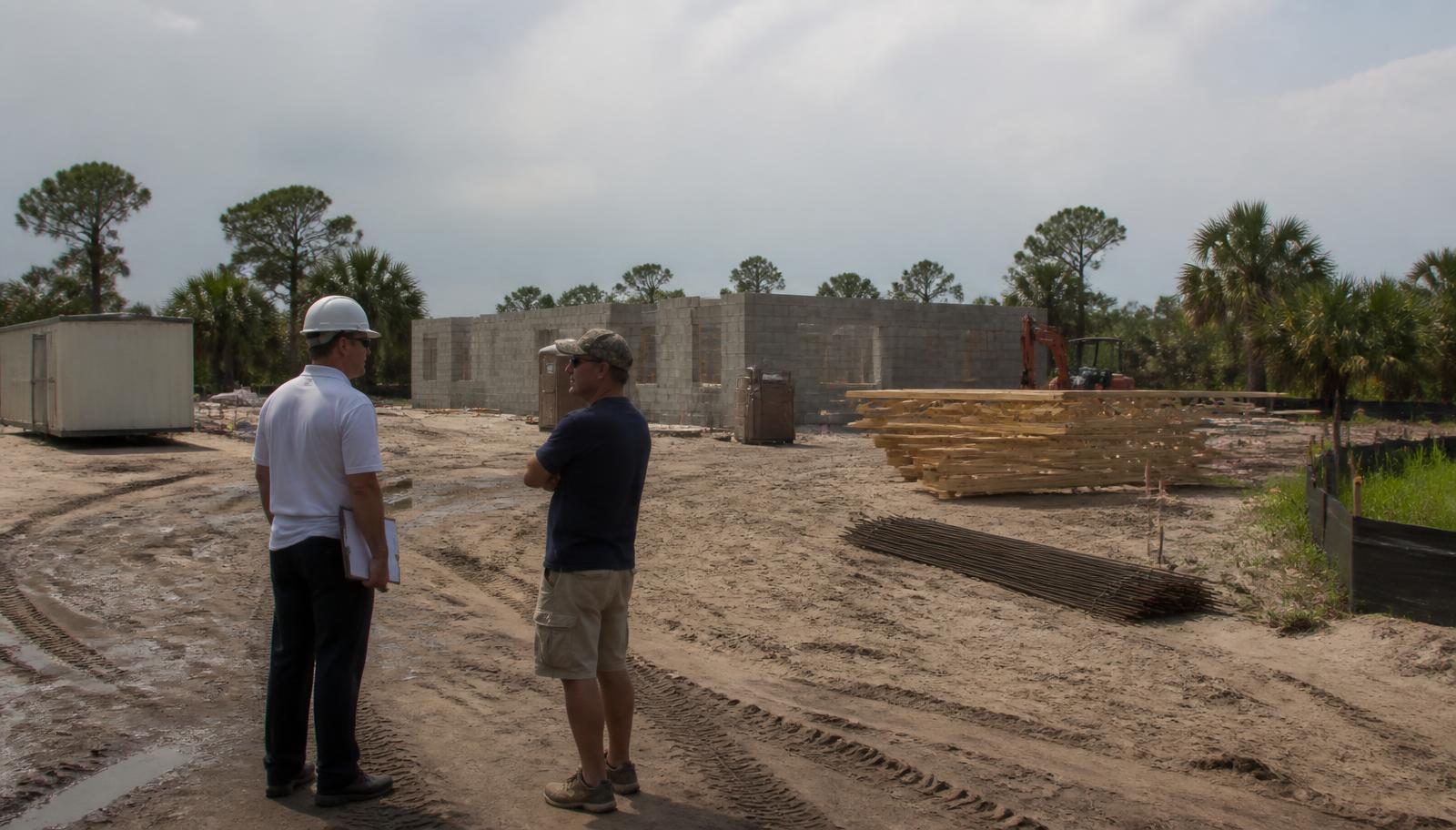
Dutch interest is calculated on the full construction loan commitment. Non-Dutch interest is calculated on funds actually advanced. Worked $2 million examples, a full 12-month draw table, a Naples scenario and an interactive calculator show why a 12% loan can cost less than a 10% loan.
Construction Financing
Land Acquisition + Construction Financing in Florida: Can Both Be Included in One Loan?
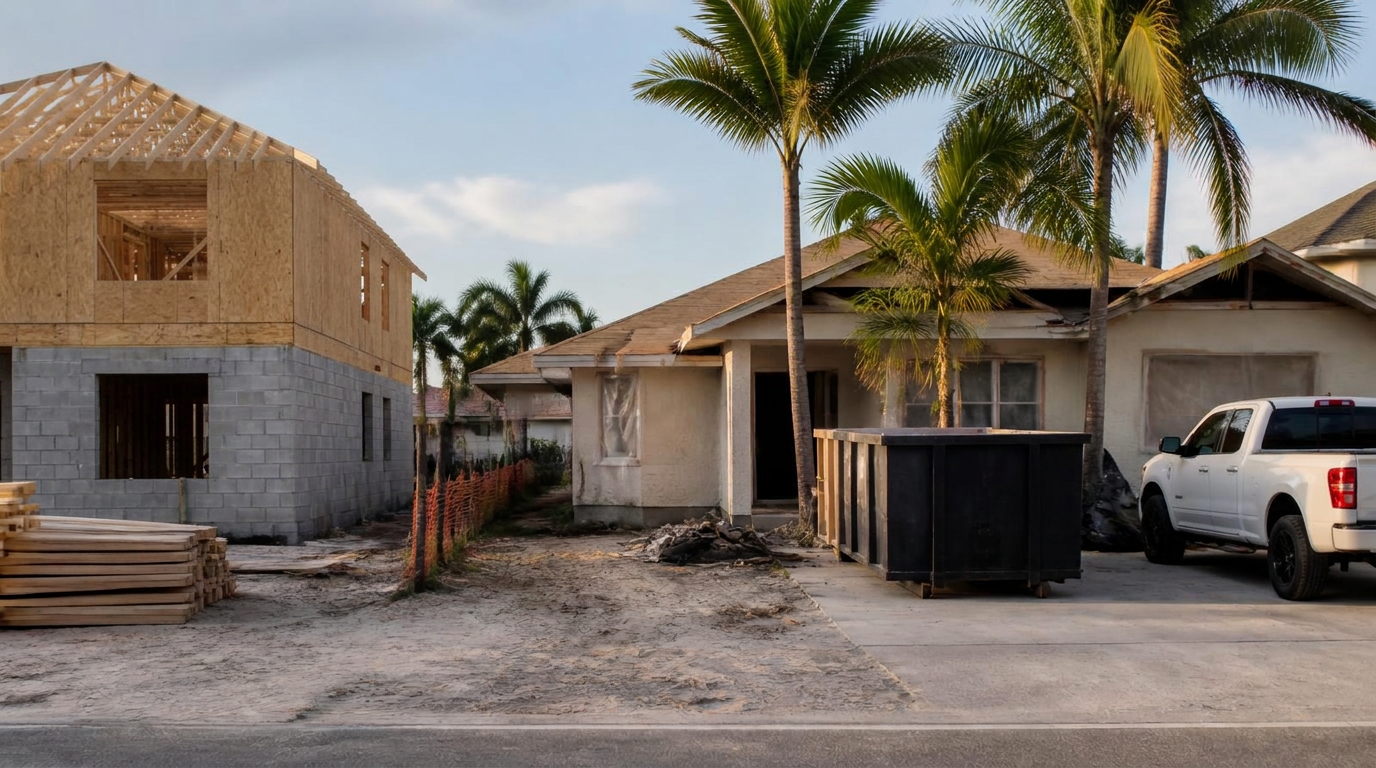
A Florida developer's guide to combining land acquisition and construction financing in one loan: how acquisition advances and construction draws work, LTC vs. LTV, land equity as contribution, what costs are and are not funded, and what lenders need to approve the request.
Construction Financing
Ground-Up Construction vs. Heavy Rehab Financing in Florida
Ground-up construction financing builds a new property from vacant land or after demolition. Heavy rehab financing funds major renovation of an existing structure. Here is how Florida private lenders underwrite each, with worked LTC and ARV examples.

Investor Education
What Do Private Lenders Look for in an Appraisal?
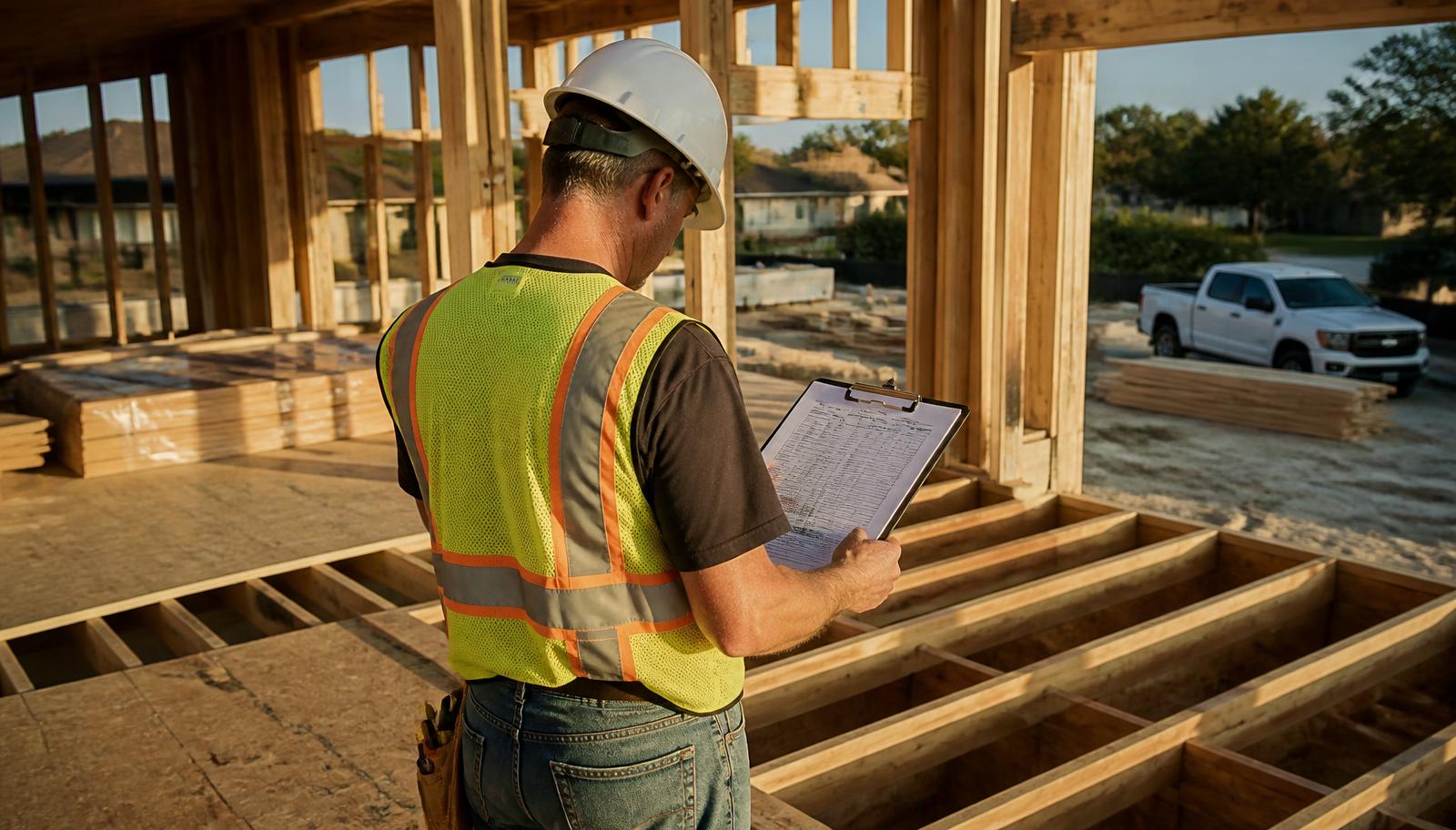
A private lender reads an appraisal for value, comparable sales, condition, marketability, zoning, and projected value at completion. Here are the 12 things Florida borrowers should know, with worked LTV, CLTV, and LTC examples.
Investor Education
What Is an Interest Reserve in a Construction Loan? A Complete Guide for Builders and Contractors
An interest reserve covers construction loan interest from loan proceeds while the property produces no income. Here is how lenders size it, how it interacts with the draw schedule, and what happens when a build runs long.