Construction Financing
Who Pays When Your Construction Project Goes Over Budget?
Published By Luminary Private Lending
- Author:
- Ivan Padilla
- Reviewed By:
- Kevin Mazzola
- Published:
- November 16, 2026
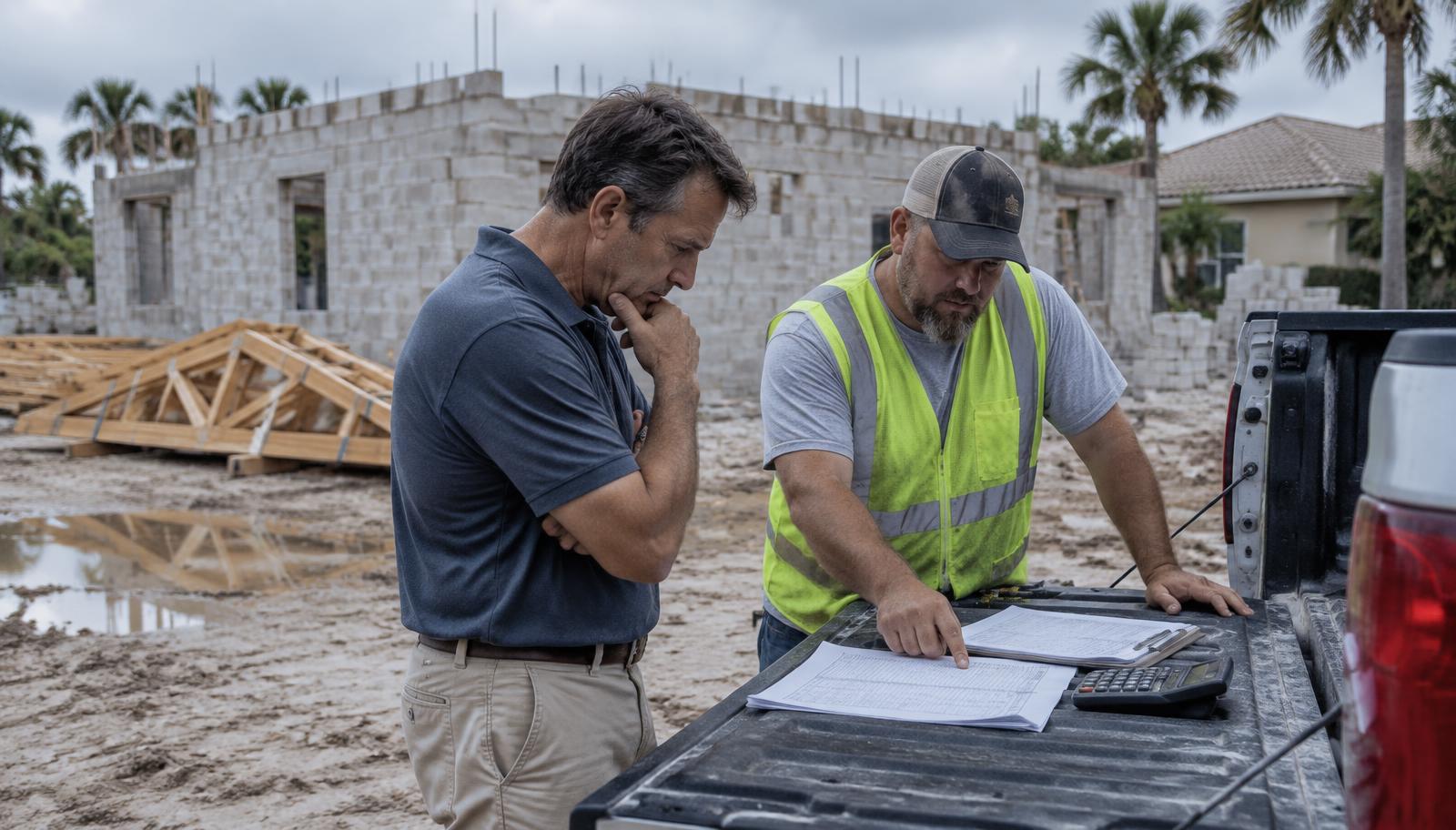
Your construction contract usually determines who owes the extra cost. Your loan agreement determines whether draw funds can cover it. Here is how fixed price, cost-plus and GMP contracts handle overruns, with hypothetical examples.
Quick Answer
Your construction contract usually determines who owes the extra cost. Your loan agreement determines whether draw funds can cover it. A contractor may have to absorb higher costs for work included in a fixed price. The owner may owe more for approved changes, allowed costs or contract exceptions.
Hypothetical scenario: A Florida investor signs a $400,000 contract to build a rental home. Two months in, the builder says the project will cost $35,000 more. Part of the increase is lumber, part is drainage work and the rest is upgrades the owner requested. It's one bill, but three different costs may follow three different rules. Before you agree to pay, ask the builder to break the increase down by cause, check your contract and work out how much cash you'll need to finish.
All dollar examples in this guide are hypothetical illustrations. They are not Luminary loans and do not imply that Luminary approved or funded any project.
Who pays for construction cost overruns under each contract type?
Start with the signed agreement: how the price was set, what work it covers and which terms allow the price to change. This chart shows how three common contract types typically handle extra costs. A guaranteed maximum price (GMP) is a contract cap the builder generally cannot exceed for the agreed work.
| Contract type | Who typically pays the extra cost? | What to check |
|---|---|---|
| Fixed price (lump sum) | The contractor generally covers higher costs for work included in the agreed price. The owner may pay for approved changes or costs covered by an exception. | The scope of work, exclusions, allowances and clauses that allow price increases. |
| Cost-plus | The owner generally pays costs allowed by the contract plus the builder's fee. The total can exceed the estimate if the contract has no cap. | Which costs qualify, how the builder's fee is calculated and what records support the bill. |
| Guaranteed maximum price (GMP) | The contractor generally covers costs above the cap for the agreed work. An approved change or another adjustment allowed by the contract can raise the cap. | The current cap, the work it covers and any changes that raised or lowered it. |
Who pays under a fixed-price contract? The builder's lumber bill goes up
You sign a $300,000 fixed-price contract. Lumber for the original plans costs $12,000 more than the builder expected. If the price covers lumber and the contract doesn't let the builder raise it, the builder typically pays the extra $12,000. Now suppose you add a covered porch outside the original plans and approve an $18,000 change order (a written record of a change to the work and its effect on price or schedule). Your contract price rises to $318,000. Evaluate the porch and the lumber increase under the terms that apply to each.
Cost-plus: the owner pays the added cost and builder's fee
Your agreement calls for a 10% builder's fee on eligible costs. An approved change adds $20,000 in qualifying costs. You owe $22,000, including the $2,000 fee. Ask for a breakdown of labor, materials and fees so you can check the bill against the contract and confirm it doesn't include work you've already paid for.
Guaranteed maximum price: a change order raises the cap
Your contract has a $500,000 cap. You sign a $15,000 change order that raises it to $515,000. The covered work ends up costing $523,000. If the contract allows no other adjustments, the contractor usually pays the $8,000 above the new cap.
Source: AIA Contract Documents (owner and contractor agreements, contract changes and price caps).
What caused the project to go over budget?
A request for more money can cover anything from an owner upgrade to a cost the builder missed in the bid. Ask what changed on each budget line.
You changed the plans or picked a more expensive finish
If you ask for an extra bathroom, get a written price and time estimate before approving. Check whether the quote covers plumbing, electrical, fixtures and changes to plans or permits. An allowance is a fixed amount for an item you'll select later. If your flooring allowance is $8,000 and you choose $11,000 flooring, you'll have a $3,000 difference. Confirm whether the allowance includes labor, delivery and tax, and whether the contract permits a markup.
The crew found a site problem after work began
A crew digging a foundation might uncover buried debris or soil that needs extra work. Who pays depends on how the agreement describes site preparation and how it handles conditions discovered after work begins. Ask for photos, a repair quote and the schedule impact, and check whether any engineering review or revised plans are included.
The builder's original estimate was too low
Start with the pricing terms. Under a fixed price, the builder often bears the cost of a bad estimate. Under cost-plus, the owner may owe actual allowed costs. Either way, ask the builder to point to the contract terms that support the charge.
The delay added costs beyond the builder's bill
A delay can add loan interest, insurance and other carrying costs. If a rental build takes 2 extra months and interest and insurance total $3,200 per month, that's another $6,400, even if the builder's price stays the same. Update your rent or sale timeline too, and read our guide to Florida construction loan extensions if the delay approaches your maturity date.
Will a Florida construction loan cover a budget overrun?
A construction loan might cover part of an overrun if the loan terms allow it and the lender approves the use of funds. A draw is a payment from the loan released under an agreed schedule, often after an inspection. The lender may request an updated budget, the change order, invoices or an inspection before releasing funds. See how construction loan draws work. Ask three questions:
- Is there contingency left? A contingency is money set aside for unexpected costs. Ask how much remains and who approves its use.
- Can money move from another budget line? If roofing has $8,000 left after every roofing bill is paid, the lender may allow moving it to another approved cost. The loan amount stays the same.
- When can funds be released? A draw may depend on reaching a stage or passing inspection. A deposit due before then may need cash.
If approved loan funds aren't enough, you can add cash, cut unneeded work or ask the lender to consider a loan increase.
Example: a $35,000 change order leaves a $15,000 gap
An approved change order adds $35,000. The lender will release $20,000 after the work passes inspection, leaving $15,000 to cover with cash or another approved source unless you reduce the cost. If the contractor also wants a $10,000 deposit before starting, you need to know where it comes from and when the draw arrives. The budget tells you what the work costs; the payment schedule tells you when you need cash.
How do you calculate how much cash you need to finish?
Funding gap = remaining project costs − available project cash − approved loan funds available for those costs
| Example budget item | Amount |
|---|---|
| Unpaid bills for work already done | $18,000 |
| Work left to complete, including approved changes | $102,000 |
| Interest and insurance through the new finish date | $10,000 |
| Total cost to finish | $130,000 |
| Remaining approved draws available for those costs | $90,000 |
| Cash set aside for the project | $25,000 |
| Remaining funding gap | $15,000 |
In this hypothetical, you have $115,000 available against $130,000 in remaining costs, a $15,000 gap. Write each bill's due date next to it and each draw's expected release date next to it. A bill due before a draw can require cash even when the overall budget balances.
What should you do when your Florida build goes over budget?
- Ask for a written breakdown. Get the reason, price and schedule impact for each extra cost, and which figures are estimates versus quotes or invoices.
- Read your contract before approving a change. Check scope, pricing terms and the approval process. If you disagree, consult a Florida construction attorney before signing a change order or holding back payment.
- Update the budget and payment dates. List what you've paid, what you owe and what it costs to finish, including costs outside the builder's contract.
- Contact your lender before committing. Send the proposed change, updated budget and revised draw schedule, and ask what can be approved and when.
- Track subcontractor and supplier payments. In Florida, a subcontractor or supplier who isn't paid can record a lien even if you've paid the general contractor. A Notice to Owner tells you who is working on or supplying your project, so you know whose lien releases to collect before final payment. Ask your attorney or title company how to handle releases. Source: Florida Statutes § 713.06.
What to send your lender with an overrun request
- The change order or written quote, with the reason for the cost
- A revised line-item budget showing paid, owed and remaining amounts
- Unpaid invoices and any lien releases received
- An updated draw schedule
- The date the extra cash is needed and its proposed source
Each lender sets its own requirements; confirm the list with your loan officer.
Frequently asked questions
Can a contractor charge more on a fixed-price contract?
A contractor can charge more on a fixed-price contract if the contract allows price changes or you approve work beyond the agreed scope. Ask for the contract clause or change order that supports the increase and a detailed breakdown of the charge.
Can a contractor charge for extra work without a signed change order?
It depends on the contract and the facts. Check who can approve changes, what needs written approval and what notice the contract requires. If you dispute the bill, save texts, emails, photos and invoices, and ask a Florida construction attorney to review them.
Can I use unused draw funds to pay for a change order?
You may, if your lender approves the new use of funds. First confirm the original budget line still has enough money for all pending work and bills on that line, then ask the lender to approve a transfer of the true savings.
How much should I set aside for construction overruns?
Base your contingency on the risks you can identify. Ask your builder to price likely site fixes, and calculate what an extra month of interest and insurance would cost. Before closing, confirm how much contingency you can access through draws and how much cash you must keep on hand.
What if the funding gap could push completion past my loan maturity date?
Discuss the schedule and the funding gap with your lender together. Ask the builder which work can be changed or removed and what it would save, share the revised budget, and ask whether a budget transfer, loan increase or extension may be considered.
Planning a ground-up build in Florida?
Bring your budget, builder's contract and draw schedule to Luminary Private Lending. If your project is underway, share what you've paid, what you owe and the estimated cost to complete. Those numbers show how much financing you're seeking and when you'll need it. Explore Florida construction financing.
Sources and review
- AIA Contract Documents: owner and contractor agreements, change orders and guaranteed maximum price.
- Florida Statutes § 713.06: liens of persons not in privity, Notice to Owner and final payment.
- Luminary: Construction loan draw schedule explained
Author: Ivan Padilla, Director of Growth and Real Estate Lending Specialist, part of the team at Luminary Private Lending. Reviewed by: Kevin Mazzola, Founder of Luminary Private Lending. This article has not been reviewed by an attorney. Sources last reviewed: November 16, 2026.
This article is educational and is not legal advice or a loan commitment. All financing is subject to underwriting, property review, appraisal, title review and final approval.
Related Florida Lending Resources
Keep Reading
Latest Insights
Keep exploring Florida private lending insights.
Construction Financing
Soft Cost Financing in Florida: Funding Your Project Before Construction
Soft cost financing helps Florida borrowers pay eligible predevelopment expenses such as architectural drawings, engineering, surveys, site investigations and permit fees before construction begins. Eligibility depends on the property, the borrower and the project review.
Construction Financing
What Happens When a Construction Loan Expires Before the Project Is Finished? | Florida Guide
An unfinished construction project does not automatically extend a maturing loan. This Florida guide explains extensions, modifications, refinancing, unused draws, updated appraisals, cost overruns and the documents lenders may review.
Construction Financing
12% vs. 14% Construction Loans: Which Costs Less?
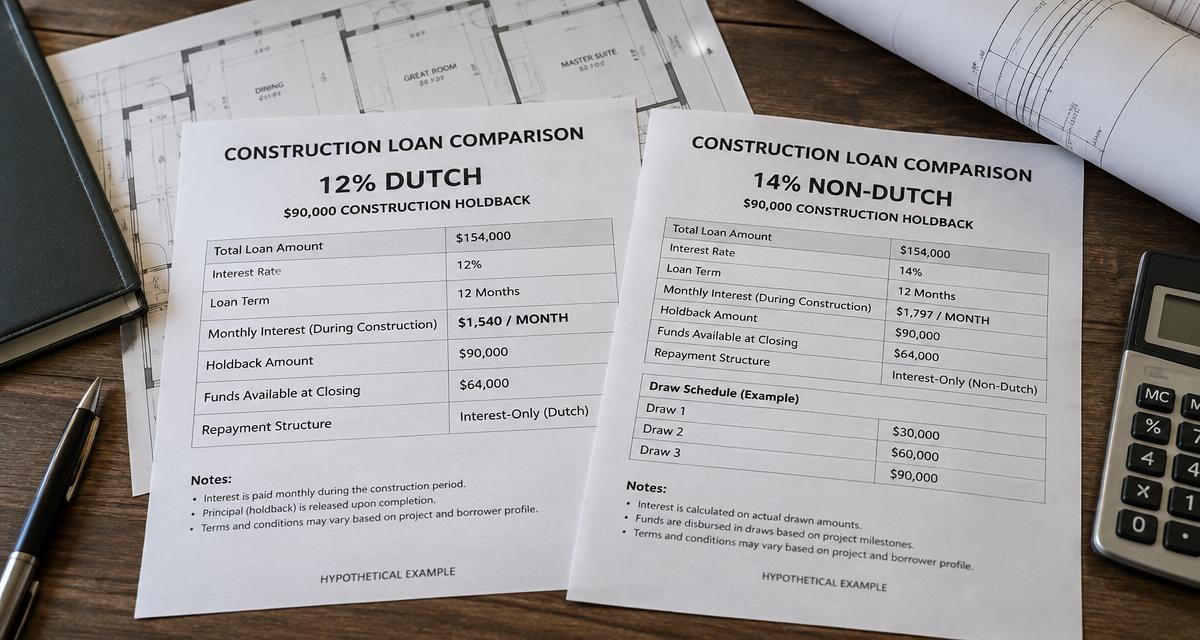
Interest rates matter, but fees, construction draws and payoff timing determine total cost. Compare 12% full commitment interest with 14% on disbursed funds using a transparent hypothetical example.
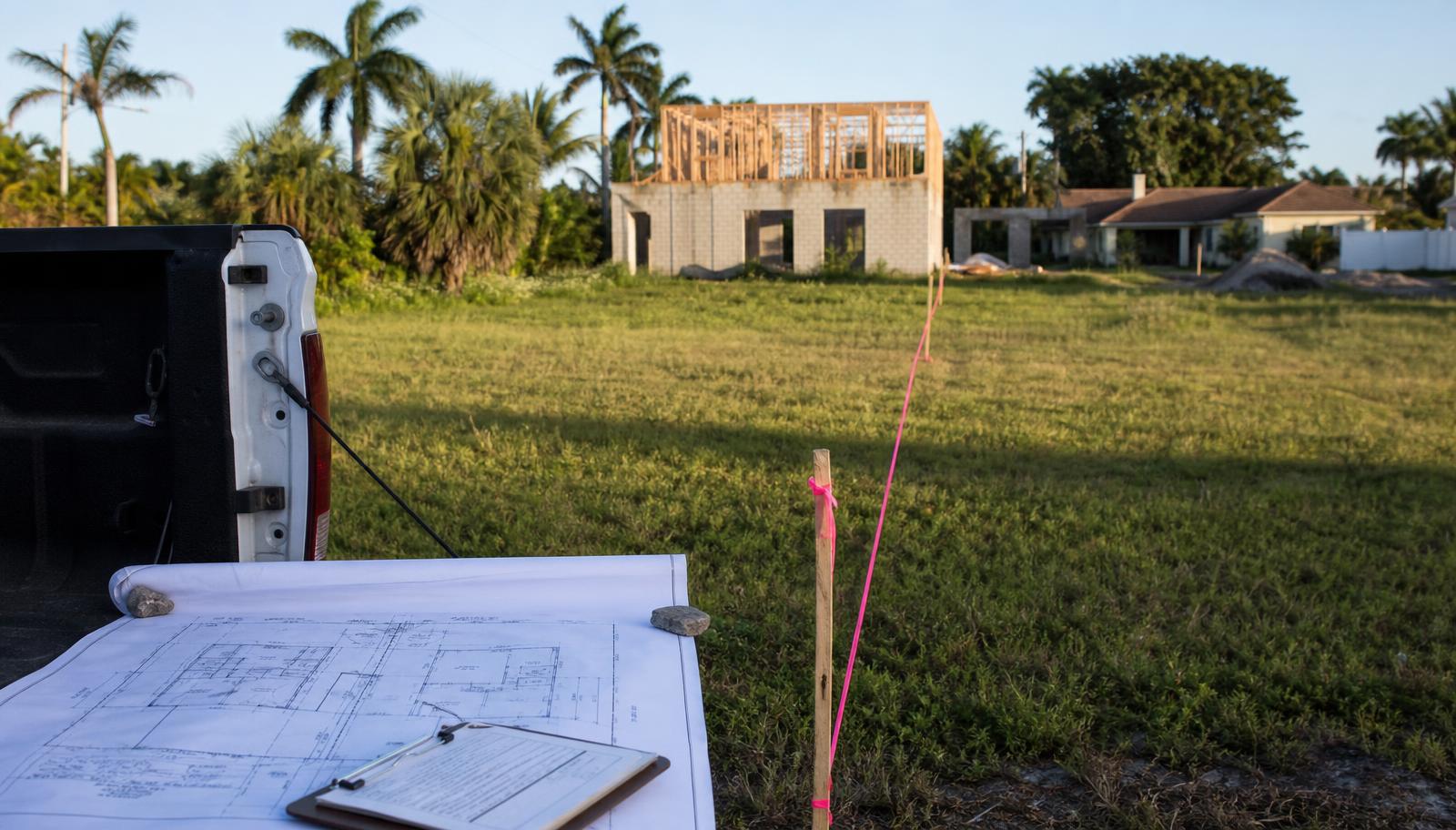
Construction Financing
You Split One Property Into Two Lots, but the Lender's Lien Is Still on Both. What Happens to Your Construction Loan?
A lot split does not automatically split an existing lien. This Florida guide explains partial lien releases, why an updated appraisal cannot remove a recorded lien, who approves a release, how construction lenders evaluate lien position, and the documents to have ready before applying.

Construction Financing
Dutch vs. Non-Dutch Interest on Construction Loans: What Borrowers Need to Know
Dutch interest is calculated on the full construction loan commitment. Non-Dutch interest is calculated on funds actually advanced. Worked $2 million examples, a full 12-month draw table, a Naples scenario and an interactive calculator show why a 12% loan can cost less than a 10% loan.
Construction Financing
Land Acquisition + Construction Financing in Florida: Can Both Be Included in One Loan?
A Florida developer's guide to combining land acquisition and construction financing in one loan: how acquisition advances and construction draws work, LTC vs. LTV, land equity as contribution, what costs are and are not funded, and what lenders need to approve the request.
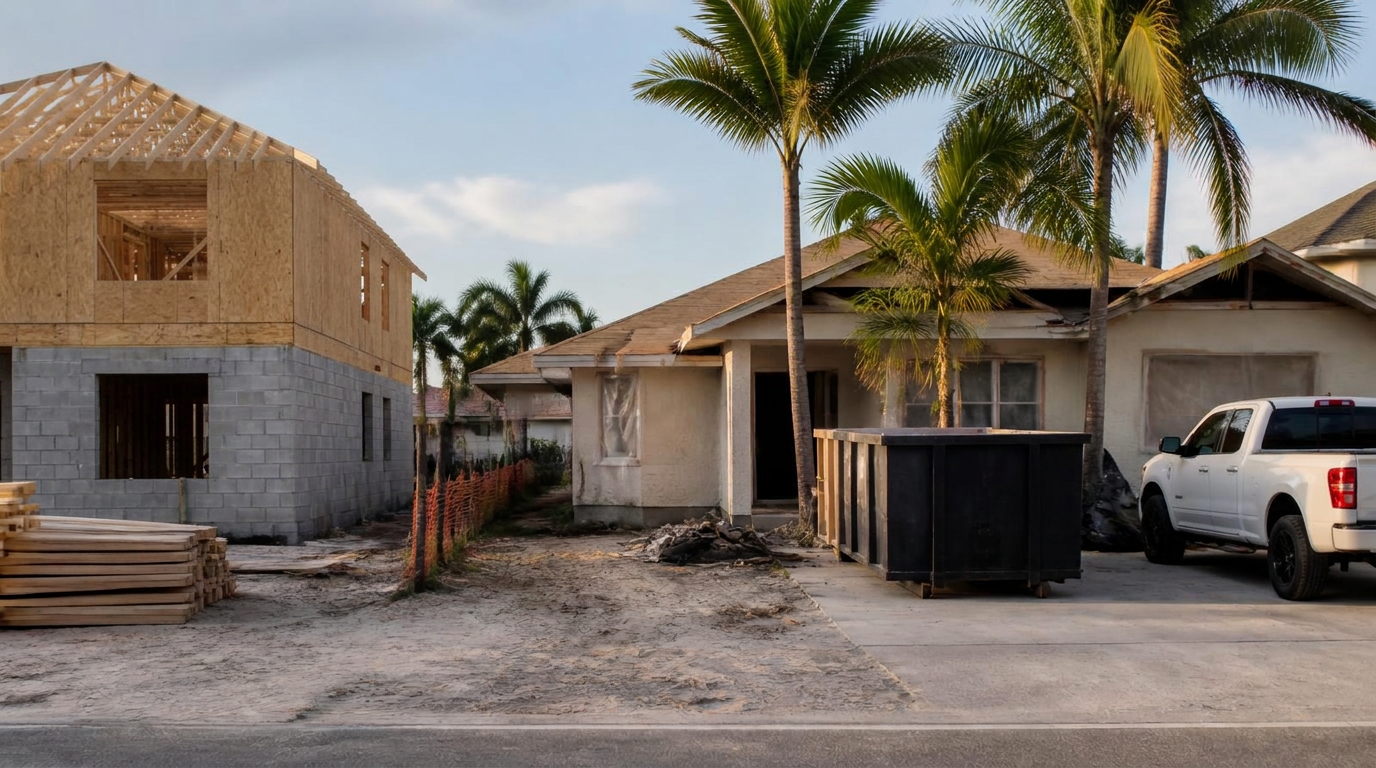
Construction Financing
Ground-Up Construction vs. Heavy Rehab Financing in Florida
Ground-up construction financing builds a new property from vacant land or after demolition. Heavy rehab financing funds major renovation of an existing structure. Here is how Florida private lenders underwrite each, with worked LTC and ARV examples.
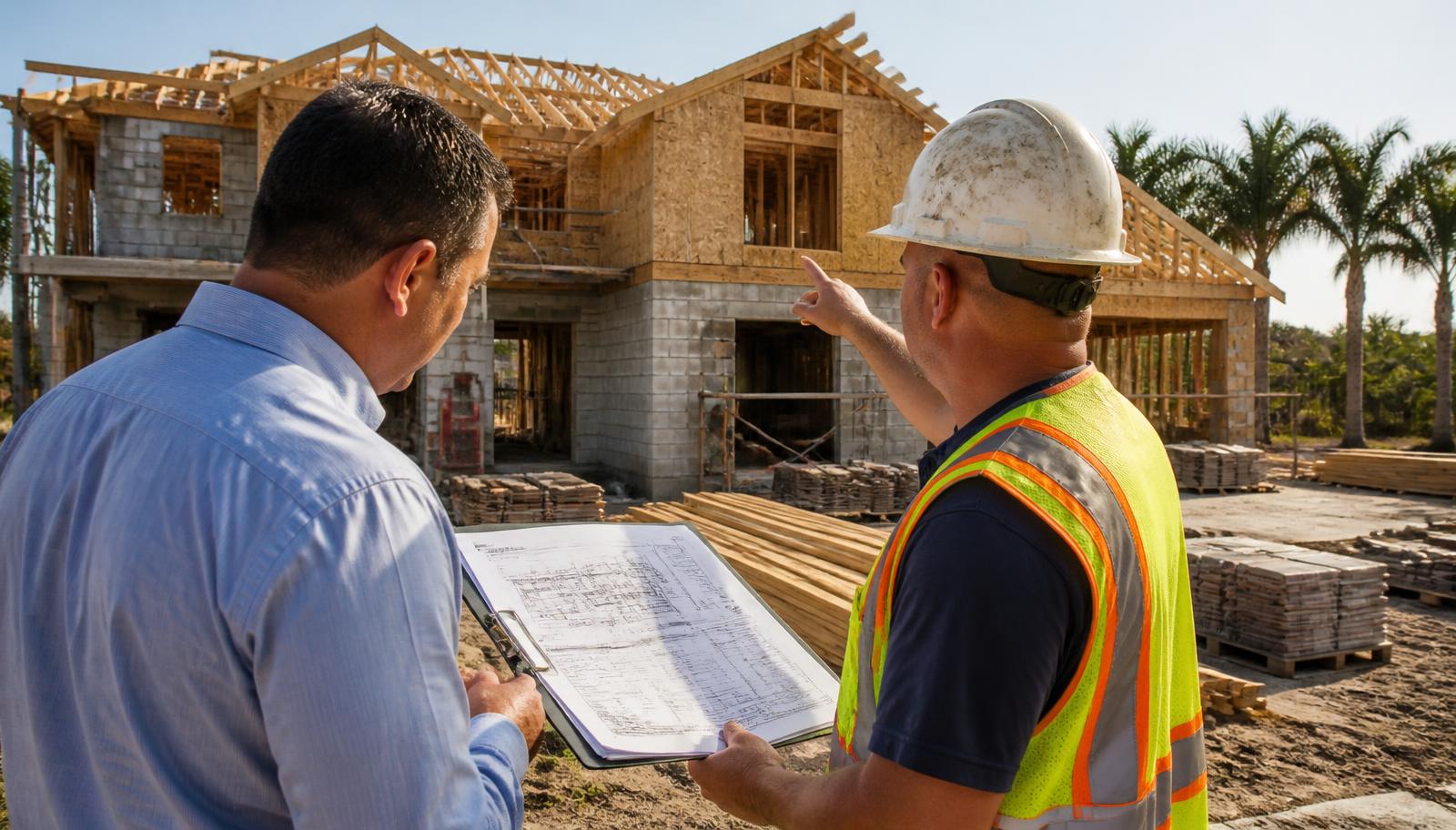
Construction Financing
Construction Loan Draw Schedule Explained: How Private Lenders Release Funds
Construction loans do not fund in one lump sum. Funds release in stages tied to completed milestones. Here is the typical draw schedule, the documentation each request needs, how inspections and interest work, and why draws get delayed.
Investor Education
Upfront Due Diligence Deposits: How Florida Borrowers Can Avoid Costly Financing Mistakes
Know who receives your money, what work it covers and what happens if financing fails. A practical Florida guide to upfront deposits, written fee terms and independent verification.
Bridge Loans
Commercial Bridge Loans in Florida: A Complete Guide to $5M to $20M Financing
The pillar guide to commercial bridge loans in Florida: what they are, who they fit, how LTV sizes a $5M to $20M request, what documents lenders need, how appraisals and exit strategies drive approval, and when bridge financing is the wrong tool.
Investor Education
What Is an Interest Reserve in a Construction Loan? A Complete Guide for Builders and Contractors
An interest reserve covers construction loan interest from loan proceeds while the property produces no income. Here is how lenders size it, how it interacts with the draw schedule, and what happens when a build runs long.
Florida Real Estate Market
Florida Housing Construction Trends 2026: What Fewer Building Permits Mean for Real Estate Investors
Florida building permits have slowed in 2026. Here's what fewer new construction starts mean for investors, plus the loan programs that help you move faster than traditional banks.